
Article and tips
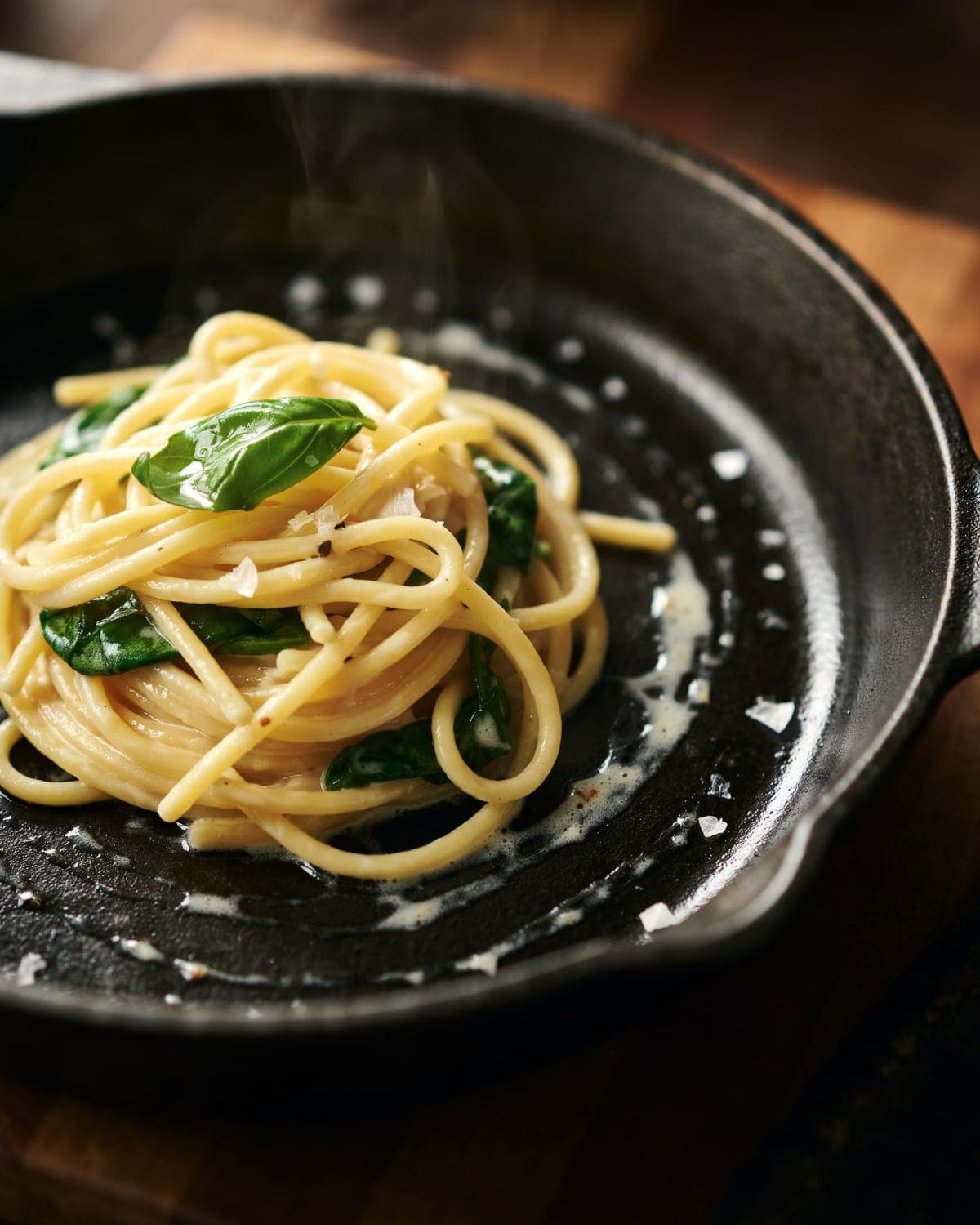
Thirty minutes and one 10-inch skillet stand between you and a bowl of glossy, garlic-scented spinach pasta — the kind of weeknight dinner that makes the two of you linger at the table longer than you planned. (I designed this for the nights when the fridge holds a bag of baby spinach, half an onion, and not much ambition.)
Most cream sauce recipes are written for a family of six, and when you shrink them down, something goes wrong: the sauce turns gluey, or the cream breaks into a greasy puddle around the wilted spinach. This version is built for a small pan from the first step. You'll use starchy pasta water as the backbone of the sauce, melt the Parmesan off the heat, and finish with a squeeze of lemon so it tastes bright rather than rich-and-flat.
What you get: two generous bowls, no sad half-cup of congealed leftover sauce, and one pan to wash. If your household is a crowd of two, this is the pasta that fits the pan you actually own.
Why This Works
The whole method rests on one idea: starch, not cream, is what makes a cream sauce cling. As pasta cooks, it releases starch into the water — a mix of amylose and amylopectin that acts like edible glue between fat and liquid. In On Food and Cooking, Harold McGee describes starch as the great stabilizer of emulsified sauces; it physically wedges itself between fat droplets so they can't merge back into grease. I've tested both approaches side by side: cream alone coats the pasta for about ninety seconds before pooling at the bottom of the bowl, while cream plus starchy pasta water stays put until the last forkful.
Scale is the second piece. A 10-inch skillet has less volume relative to its surface area than a big sauté pan, so cream reduces roughly twice as fast at this size — a 'simmer for five minutes' instruction cooks away a third of your sauce. (That's the hidden math nobody warns you about.) And Parmesan's casein proteins tighten and go stringy above about 180°F (82°C), which is why every cheese addition here happens off the heat.
Small pans forgive less but reward more.
What Most Recipes Get Wrong
Most versions I've cooked follow the same three-step script — wilt the spinach, pour in the cream, simmer for five minutes — and at a six-serving volume in a wide pan, that script works. Scaled down to two, it fails in predictable ways.
First, the simmer: five minutes of heat in a small skillet evaporates a third of your sauce and pushes the cream past the point where its butterfat stays emulsified, leaving you stirring grease into noodles. Second, cheese over live heat — Parmesan's proteins seize into strings above 180°F (82°C), which is why cream sauces sometimes turn ropey instead of silky. Third, spinach water: a bag of spinach releases a surprising amount of liquid as it wilts, and if you pour cream in before that liquid cooks off, you dilute the sauce at the exact moment it needs concentration. And the quiet failure — draining the pasta without reserving water, tossing away the one ingredient that could have fixed everything.
The mistake I kept making for years was expecting the cream to do all the work. It's one player; starch runs the game.
Chef's Tips & What I've Learned
Chef Augustin's Tip: Undercook the pasta by a full minute, not thirty seconds. That minute of tossing in the sauce is where the pasta finishes cooking and absorbs flavor — pasta that's fully cooked before it meets the sauce has no room left to take anything in.
Chef Augustin's Tip: If you use frozen spinach instead of fresh, thaw 10 oz completely and squeeze it in a clean towel until it weighs about 5 oz — hard enough that no water beads out when you squeeze again. Loose frozen spinach is the number one cause of watery cream sauce.
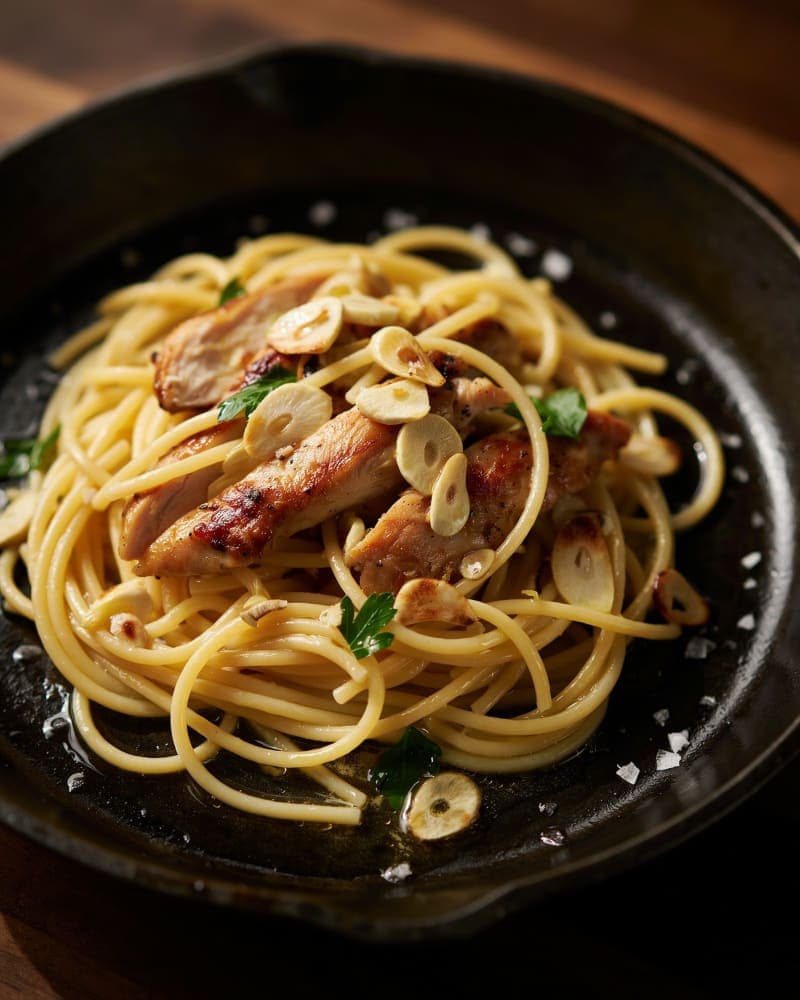
Chef Augustin's Tip: Want to turn this into a meat dinner? Sear 6 oz of sliced chicken breast in a separate pan to 165°F / 74°C internal temperature (the USDA minimum for poultry) and lay the slices over each bowl. The sauce stays exactly as written.
A cream sauce is a negotiation between heat and time — win it by taking both away at the right moment.
FAQ
Can I use frozen spinach instead of fresh?
Yes, and it's a practical swap. Use 10 oz (280g) frozen chopped spinach, thawed completely, then squeezed in a clean kitchen towel until it weighs about 5 oz (140g) — squeeze hard enough that no water beads out. Stir it in at Step 4 just to warm through, since it's already fully cooked. The flavor runs slightly earthier and the texture softer, but the sauce handles it beautifully, and it usually costs about half as much as a fresh bag.
Can you freeze creamy spinach pasta?
You can, with honest expectations. Cream-based sauces separate as they freeze and thaw — the butterfat and water split, and reheating won't fully rebuild the emulsion. If you need to freeze it, portion into airtight containers for up to 2 months, thaw overnight in the fridge, and reheat gently over low heat with a tablespoon of milk, whisking constantly. It lands at roughly 80 percent of its fresh texture. My real advice: this recipe makes exactly two servings precisely so you never have to.
How long does creamy spinach pasta last in the fridge?
Three to 4 days in an airtight container, which matches the USDA guidance at FoodSafety.gov for cooked dishes containing cream or cheese. Cool it first — spread it out in the container so it chills within two hours instead of holding heat in a deep pile. Reheat over low heat with a splash of milk or water, stirring often; the microwave works too, at 50 percent power in 60-second bursts. The sauce will look tight when cold — that's normal.
How many calories are in a serving?
Roughly 860 per serving, based on the quantities here: about 620 from the pasta, 400 from the half cup of heavy cream, and the rest split between the olive oil, butter, and half cup of Parmesan. You'll also get around 23 grams of protein per bowl. To trim it, swap half the cream for additional pasta water in Step 5 — that brings a serving to roughly 730 calories and keeps the sauce surprisingly cohesive, because the starch picks up the coating work.
What should I serve with creamy spinach pasta for two?
Keep the sides low-effort, because the pasta already covers your pan-washing quota. A torn baguette warmed at 400°F (200°C) for 5 minutes handles sauce-mopping duty. A sharp arugula salad with lemon juice and shaved Parmesan comes together in 2 minutes and cuts through the richness. Roasted broccoli or blistered cherry tomatoes work if you want another vegetable on the table. To drink, a crisp Pinot Grigio or sparkling water with lemon both fit the bowl.
Can I make it with milk instead of cream?
Yes. Whisk 2 teaspoons of cornstarch into 1 cup (240ml) of cold whole milk until smooth, then use it in place of the cream in Step 5. The cornstarch matters: whole milk carries only about 3.5 percent fat — not enough to hold together at a simmer — and it can curdle once the lemon goes in. With the starch buffer, the sauce stays stable and finishes slightly looser: a silky sauce that flows rather than a heavy one that clings.
What's the most common mistake with this dish?
Boiling the sauce. People crank the heat to thicken cream quickly, and above a rolling boil two things happen: the water evaporates faster than the emulsion can adjust, and the butterfat separates into visible grease. Hold the sauce at a gentle simmer — 180 to 190°F (82 to 88°C), small lazy bubbles — and thicken it with pasta water and time instead. Already broken it? Take the pan off the heat and whisk in 2 tablespoons of pasta water; it recovers more often than not.
Two bowls, one skillet, and the last of the lemon on the counter. The candles are optional — the second helping rarely is.