
Article and tips
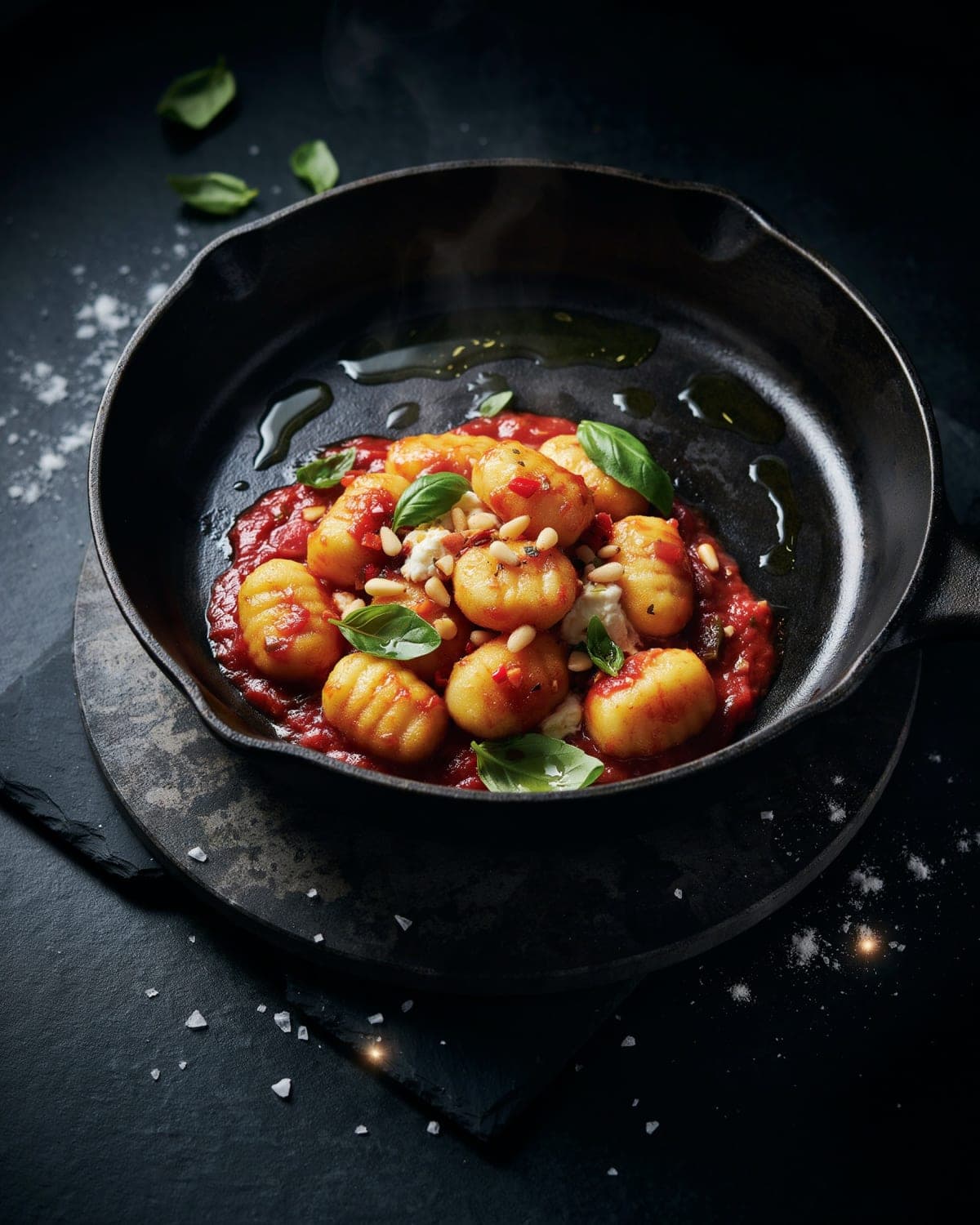
A skillet that starts with sizzling gnocchi and ends with a tomato sauce built from a can, an onion, and a handful of frozen vegetables is my default Tuesday-night dinner for two. I have made this vegetarian one-pan gnocchi for two enough times to know the two things that matter: get a real golden crust before liquid hits the pan, and use enough starchy tomato broth to build a sauce without drowning the dumplings. Most recipes I have tried either boil gnocchi in water first or pack a sheet pan full of sauce, then wonder why the dish turns soft. This version skips the boiling pot, keeps cleanup in one skillet, and makes pantry staples taste deliberate. The angle is simple: crisp the gnocchi in butter and oil, deglaze with reserved tomato juice, then simmer just long enough for the sauce to cling. It comes together in 30 minutes, and two portions can sit on a small table while the pan is still warm. If your stove runs hot, lower the heat for the simmer; if it runs gentle, give the sauce an extra minute to reduce.
Why This Works
The magic here is texture management. Gnocchi are delicate: the potato or semolina surface has enough starch to brown, but it also absorbs liquid quickly. When I sear the gnocchi first in olive oil and butter, the outside firms up, giving them a thin crust that survives a short simmer. The butter contributes milk solids that caramelize slightly, while the oil keeps the surface from scorching too fast. That is one reason I prefer this technique to straight boiling. The onion and garlic then cook in the same fond, building a base that does not need anything else to taste full. Tomato paste, stirred for a minute, deepens its sweetness. Deglazing with reserved tomato juice and vegetable broth picks up the browned bits, which are the flavor anchors of the dish. I keep frozen vegetables near the end so they stay crisp-tender instead of releasing too much water. The final splash of butter at the end emulsifies the sauce and glosses the gnocchi without making them heavy.
I follow FDA advice for perishable dairy: keep cold items at or below 40°F / 4°C. For prepared leftovers, USDA guidance says to reheat to 165°F / 74°C throughout. That temperature line is why I do not leave a finished skillet sitting in a warm kitchen if I am not serving it immediately. The same logic is why I prefer low-sodium broth: I can season gradually instead of trying to rescue an oversalted pan.
A sauce is just fat, liquid, and patience arguing politely.
What Most Recipes Get Wrong
The mistake I keep seeing is skipping the sear and throwing everything into liquid. That produces soft gnocchi and a sauce that tastes flat. The other common error is using too much broth for a two-person portion. 3/4 cup is usually plenty for 8 ounces of gnocchi, especially when the tomatoes release juice. I learned this after several watery Tuesday dinners. Now I start with 3/4 cup broth and only add more if the sauce looks tight.
Because this is a one-pan meal, crowding matters. If the gnocchi are piled high, they steam instead of browning. A 10-inch skillet gives enough room for the crust to set before sauce arrives. Another fix is timing the frozen vegetables. They can go in late so they heat through and retain snap. If you add them at the beginning with tomatoes, they turn dull.
I also keep the final simmer uncovered. If the pan is crowded with sauce, the gnocchi soften too much and the tomato flavor stays sharp. A small simmer reduces acidity and lets the basil look brighter. Since gnocchi continue to soften after cooking, stop a little early if they seem close.
Chef's Tips & What I have Learned
Chef Augustin's Tip: Use an unscented neutral oil if your butter browns too quickly in your particular skillet. Cast iron and carbon steel can run hotter than nonstick, and the butter solids need protection. The why matters: oil raises the scorch resistance while butter still supplies flavor.
Chef Augustin's Tip: Drain canned tomatoes but reserve the juice. The juice deglazes with acidity and a little sweetness, while the drained tomato solids prevent the sauce from becoming soup. (If you are in a hurry, pulse the tomatoes with their juice, but add 2 fewer tablespoons of broth.)
Do not rinse the tomatoes; draining leaves enough pulp to thicken. I follow FDA guidance for butter and other soft dairy: keep it cold until needed, and do not let it sit out for more than 2 hours when the room is warm. For leftover reheating, warm the portion gently until steaming; USDA guidance for reheating prepared leftovers is 165°F / 74°C.
A well-made sauce should coat, not swim.
If you want a richer finish without opening a can of cream, stir in a small piece of cold butter off the heat. It coats the gnocchi and rounds the tomato acidity. For texture, a small sprinkle of toasted breadcrumbs over the finished bowls adds a second kind of crispness; use a dry skillet and about 1 minute of attention.
FAQ
How much gnocchi for two people?
Start with 8 ounces (225g) shelf-stable or refrigerated potato gnocchi. That is half a 16-ounce package, enough for two main portions when paired with tomato sauce, onion, garlic, and frozen vegetables. I like this number because it leaves room for browning; too many dumplings pile up and steam instead of crisping. If your eaters are hungrier, use 10 to 12 ounces (285g to 340g), add a splash more broth, and simmer 1 extra minute. If serving beside salad, stay at 8 ounces.
Can you make gnocchi for two in one pan?
Yes. Use a 10-inch skillet and treat one pan as the whole system: brown the gnocchi, build the onion, garlic, and tomato paste base in the same pan, deglaze, then simmer everything together. Keep the sauce shallow enough that the gnocchi can move a little. A 9-inch skillet works for two if you stir gently. This is easier than boiling because gnocchi starch thickens the tomato sauce directly in the pan.
How do I make a one-pan gnocchi dinner vegetarian?
Keep olive oil and butter as the base, use vegetable broth, and add frozen vegetables for color and bite. The tomato, garlic, onion, and basil combo already has depth, especially when tomato paste browns. For more body, stir in 1/2 cup (120g) drained cooked cannellini beans with the tomatoes. For gloss, finish with a knob of cold butter off heat. Keep the pantry staples: canned tomatoes, dried oregano, black pepper, and Diamond Crystal kosher salt.
What are common gnocchi cooking mistakes?
The most common mistake is overcooking before the skillet. Shelf-stable or refrigerated gnocchi cook quickly, so they need only a sear and a few minutes of simmering. Another error is skipping the dry-off step, which prevents browning. Overcrowding is the third: too many dumplings piled up steam into soft pillows. I also watch sauce quantity; too much broth makes a thin soup. Add basil and frozen vegetables late so they keep flavor and color.
How do I scale a one-pan gnocchi recipe for two?
For two servings, keep the structure simple: 8 ounces (225g) gnocchi, 1/2 cup (75g) diced onion, 2 garlic cloves, 1/4 cup (48g) tomato paste, 1 drained can of diced tomatoes, and 3/4 cup (180ml) broth. For four, use 16 ounces (450g) gnocchi and increase the sauce by half, not double, in a 12-inch skillet. For one, use 4 ounces (115g) gnocchi and 6 to 8 tablespoons (90ml) broth. Scaling works because the technique stays the same.
At the table, two bowls are full enough that a spoon stays upright, basil is scattered over glossy tomato sauce, and the skillet is still warm enough to make the house smell like garlic as the first bites arrive.