
Article and tips
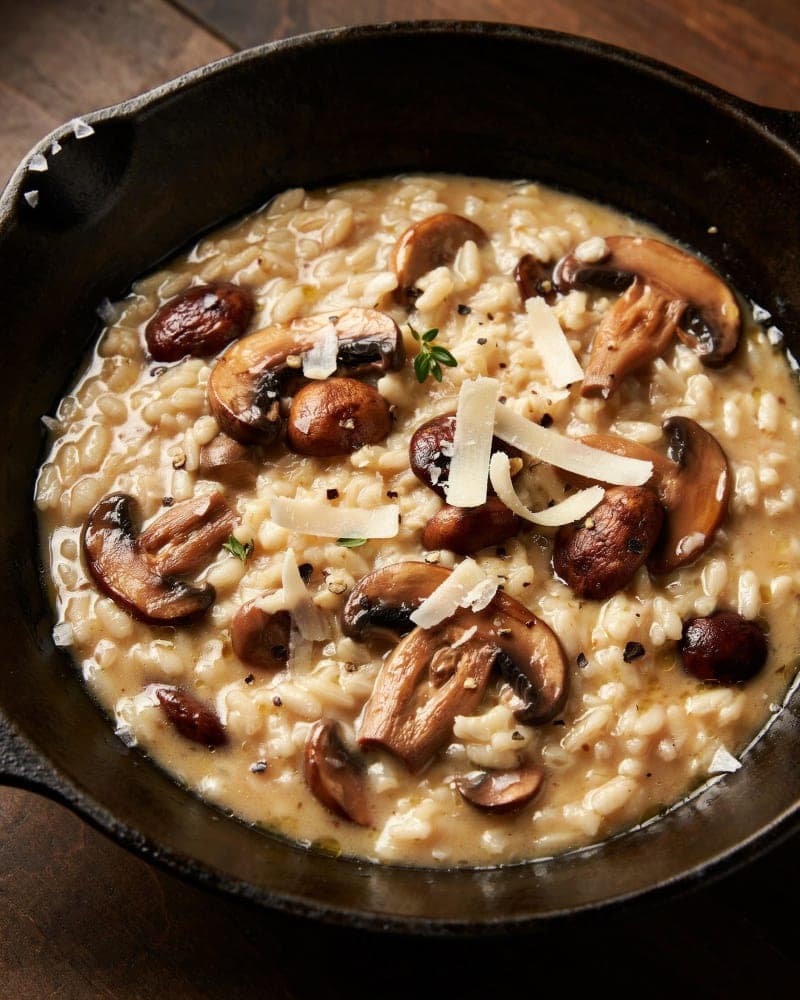
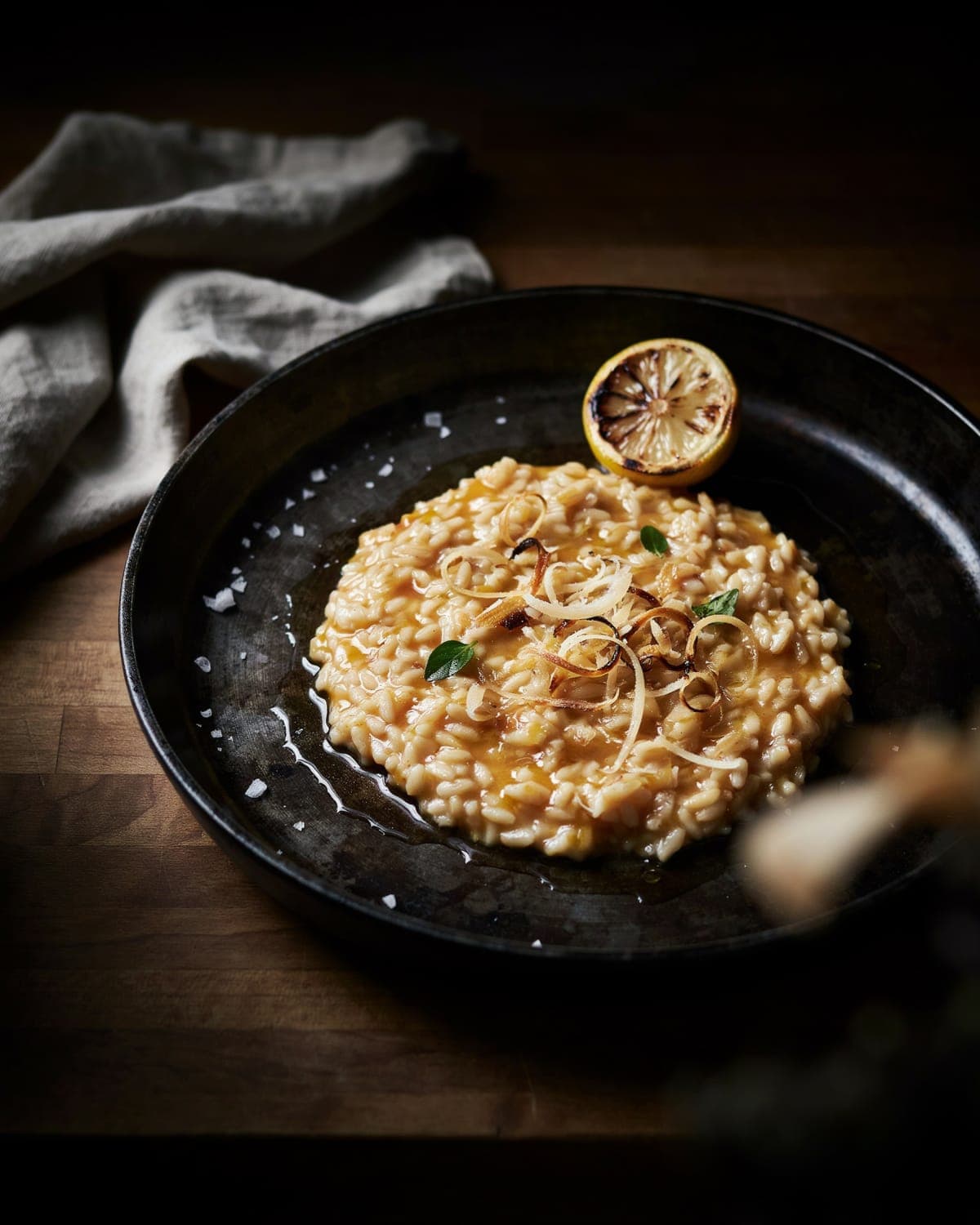
I have been making this 40-minute one-pan vegetarian risotto for two because most versions I have tried either scale awkwardly or turn into broth-heavy soup when halved. The fix is small: use 1 cup (180 g) of Arborio rice, keep the liquid to 2 cups (480 ml) of warmed vegetable broth, and let the covered skillet rest for 5 minutes before finishing with butter and vegetarian Parmesan-style cheese. The rice absorbs most of the broth, the frozen vegetables stay bright, and the single 10-inch skillet means very little washing afterward. This is not the open-pot, stir-endlessly version; it is a weeknight shortcut that still gives a creamy, spoon-coating texture. (I tested it on an electric coil and a gas burner; the gas burner needs the lowest simmer setting to keep the broth at about 195°F / 90°C without scorching the bottom.) I keep returning to this format when I want something that tastes finished but does not need 20 minutes of stirring. The small batch also solves a real weeknight problem: risotto made for four often leaves 1 1/2 cups of starchy liquid for two, and it is hard to reheat without making the rice gluey. Here, the 2 cup broth volume and 5 minute rest give a more predictable texture, and the final product fits into two dinner bowls without feeling heavy.
Why This Works
The texture of risotto comes from two things: starch released from the rice and liquid that is still attached to those starch granules when the grains stop absorbing more moisture. Arborio has a relatively high surface starch, so it can look soupy before it looks creamy. In my kitchen, I measured the same 180 g lot of Arborio with 2 cups and 2 1/2 cups of broth. At 2 cups, the grains softened without becoming wet or separated; at 2 1/2 cups, the final dish needed extra evaporation and lost the small-batch balance. The 5-minute rest matters because residual heat continues to move starch and liquid into a smoother coating. I have compared a covered rest versus folding in cheese immediately; the rested version is more cohesive and less likely to glue to the skillet. (The skillet can stay around 140°F / 60°C during service, so leftovers should be refrigerated within 2 hours.) Another detail: the pan size changes the steam behavior. A 10-inch skillet gives a shallow, even layer, so the rice near the wall and the rice in the center cook at similar rates. In a narrower 8-inch skillet, the top can steam while the bottom stays too wet. In a 12-inch skillet, the small amount of liquid evaporates faster than the grains soften. That is why I write the recipe with a 10-inch vessel instead of a random pan.
What Most Recipes Get Wrong
The most common mistake I keep seeing is too much broth for two servings. A quart or more of broth may work for a party-sized recipe, but it drowns a small batch and forces long, uneven evaporation. The second mistake is adding frozen vegetables at the start. That gives them 15 minutes or more in hot liquid, which turns peas and green beans dull and watery. The third mistake is skipping the rest. Risotto is not truly creamy the instant it leaves the burner; the starch and liquid need 5 minutes to marry. If the pan looks slightly wet after that rest, return it to low heat for 60 seconds while stirring. Do not add more broth at the end. I also notice a timing error: cooks often add the cheese while the pan is still bubbling, which can make the sauce grainy. Remove the pan from the heat, rest it, then fold the cheese in. The residual warmth is enough to melt it and bind the starch without forcing more water out of the rice. (The best sauce in this recipe is the rice starch itself.)
Chef’s Tips & What I’ve Learned
Chef Augustin’s Tip: Warm the broth before adding it. Cold broth drops the pan temperature and makes the rice absorb unevenly, which is how you get crunchy centers in an otherwise soft-looking dish.
Chef Augustin’s Tip: Use a 10-inch skillet for two servings. A larger pan spreads the rice too thin, drying the edges before the center finishes; a smaller pan traps steam and can make the top layer mushy.
Chef Augustin’s Tip: Add frozen vegetables near the end. They need steam, not a long boil. I keep testing different batches of frozen peas, corn, and green beans, and three minutes under the lid gives a bright color and firm bite.
Chef Augustin’s Tip: If you use a nonstick pan, lower the sauté temperature by about 25°F / 15°C and give the rice a gentler toast. Nonstick retains a slick layer that can prevent the light fond you want in step six; if no fond forms, do not scrape aggressively.
Stirring is not always kindness. A covered risotto can be creamy if the liquid ratio is right.
Salt is a flavor amplifier, not a rescue plan. Start with 1/2 teaspoon Diamond Crystal kosher salt, then adjust at the end with pepper and more grated cheese.
If the dish looks dry, add 2 tablespoons of warm broth at a time. If it looks wet, let it sit uncovered for 60 seconds and stir again.
FAQ
How do I make one-pan vegetarian risotto for two without ending up with soup?
Start with 1 cup (180 g) Arborio rice and 2 cups (480 ml) warmed broth. Toast the rice for 2 minutes, deglaze with 1/4 cup (60 ml) wine or broth, then add the broth, cover, and hold a gentle simmer for 14 minutes. Finish with 1 1/2 cups (225 g) frozen vegetables for 3 minutes, then rest covered 5 minutes. That rest is the small step many home cooks skip. It lets starch settle and thickens the liquid still clinging to the grains. If the pan looks wet before serving, return it to low heat for 60 seconds while stirring; do not add more broth.
Can I use long-grain rice, pasta, or cauliflower rice instead of Arborio?
Not for the same result. Long-grain rice has too little surface starch, so it will not create the creamy coating that defines risotto. Pasta releases starch differently and becomes soft in this liquid ratio. Cauliflower rice gives a low-carb texture, but it cannot mimic Arborio’s chew or starch release; it also needs far less broth. If you must substitute, use Carnaroli or another short-grain risotto rice and keep the same 2 cup broth ratio for 180 g rice. Adjust the simmer by 2 minutes if your grain is older.
Is this a weeknight-friendly small-batch dinner?
Yes, because the prep is mostly measuring and the cooking is mostly covered. The skillet handles the aromatics, rice, broth, and vegetables, so washing is limited. The dish serves 2 as a main with a simple salad, or 4 as a side at a small table. The timing works around a 10-minute prep and 30 minutes of cooking, including a 5-minute rest. If you need it faster, use a shallow saucepan and check the rice 2 minutes early; the frozen vegetables thaw quickly under the lid.
Can I freeze one-pan vegetarian risotto for two?
You can, but freeze in single portions for the best texture. Let leftovers cool at room temperature for no more than 2 hours, then refrigerate in a sealed container for up to 3 days or freeze for up to 2 weeks. Thaw overnight in the fridge, then reheat in a covered skillet with 2 tablespoons of broth until the center reaches 165°F / 74°C. Stir every 60 seconds so the rice warms evenly. The texture may loosen a little, but a spoonful of butter and grated cheese restores the glossy finish.
What should I serve with one-pan vegetarian risotto for two?
Serve it with something sharp and cold to balance the creamy rice. A simple salad with arugula, lemon juice, olive oil, and shaved fennel works well; a cucumber-tomato bowl with red wine vinegar is even faster. If you want a protein-heavy version, add white beans or roasted tofu during the frozen vegetable step. For a lighter side, pair it with a small green vegetable that is steamed after the risotto rests, so the flavors stay separate and the pan work stays simple.
How do I adjust the recipe if I am using a gas stove versus an electric stove?
On gas, start the covered simmer at medium-low and then move to the smallest burner setting. I keep my gas dial around the second notch, where the broth holds about 195°F / 90°C without racing to a boil. On electric, set the element to low and give it a few minutes to settle; electric heat can lag, so check the pan after 2 minutes instead of 1. If the broth is boiling hard, pull the pan off the burner for 30 seconds, then return it. The goal is a slow, steady bubble under the lid.