Article and tips
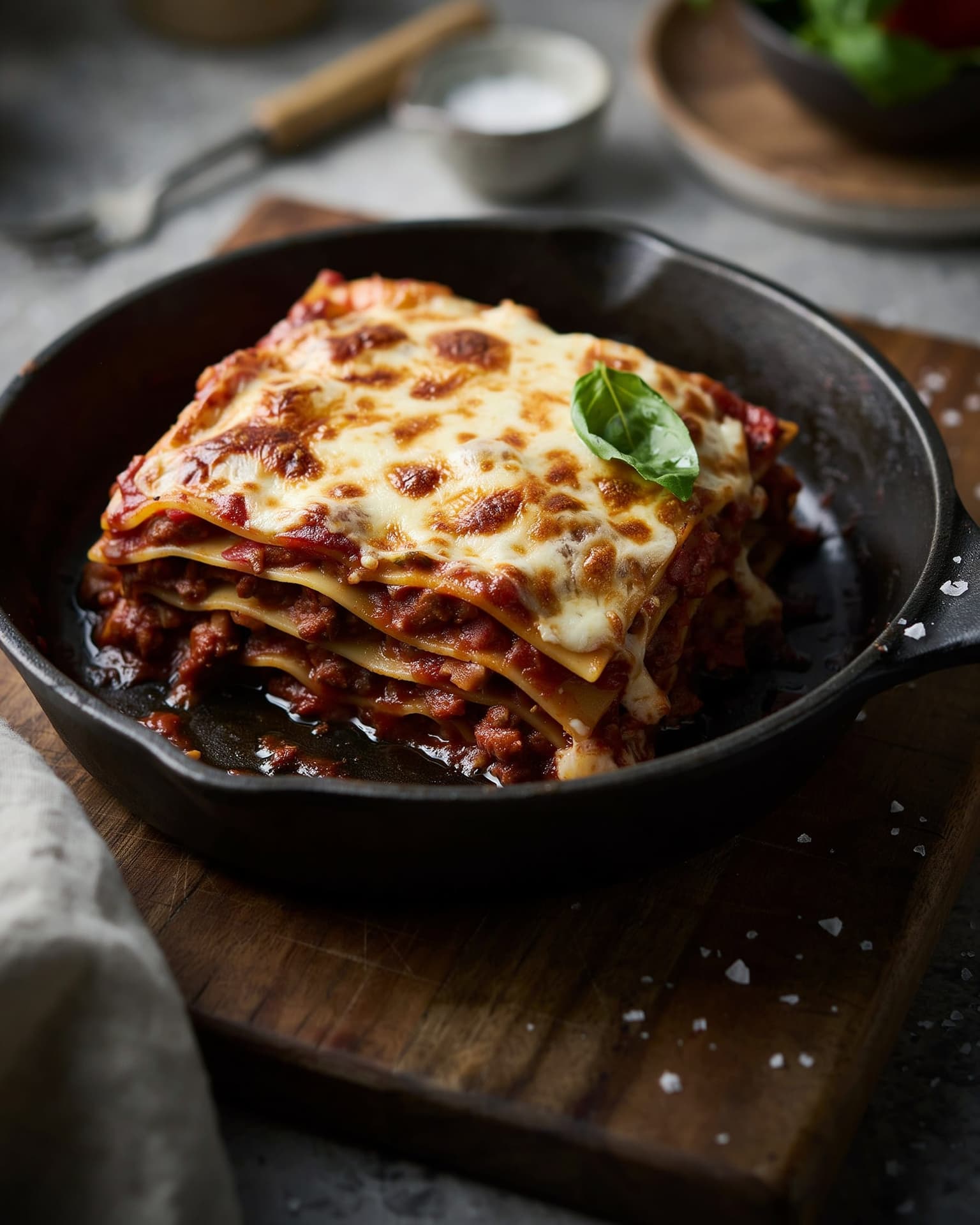
Lasagna exists, and it doesn't require a casserole dish the size of a car battery. The angle nobody in the top results covers: they all scale down the ingredients but keep the same fussy assembly, which is why small-batch lasagna feels like more work than the family-sized version. My fix is to build the entire meat sauce in one skillet, deglaze it properly, and layer into a loaf-pan-sized dish so you get real edges, real corners, and exactly two hearty portions. No half-tray of leftovers slowly drying out. This is the lasagna I actually make on a Tuesday when it's just the two of us and I want the smell of garlic and simmering tomato in the kitchen without committing to a marathon.
The competitors either give you a 30-minute shortcut that skips the browning (and tastes like it) or a full Sunday project. I want the middle: about 25 minutes of hands-on work, a proper seared-then-simmered sauce, and an oven finish that melts everything into one bubbling, layered thing.
Good lasagna is not about more cheese. It's about a sauce with enough backbone to season the pasta beneath it.
Why This Works
The secret to a small batch tasting like a big one is surface browning. When you sear the beef in a hot skillet without crowding it, the proteins and sugars undergo the Maillard reaction — that's the browning that builds the deep, savory notes you can't fake with tomato paste alone. In a two-portion batch it's tempting to just stir the meat around until it's gray. Don't. Let it sit, get color, then break it up.
Deglazing is the other half. After searing, the bottom of the pan is coated in browned bits (the fond). A splash of liquid lifts all that concentrated flavor back into the sauce instead of leaving it stuck to the steel. I've done this side-by-side with and without deglazing, and the deglazed version tastes like it simmered twice as long. Then the canned tomatoes reduce gently, the pasta softens in the oven where it belongs, and the ricotta-egg layer sets into something sliceable rather than soupy. Small dish, big flavor, honest technique.
What Most Recipes Get Wrong
The 30-minute versions skip the sear, and you can taste the shortcut — the meat sits limp in the sauce with no depth. The full Sunday recipes over-assemble a small batch, treating a two-person dish like a nine-layer cathedral. The real mistake, though, is baking uncovered the whole time. That dries out the top noodles into leather before the middle is even hot. Cover first so steam softens the pasta and cooks the egg through, then uncover to brown. And nearly everyone skips the rest: cut a lasagna straight from the oven and it collapses into soup. Ten minutes of patience and it slices into clean, layered squares.
Chef's Tips & What I've Learned
Use no-boil noodles if you can find them — in a small dish they hydrate perfectly from the sauce's moisture and remove an entire pot from your sink.
Chef Augustin's Tip: Salt the sauce, not the ricotta heavily. The parmesan already brings salt, and an over-salted cheese layer can't be undone once it's baked in.
A loaf pan is the perfect vessel for two — tall sides mean proper layers and real corner pieces, which are the best pieces.
I've tested this in both glass and metal loaf pans. Glass runs a touch slower, so give it an extra 5 minutes covered.
The kitchen goes quiet as it rests on the stovetop, the cheese still faintly bubbling at the edges. Two plates, two forks, and a lasagna sized exactly for the night in front of you.
How do you make quick easy lasagna for two?
Build the meat sauce in one skillet — sear 8 oz (225g) ground beef to 160°F / 71°C, add onion and garlic, deglaze, then simmer with crushed tomatoes for 10 minutes. Layer into a loaf pan with noodles and a ricotta-egg mixture, cover and bake at 375°F / 190°C for 25 minutes, then uncover for 10. Total hands-on time is about 25 minutes, and using no-boil noodles removes the separate pasta-boiling step entirely.
Can I make lasagna with only 4 ingredients?
You can get close: ground beef, a jar of crushed tomatoes, lasagna noodles, and a bag of shredded mozzarella will produce a serviceable lasagna. But you lose the ricotta layer that gives it structure and the aromatics that give it depth. If you want a true 4-ingredient version, brown the beef to 160°F / 71°C, mix it into the tomatoes, and layer with noodles and cheese. It works — it's just flatter in flavor than the full recipe here.
What is lazy lasagna?
Lazy lasagna skips the layering. You break the noodles into a skillet, add browned beef (cooked to 160°F / 71°C), tomato sauce, and enough water to cook the pasta right in the pan, then stir cheese through at the end. It's a one-pan riff that tastes like lasagna without the assembly. For two people it's genuinely fast, though you sacrifice the distinct layers and browned top that make the baked version special.
Do you have to boil lasagna noodles first?
Not always. No-boil (oven-ready) noodles are designed to hydrate from the moisture in the sauce as they bake, so you skip boiling entirely — just make sure your sauce is a little loose and the dish stays covered for the first 25 minutes at 375°F / 190°C. Regular dried noodles technically need a quick boil, but in a small covered dish with generous sauce they'll soften through the 35-minute bake if you don't crowd them.
How long should lasagna rest before cutting?
At least 10 minutes, and 15 is better. Straight from the oven the layers are molten and will slide apart into a puddle the moment you cut in. Resting lets the egg-set ricotta firm up and the sauce reabsorb, so you get clean, standing slices. The lasagna will still be piping hot after 10 minutes — a small loaf-pan batch holds its heat easily while you set the table.