
Article and tips
Two bowls of restaurant-grade risotto in forty minutes — and no, you won't spend the evening chained to the stove.
That promise sounds glib until you've watched a small batch fail for reasons a big batch never does. I learned this the embarrassing way: halve a six-serving risotto, keep its instructions, and your two portions go gluey before the broth even runs out. A small pan of rice sits over the same flame as a large one but holds a fraction of the liquid, so the whole rice-to-heat ratio shifts underneath you. The fix isn't more stirring — it's smaller ladles, a wider pan, and a two-mushroom broth that does most of the flavor work for you. (Dried porcini steeped straight into the stock: ninety seconds of effort that tastes like an afternoon of simmering.)
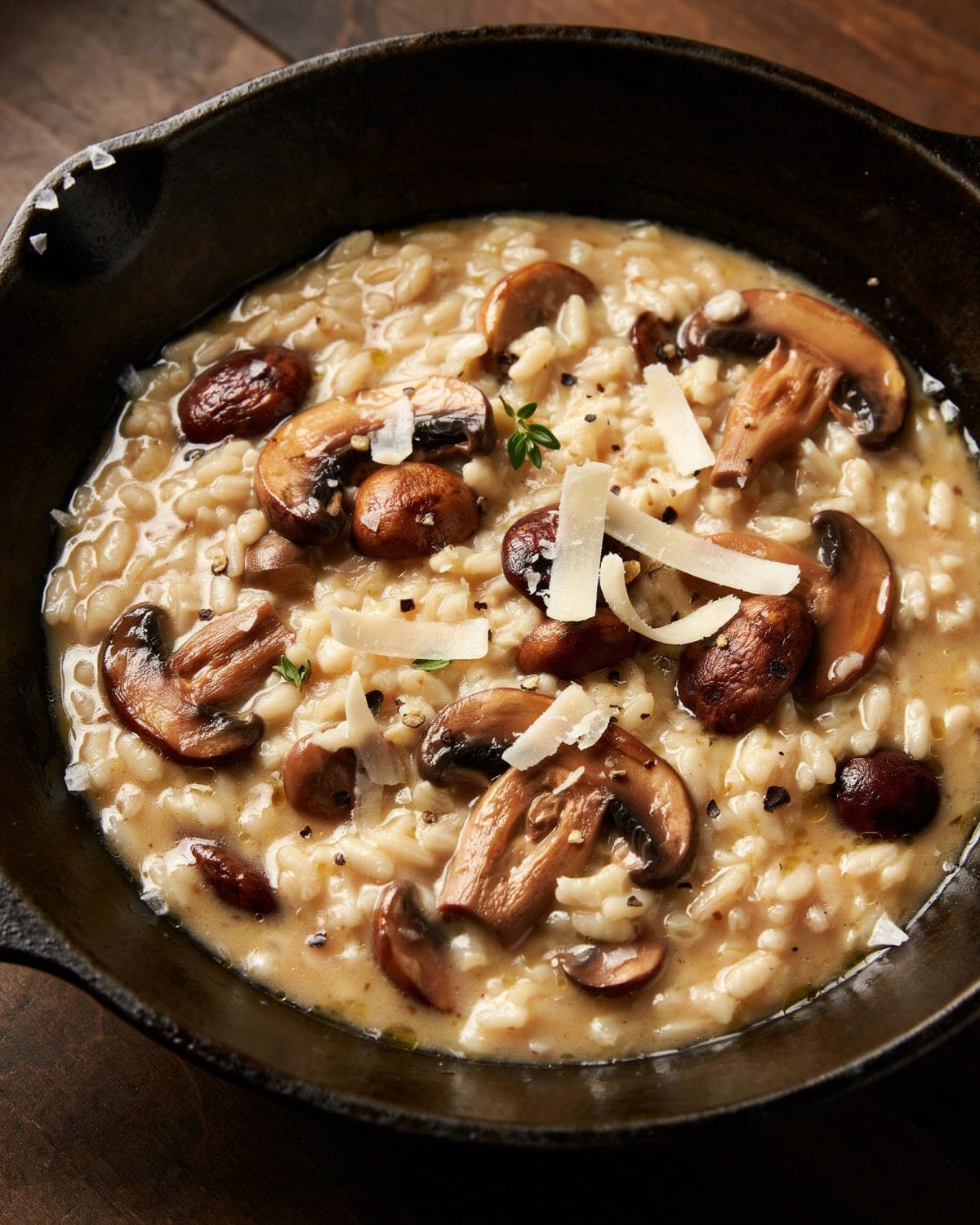
The Italians have a word for the finished texture — all'onda, "like a wave" — and that's the target: spoon the risotto onto a plate, tilt it, and it should ripple back slowly, like the tide going out. Everything in this version is built to get you there on a weeknight, with one saucepan and one wide skillet to wash.
Risotto forgives almost everything except hurry.
Why This Works: The Starch Science
Risotto's creaminess is chemistry, not cream. Arborio is milled so its outer layers are scuffed while its center stays chalky and dense, and Harold McGee explains in On Food and Cooking why that structure is exactly what you want: gentle heat plus steady abrasion coaxes starch out of each grain — amylose to thicken the surrounding liquid, amylopectin for that glossy cling — until the pan becomes its own sauce. No cream, ever.
Three details make or break it. Toasting: America's Test Kitchen found that a minute or two of toasting sets the grain's outer layer so the rice releases starch slowly instead of dissolving into porridge. Broth temperature: Cook's Illustrated tested cold versus hot stock and found cold additions stall the cooking unevenly — I hold mine at a bare simmer, about 180°F (82°C), for the entire cook. And the finish: the Italian mantecatura, beating cold butter and finely grated Parmesan into the rice off the heat, creates a true emulsion. Rice gives structure, starch gives body, butter and cheese give the shine.
What Most Recipes Get Wrong
Most risotto recipes I've cooked are written for six servings, and the instructions quietly assume that scale. Cut them in half and three things break. The liquid: a recipe calling for 1-cup ladles and 5 to 6 cups of broth expects a big pan with real thermal mass — at ¾ cup of rice, those ladles drown the rice and you stir porridge. The stirring: "stir constantly" is actively harmful at small scale, because the grains grind against each other and burst — that's the glue. The clock: full-size batches run 20 to 25 minutes, but a two-serving batch finishes between 16 and 18, and every minute past al dente is a minute toward baby food. One mistake isn't about rice at all: mushrooms added raw to the pan steam gray and flavorless instead of searing brown. Sear them hard, hold them out, fold them back at the end. Halving ingredients is arithmetic. Halving the technique — ladle size, stirring rhythm, clock — is what nobody writes down.
Chef's Tips and What I've Learned
Risotto doesn't reward attention; it repays it.
Chef Augustin's Tip: Grate the Parmesan on a Microplane. Coarse cheese melts slowly and strings; the fine snow melts into the emulsion in seconds, which matters when you're working off the heat.
Chef Augustin's Tip: Warm your bowls. Risotto loses its wave in a cold bowl faster than anywhere else. Thirty seconds under hot tap water buys you minutes at the table.
Chef Augustin's Tip: Taste the broth before it meets the rice. If it's already robust, season lightly early and finish the seasoning at the end. Parmesan brings plenty of salt, and it's easier to add than to undo.
What I've learned cooking this on repeat: the recipe is mostly technique, so shop small and buy well. One bunch of arugula with lemon, the glass of Pinot Grigio you cooked with, two shallow bowls — that turns dinner into an evening. The night I stopped chasing extra ingredients and started chasing texture was the night this became a regular instead of a project.
Your Mushroom Risotto Questions, Answered
Can I make mushroom risotto for two without wine?
Yes. Swap the ½ cup (120 ml) of wine for ½ cup of broth plus 1 teaspoon of lemon juice or white wine vinegar, added at the same point after toasting. The acid matters more than the wine itself — it keeps the starch in check so the finished dish tastes bright instead of flat. Skipping it entirely still works, but expect a rounder, heavier bowl.
What can I substitute for arborio rice?
Carnaroli is my first swap: 1:1 by volume, holds its bite confidently, and forgives a distracted minute at the stove. Pearl barley works too but needs 10 to 15 extra minutes and a few more ladles of broth; the result is nuttier and chewier. Sushi rice gets you close to creamy in a pinch. Long-grain rice like basmati will not work — those grains stay separate by design, so no stirring coaxes out the starch.
Is mushroom risotto for two a balanced dinner?
I think of it the way an Italian grandmother would: a modest bowl of rice, mushrooms, broth, and cheese served as a complete main, not a side. One batch here uses ¾ cup (150 g) of rice, 8 oz (225 g) of mushrooms, and about 2 tablespoons of butter split across two servings — dinner proportions, not restaurant mega-bowls. Round out the plate with a bitter-green salad or roasted asparagus, which is how I serve it most weeknights.
Can you freeze mushroom risotto?
I don't recommend it. Risotto is an emulsion — rice starch suspended in broth, butter, and cheese — and freezing breaks that suspension: the water separates on thawing, the grains split, and you're left with broken rice in a watery puddle. Refrigerate instead (see below). If you do end up with extra, repurpose it: chilled risotto rolled into balls around a cube of mozzarella and fried makes supplì, leftover risotto's best second act.
How long does mushroom risotto last in the fridge?
Cool it quickly, then store it airtight for 3 to 4 days — the standard window for cooked leftovers, rice included. Reheat low and slow in a pan with a few tablespoons of broth or water, stirring until it's steaming all the way through and loosened back to a flowing consistency. The texture will be denser than night one, since rice keeps drinking liquid in the fridge, but fresh Parmesan and black pepper bring most of it back.
What should I serve with mushroom risotto for two?
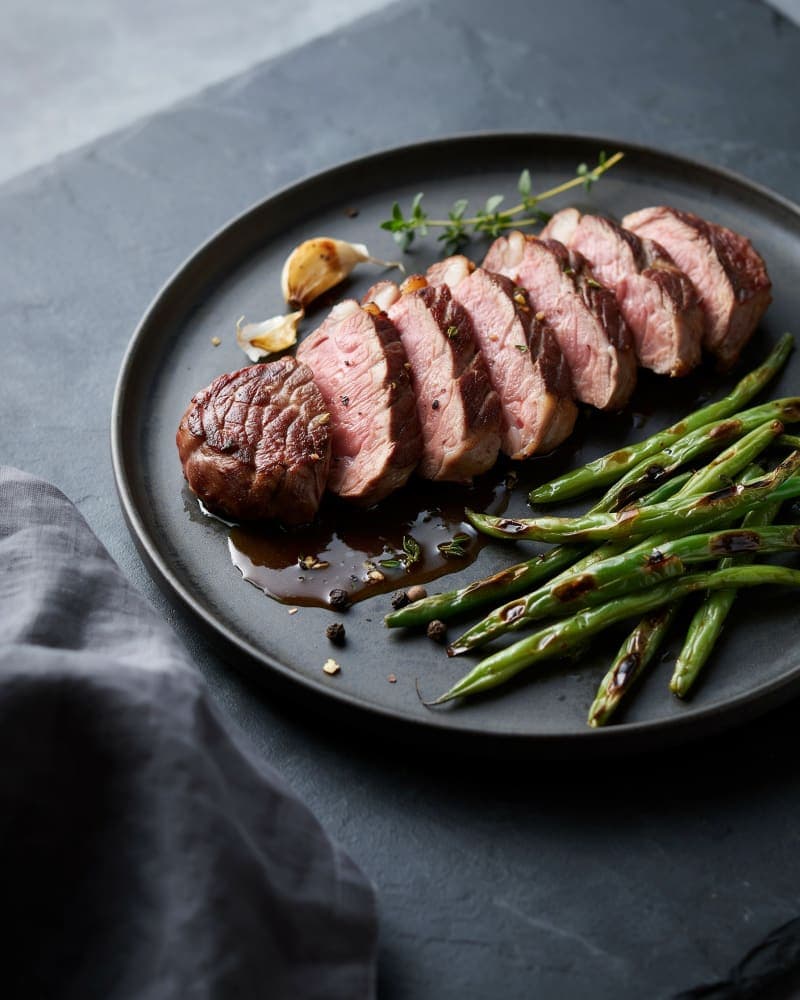
Contrast is the whole plan. A bitter greens salad — arugula or frisée with a sharp lemon vinaigrette — cuts through the richness. For something warm, asparagus roasted at 425°F (218°C) for 10 to 12 minutes with olive oil and lemon keeps the evening easy, and blistered green beans with garlic take 8 minutes in the same skillet while the risotto rests. Pour the same crisp Pinot Grigio you cooked with. Skip the bread; the rice is the starch.
Two Bowls, No Leftovers
The window over the stove fogs up, the pots go in the sink, and the table holds two warm bowls of something that ripples when tilted. One of you reaches for the Parmesan without asking. This is the easy date-night dinner I cook most often — no reservation, no clock to beat, just forty minutes and a wooden spoon doing exactly what you ask of them. The wave waits for one thing only: you, at the table.