Article and tips
A slow cooker built for six will punish you for cooking for two — the food scorches against too much empty surface, and rice turns to glue before the chicken is safe to eat. The fix isn't a smaller recipe crammed into a big pot; it's the right volume in the right vessel with the rice added at the right moment. That last part is where nearly every recipe I read while writing this went quiet.
Every competitor on the first page of Google treats "for two" as code for "cook the same big batch and eat it twice." I don't want leftovers guilting me from the fridge on Thursday. This recipe is scaled honestly for two dinner plates, and the one thing those top results miss — when to add the rice so it stays fluffy instead of dissolving — is the whole game.
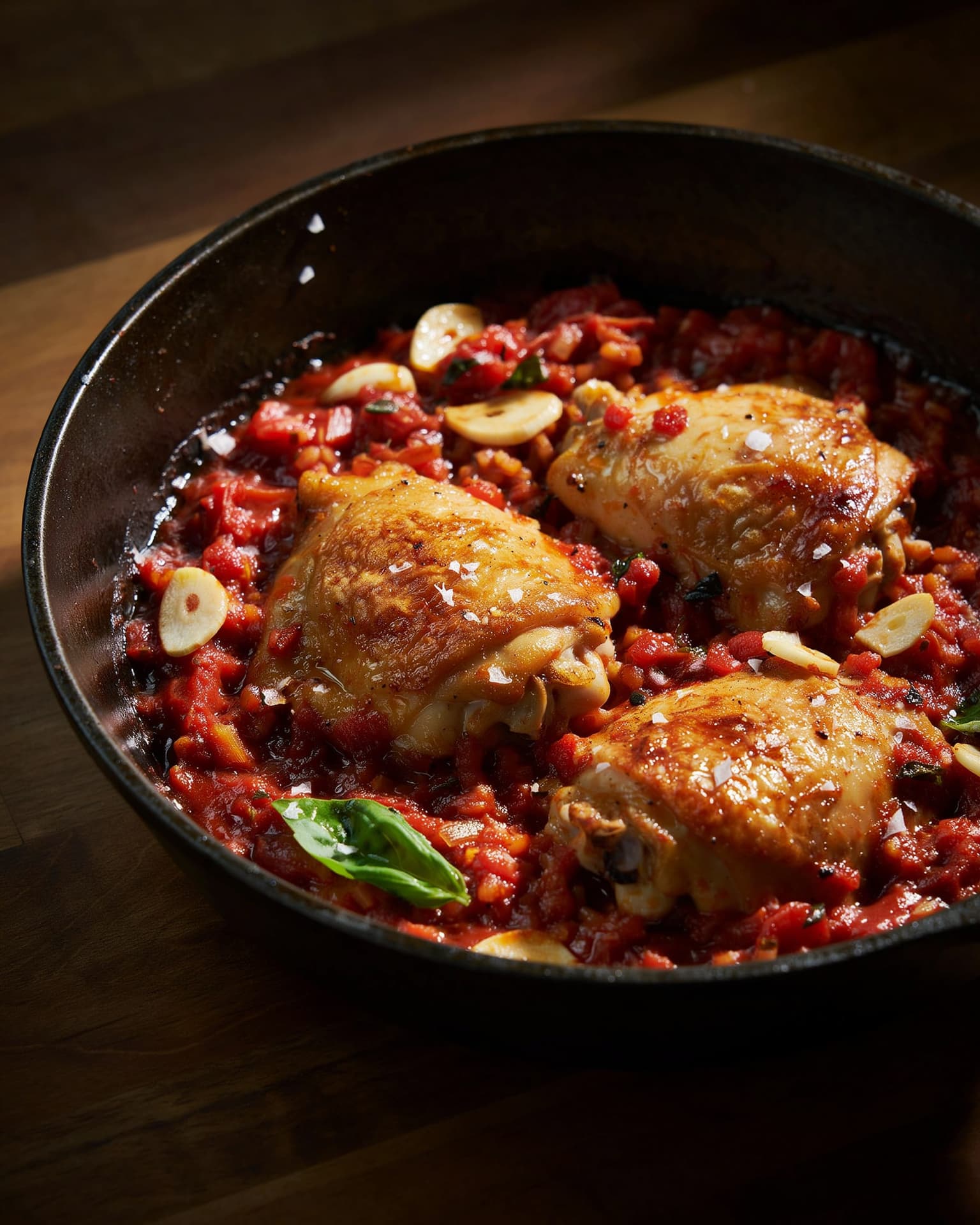
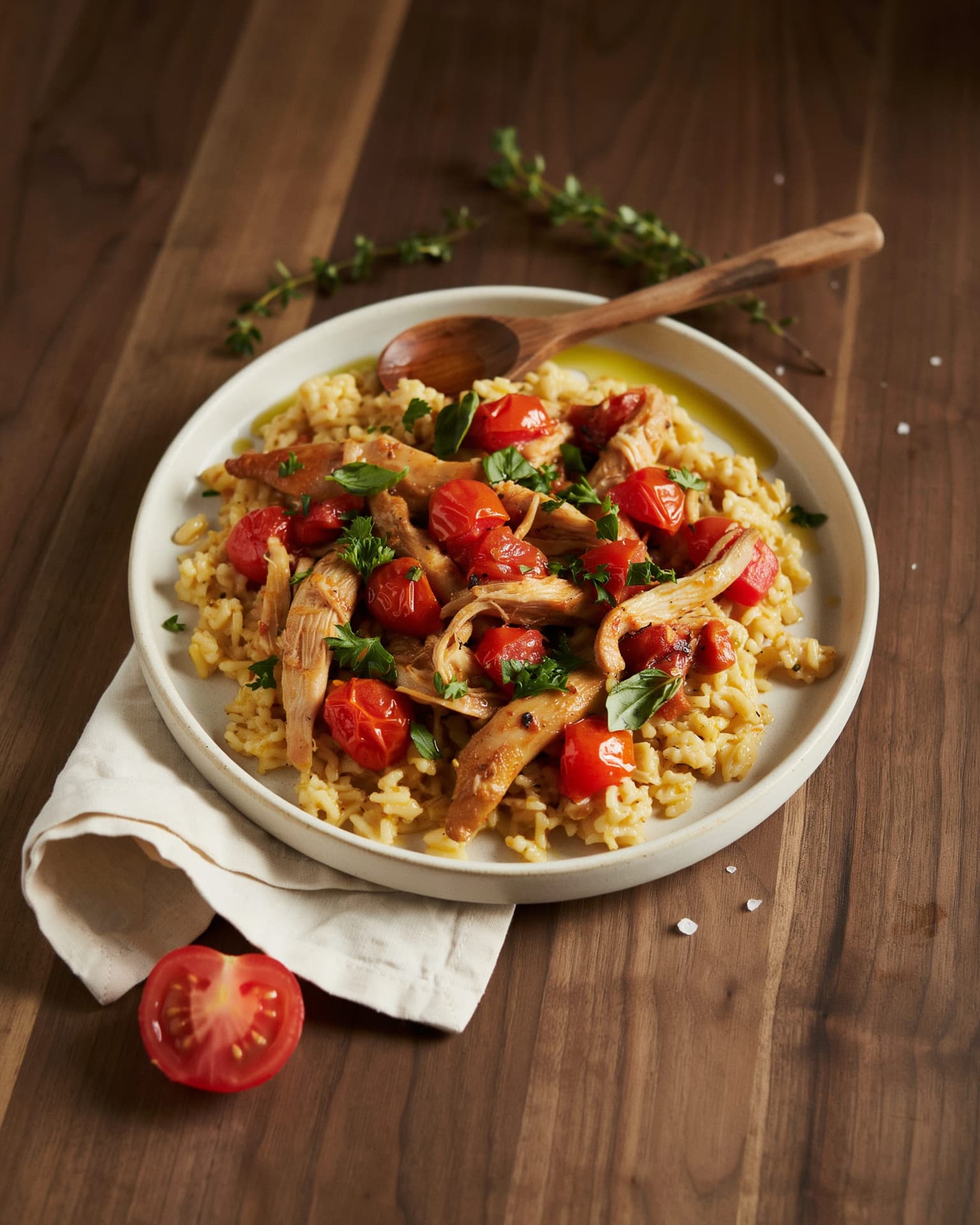
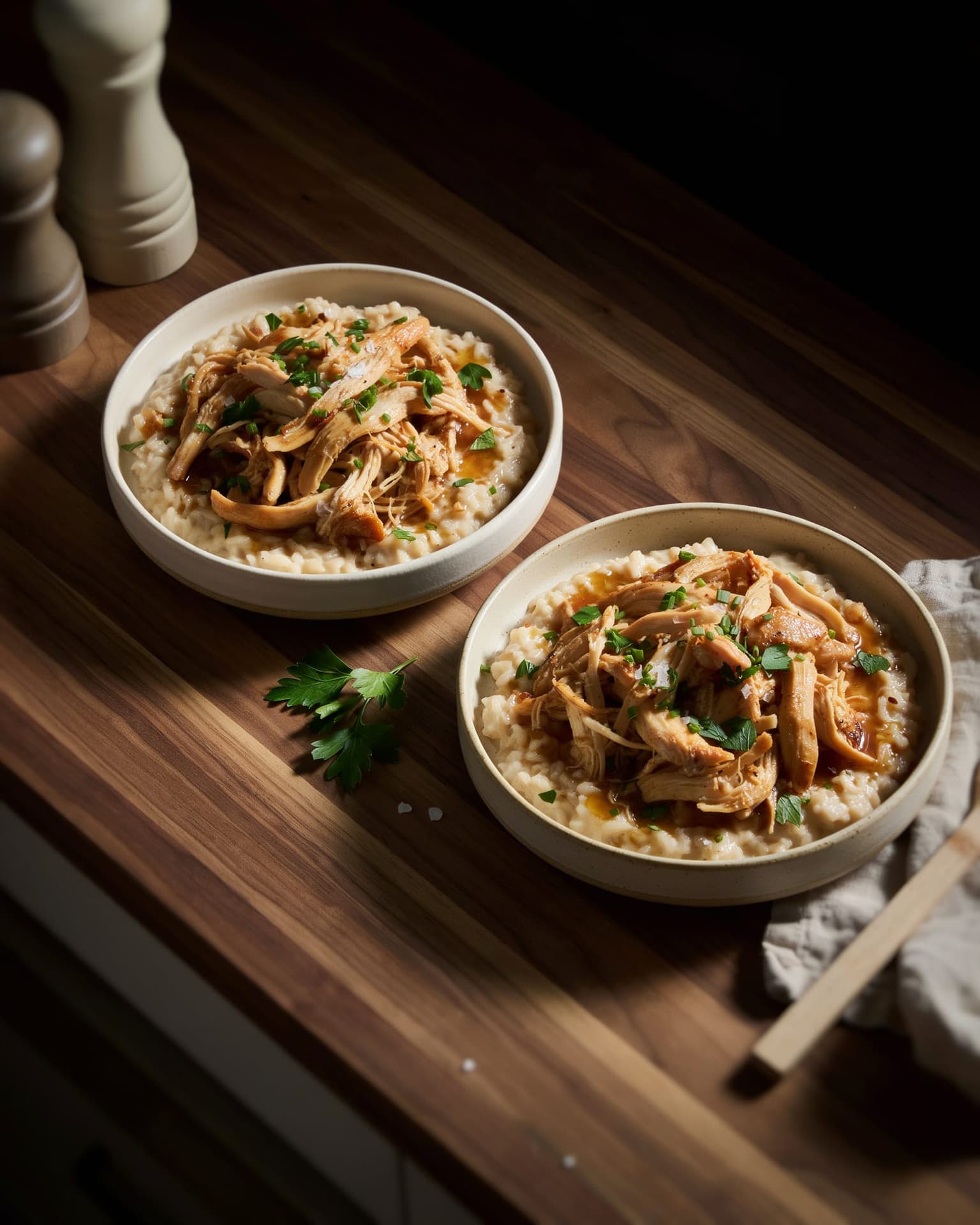
The result is chicken breast that shreds under a fork, rice that drank up every bit of the garlicky tomato broth, and a pot small enough to wash in thirty seconds. You start it, you leave, you come home to dinner.
Why This Works
The slow cooker is a moisture trap. Because the lid seals in steam, chicken breast — normally the fussiest cut to keep juicy — braises in its own liquid and never crosses the line into dry. The USDA safe temperature for poultry is 165°F / 74°C, and in a low, humid environment the meat reaches that number gently, so the muscle fibers don't seize and squeeze out water the way they do in a screaming-hot pan.
Rice is the variable everyone gets wrong. Uncooked long-grain rice needs roughly 90 minutes of moist heat — a fraction of the chicken's cook time. If you dump it in at the start, it turns to paste. So the chicken cooks nearly to done first, then the rice joins for the final stretch, absorbing the accumulated tomato-and-garlic liquid instead of plain water. That liquid is loaded with dissolved fond from a quick sear, which brings me to the one step you should not skip.
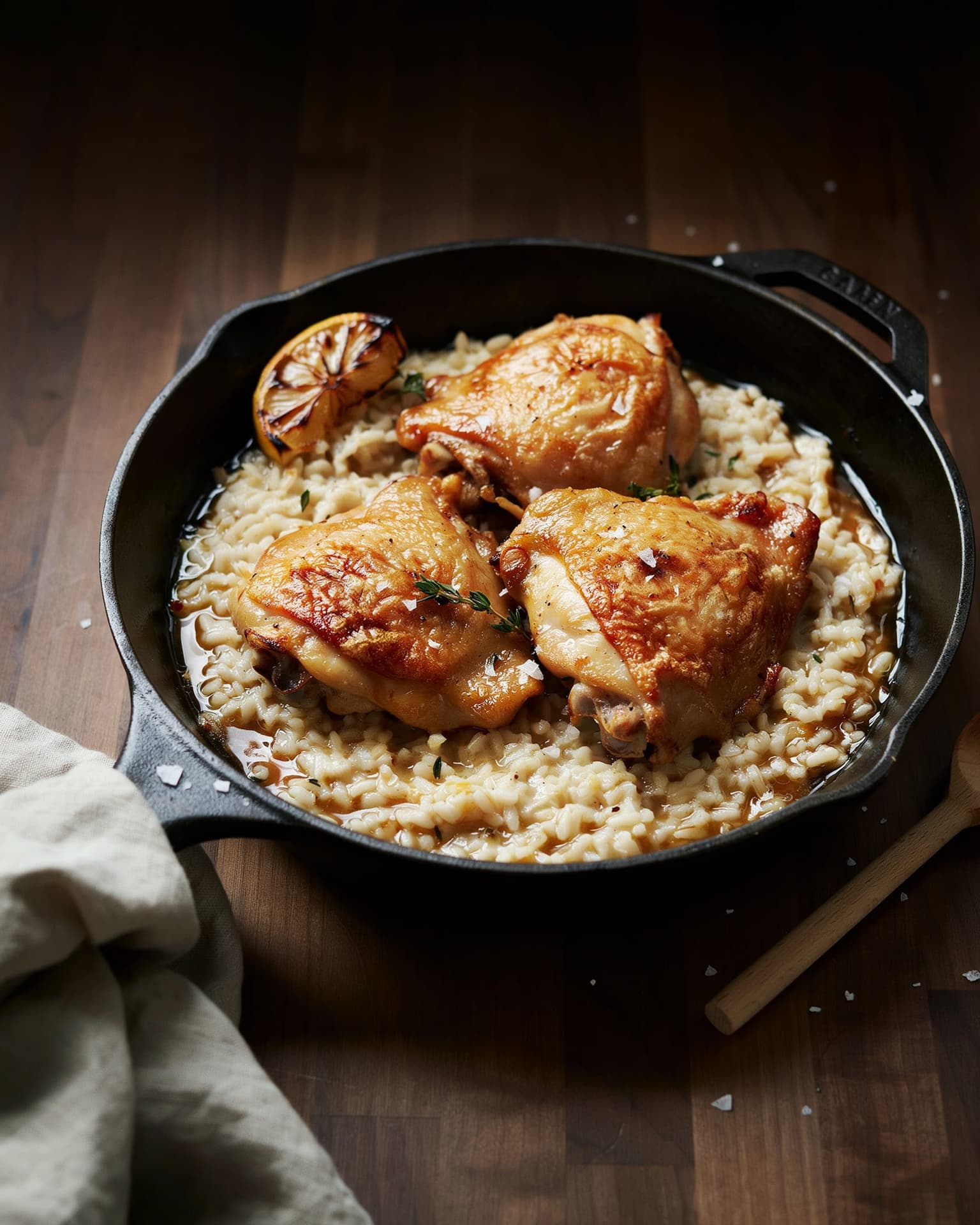
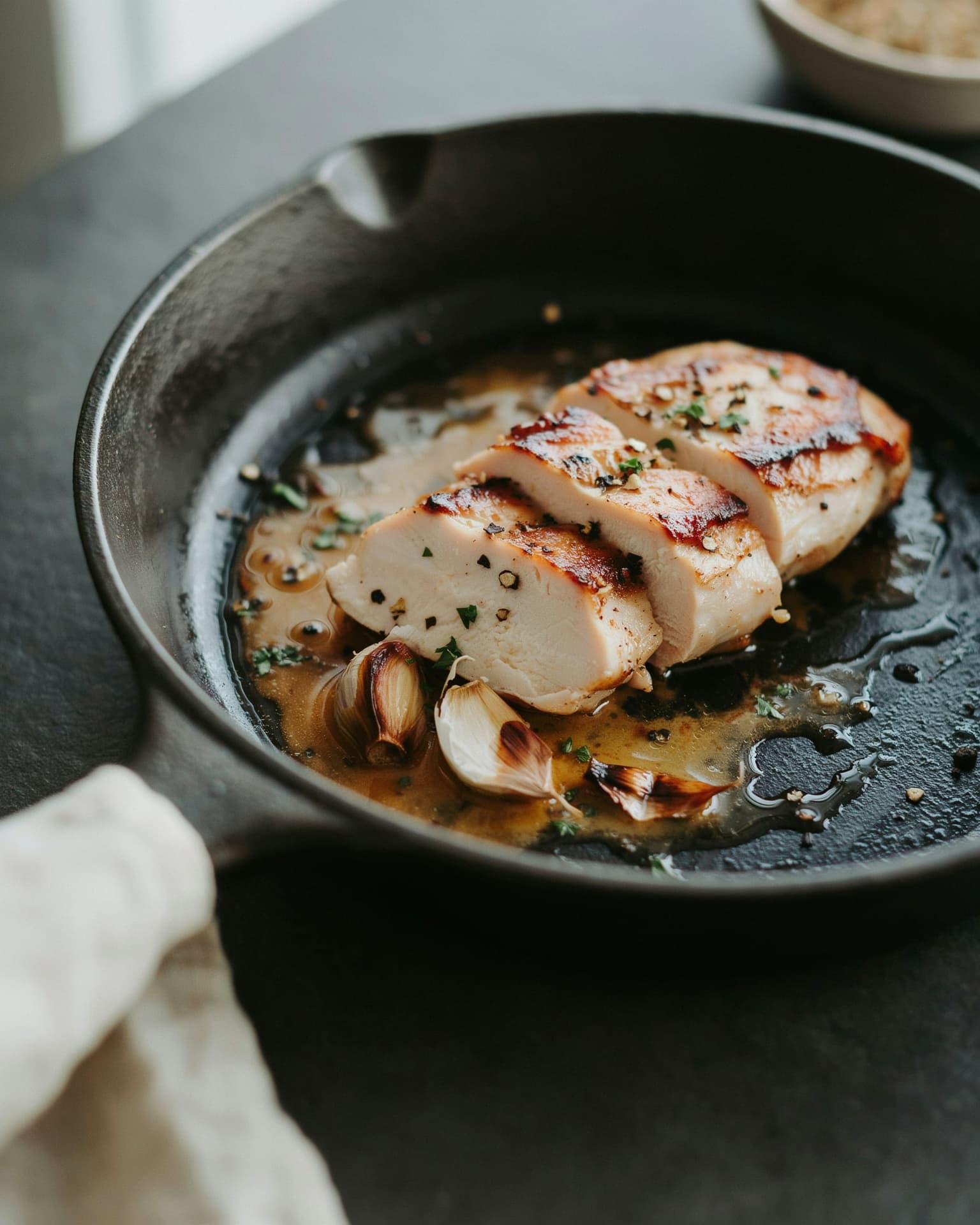
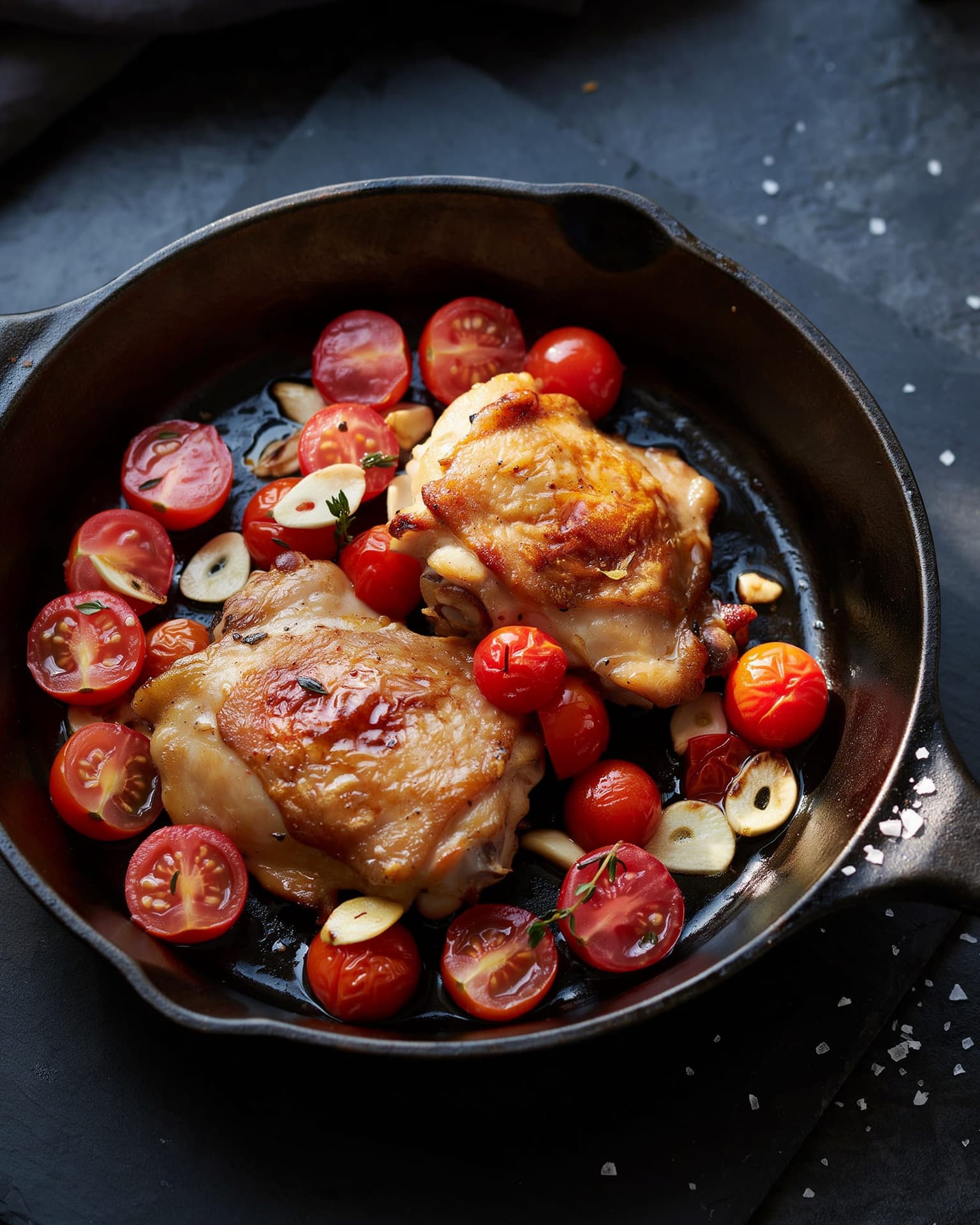
Searing the chicken before it goes in the pot builds a fond — those browned bits — that a slow cooker alone can never create. I've made this both ways, and the seared version tastes twice as deep. The Maillard reaction that browns the surface only happens above about 300°F / 149°C, a temperature the slow cooker never reaches. Two minutes in a hot skillet buys you the entire flavor foundation.
What Most Recipes Get Wrong
They add the rice at the start. Scroll through the top slow cooker chicken-and-rice recipes and you'll find rice going into the pot alongside the raw chicken for the full 5 to 6 hours. That's how you get the gummy, blown-out grains everyone quietly complains about in the comments. Rice does not need six hours — it needs about ninety minutes of moist heat. By staging it in near the end, the grains stay distinct and soak up a broth that's already rich with rendered chicken and dissolved fond, not the thin liquid you started with.
The second miss is scale. A batch sized for a 6-quart cooker spread thin across the bottom scorches and overcooks. For two people, use a 1.5 to 2-quart slow cooker, or an insert that keeps the food at least two-thirds deep. Volume, not just quantity, protects your dinner.
Chef's Tips & What I've Learned
The difference between good and great here is that two-minute sear. Skip it when you're rushed and the dish is still fine — just flatter.
Chef Augustin's Tip: If your slow cooker runs hot (some new models do), check the chicken at 3.5 hours instead of 4. A thermometer costs less than a ruined dinner and removes all the guesswork — 165°F / 74°C means done, full stop.
Chef Augustin's Tip: Stir a spoonful of cold butter into the finished rice off the heat. It emulsifies into the residual liquid and gives the whole pot a glossy, restaurant-style finish that costs you nothing.
Salt the chicken, then salt the broth, then salt at the end. Seasoning in one big hit at the finish never reaches the center of the meat.
A small slow cooker is one of the best tools a two-person kitchen can own — it turns a workday into a meal you didn't have to stand over.
Can I use a 6-quart slow cooker for a recipe this size?
You can, but you'll need to watch it. A large cooker spreads a small amount of food thin across the base, right over the heating element, which leads to scorching and overcooked edges. If it's all you have, prop the food deep on one side and check for doneness about 45 minutes early. For two people, a 1.5 to 2-quart cooker is the sweet spot — the food stays at least two-thirds deep and cooks evenly.
Why does my slow cooker rice always turn out mushy?
Two reasons: timing and starch. Rice only needs about 90 minutes of moist heat, so adding it at the start of a 5-hour cook guarantees a gummy result. Add it in the final 90 minutes instead. Second, rinse the rice under cold water until it runs clear before adding it — this removes surface starch, the culprit behind that paste-like texture. Push the rice fully under the liquid so every grain hydrates evenly.
What foods should you not put in a slow cooker?
Delicate items suffer in long, moist heat. Add dairy like milk or cream in the last 30 minutes or it can curdle. Fresh herbs, frozen vegetables, and seafood go in near the end — seafood cooks in minutes and turns rubbery over hours. Raw chicken skin never crisps in a slow cooker, so remove it or sear it first. And avoid adding rice or pasta at the start, since both overcook long before the meat is safe.
Can I make this with ground beef instead of chicken?
Absolutely, and it's a great weeknight swap. Brown 12 oz of ground beef in the skillet first, cooking it to a safe internal temperature of 160°F / 71°C and draining the fat. Skip the chicken searing step and add the browned beef straight to the slow cooker with the base ingredients. Because the beef is already cooked, you can shorten the initial cook to 2 hours on LOW before adding the rice. The tomato-garlic broth works just as well.
How long does this keep, and can I freeze it?
Stored in an airtight container in the refrigerator, it keeps 3 to 4 days — perfect if your "for two" is actually one person eating twice. Rice-based dishes freeze acceptably but the grains soften on thawing, so I prefer to refrigerate. Reheat gently with a splash of broth to loosen the rice, and heat until piping hot (165°F / 74°C) throughout. Stir midway so the center warms evenly rather than the edges overheating.
By the time you lift the lid, the kitchen smells like garlic and slow-cooked tomato, and there's just enough for two plates — no giant pot staring you down, no Thursday obligation. Set the bowls on the table while it's still steaming and let the fork do the rest.