Article and tips
Most slow cooker pasta recipes tell you to dump raw pasta in with the sauce and walk away for four hours. I've done it, and I've eaten the gluey result, and I want to save you that dinner. My angle here — the one thing the top-ranked crockpot pasta pages skip — is that the pasta should never spend hours in the slow cooker at all. The sauce slow-cooks; the pasta joins at the very end. That single change is the difference between a ragu you'd serve to company and a bowl of paste.
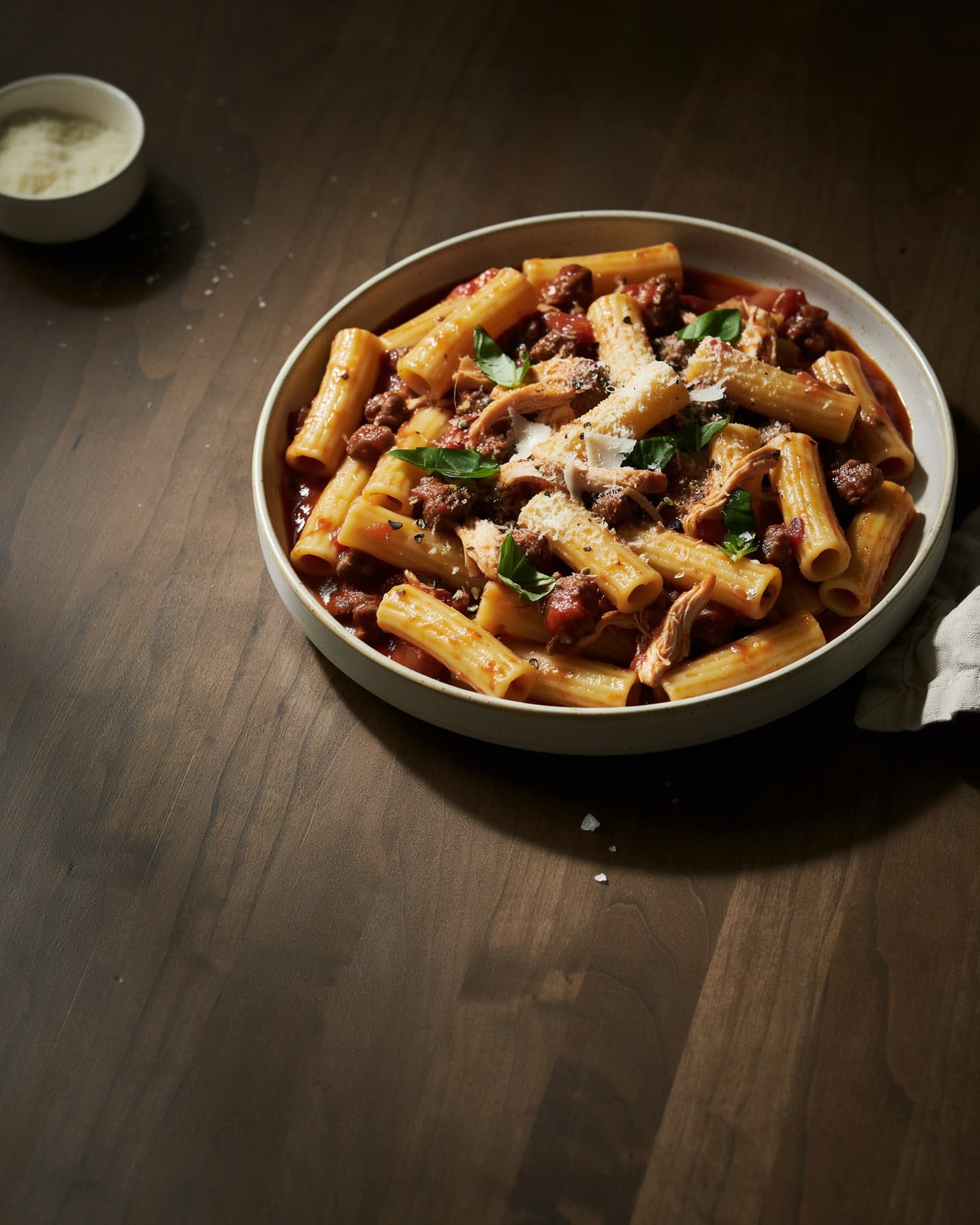
This version leans on two proteins because a mix of seared chicken breast and ground beef gives you both structure and richness in a two-person portion. (I keep the beef modest — a little goes a long way when it's browned properly.) You do about fifteen minutes of hands-on searing and chopping in the morning, then the slow cooker does the patient work while you're out. Twenty minutes before dinner, the pasta goes in, and you're eating a sauce that tastes like it simmered all day. Because it did.
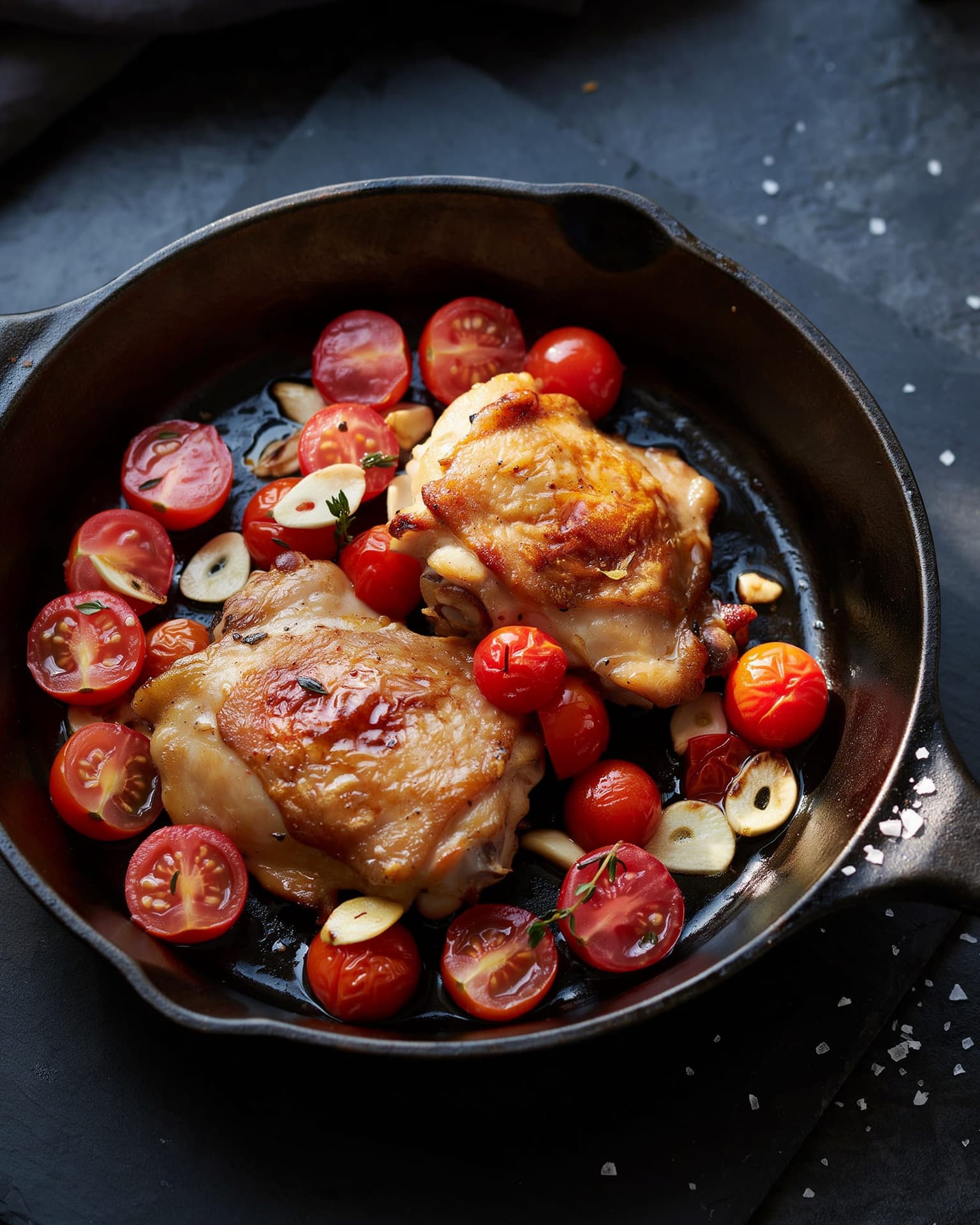
Deglaze the searing pan and pour every brown fleck into the crock — that fond is half your flavor.
Why This Works
The searing step is non-negotiable, and here's the food science. When you sear the chicken and brown the ground beef, you trigger the Maillard reaction — the cascade of browning that builds hundreds of new savory compounds you simply cannot get from raw meat stewed in liquid. A slow cooker holds a gentle, moist heat (typically around 195–210°F / 91–99°C on low), which is perfect for melting collagen and marrying flavors, but it is far too wet and too cool to brown anything. So you build the browned flavor in a hot skillet first, then hand the sauce off to the slow cooker to develop depth over hours.
The second principle is starch management. Dried pasta releases starch as it cooks. In a fast pot of boiling water that starch disperses and washes away; in a slow cooker it has nowhere to go, so it thickens into glue and the pasta overcooks past the point of return. By adding the pasta only in the last 20–30 minutes on high — with enough hot liquid to actually cook it — you get properly al dente noodles coated in sauce, not cemented into it. I've tested both methods in the same crock, and the late-add pasta wins every time.
What Most Recipes Get Wrong
The crockpot pasta pages ranking above this one nearly all commit the same sin: they add raw pasta at the start and cook it for hours. That's how you get the mushy, starch-cemented result the People Also Ask box is quietly worried about ("Can I put raw pasta in a slow cooker?" — yes, but not for four hours). Pasta cooks in minutes, not hours. The slow cooker's job is the sauce. Treat the pasta like the finishing move it is — added late, cooked briefly, pulled at al dente — and you sidestep the single biggest failure of the entire genre.
Chef's Tips & What I've Learned
Chef Augustin's Tip: If your sauce looks thin before the pasta goes in, don't panic — the dried pasta will drink up a surprising amount of liquid. Add the pasta first, wait ten minutes, then decide whether to add broth. It usually corrects itself.
A cold slow cooker insert can add 30 minutes to your cook time; if you can, let it come to room temperature before you fill it.
Chef Augustin's Tip: Reserve a splash of broth to loosen leftovers. Slow cooker pasta tightens overnight as the starch sets, and a tablespoon of warm liquid brings it right back the next day.
Undersalt the sauce early and correct at the end — the flavors concentrate over hours, and salt you can't take back.
Can I put raw pasta in a slow cooker?
Yes, but timing matters enormously. Add dried pasta only in the final 20–30 minutes on the high setting, never at the start. Dried short pasta like penne needs enough hot liquid to actually cook — about 3/4 cup broth per 6 oz of pasta — and it must be pulled at al dente. Left in for hours, it overcooks and releases starch that has nowhere to go, turning the whole dish gluey.
Does pasta cook well in a slow cooker?
It can, with the right approach. The sauce benefits enormously from slow cooking — 6 hours on low melts everything into a deep, cohesive ragu. The pasta itself, however, cooks in minutes and only tolerates a short window in the crock. Cook the sauce long and add the pasta late. Do it that way and slow cooker pasta rivals stovetop; do it the dump-and-go way and it disappoints.
What's the easiest way to scale this for one?
Halve every ingredient and keep the slow cook time identical — cooking time depends on temperature, not volume, so 6 hours on low still applies. Use a smaller 1.5-quart slow cooker if you have one, since a single portion in a large crock can scorch at the edges. The pasta step shortens slightly; check at 15 minutes instead of 20 for a single serving.
Can I use jarred sauce instead of canned tomatoes?
Absolutely, and it's a legitimate shortcut. Use about 1.5 cups (360ml) of jarred marinara in place of the canned tomatoes, and cut the added salt to 1/2 teaspoon total since jarred sauce is already seasoned. You'll lose a little control over texture and salt, but the searing and deglazing steps still carry the flavor. It will still work beautifully.
How do I store and reheat leftovers?
Refrigerate in an airtight container for up to 3 days. The pasta absorbs sauce as it sits, so reheat gently on the stovetop or microwave with a splash of broth or water — about 1 to 2 tablespoons per portion — stirring until loosened. I don't recommend freezing this one; cooked pasta turns grainy after thawing. The sauce alone, made without pasta, freezes well for up to 2 months.
Dim the kitchen, pour something red, and set two bowls at the table — this is the kind of dinner that fills the room with the smell of a Sunday even on a Tuesday night.