Article and tips
The best dinner for two is the one that leaves you with a single pan in the sink. Every SERP result for this search hands you a list of thirty recipes and a scroll wheel — nobody actually shows you how to cook one thing properly from sear to plate. So that's the angle: not a list, but a complete one-pan method you can repeat by memory within a week.
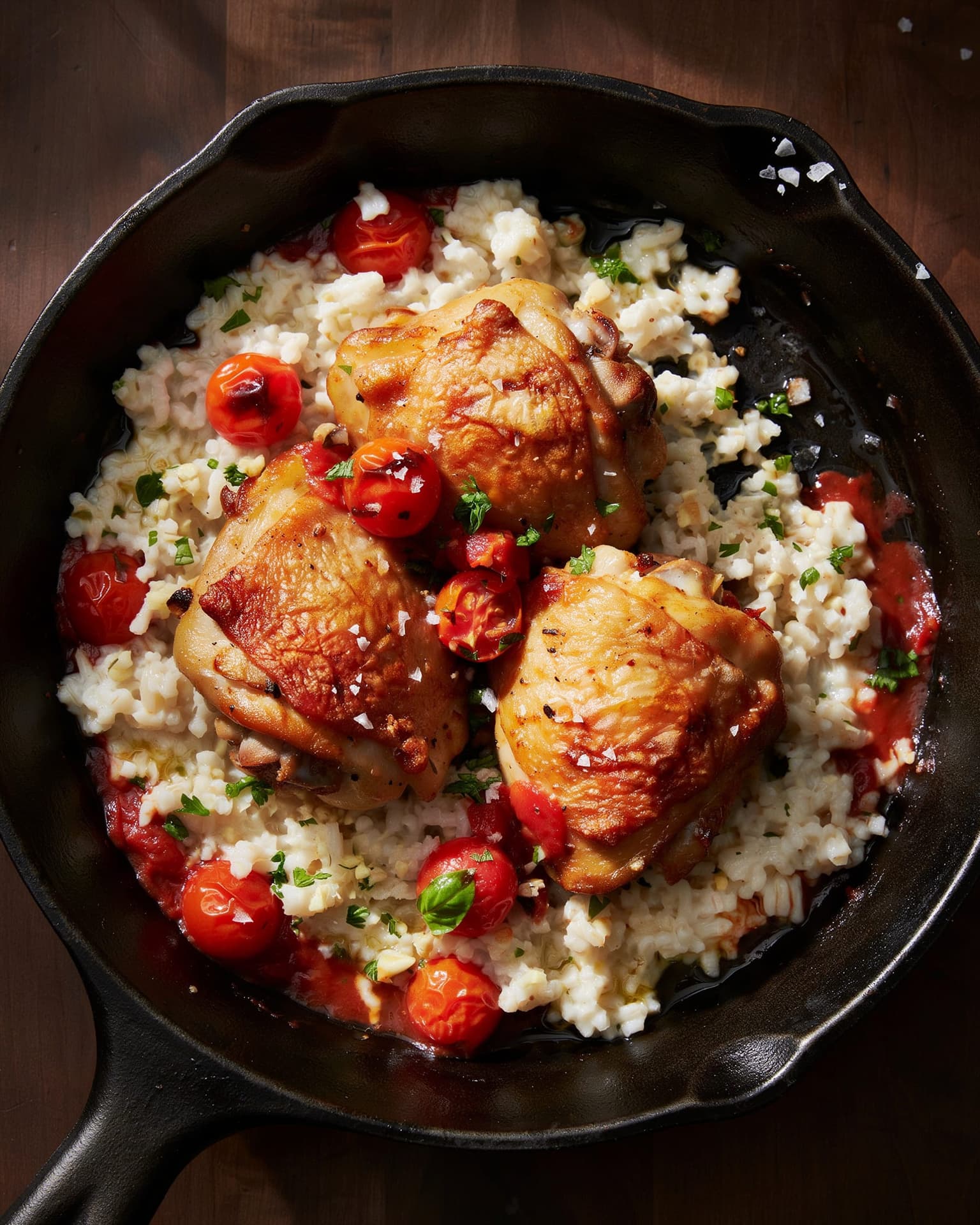
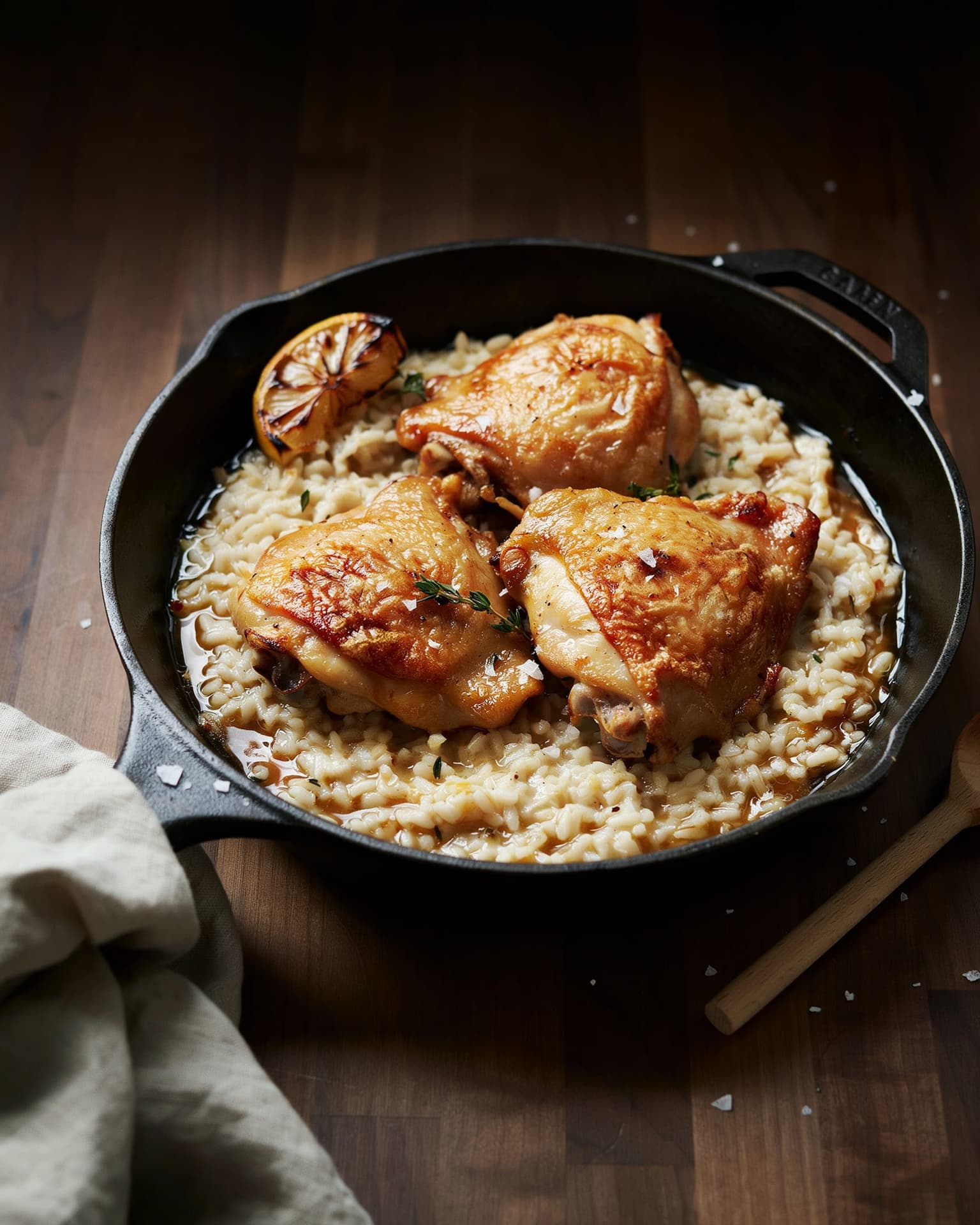
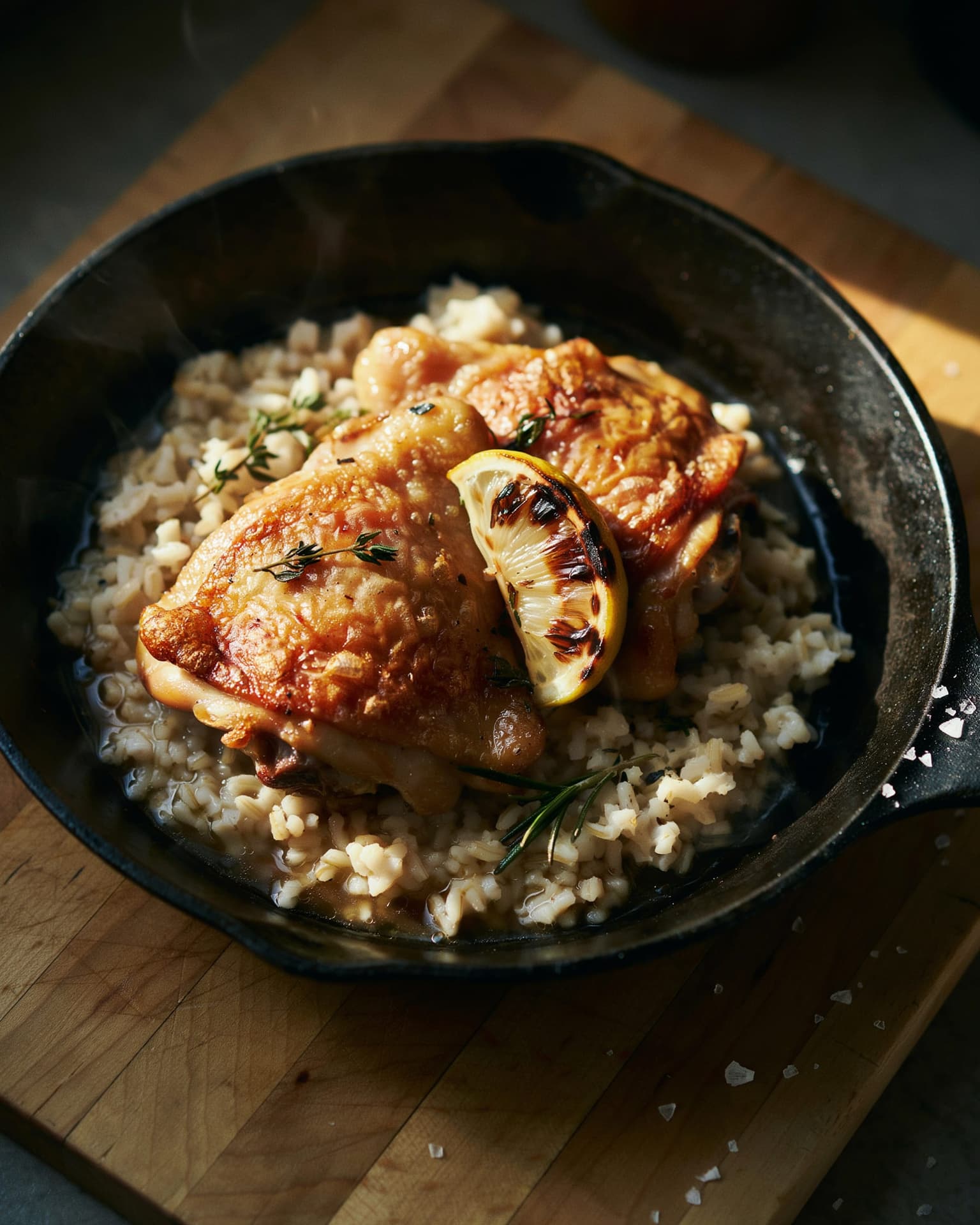
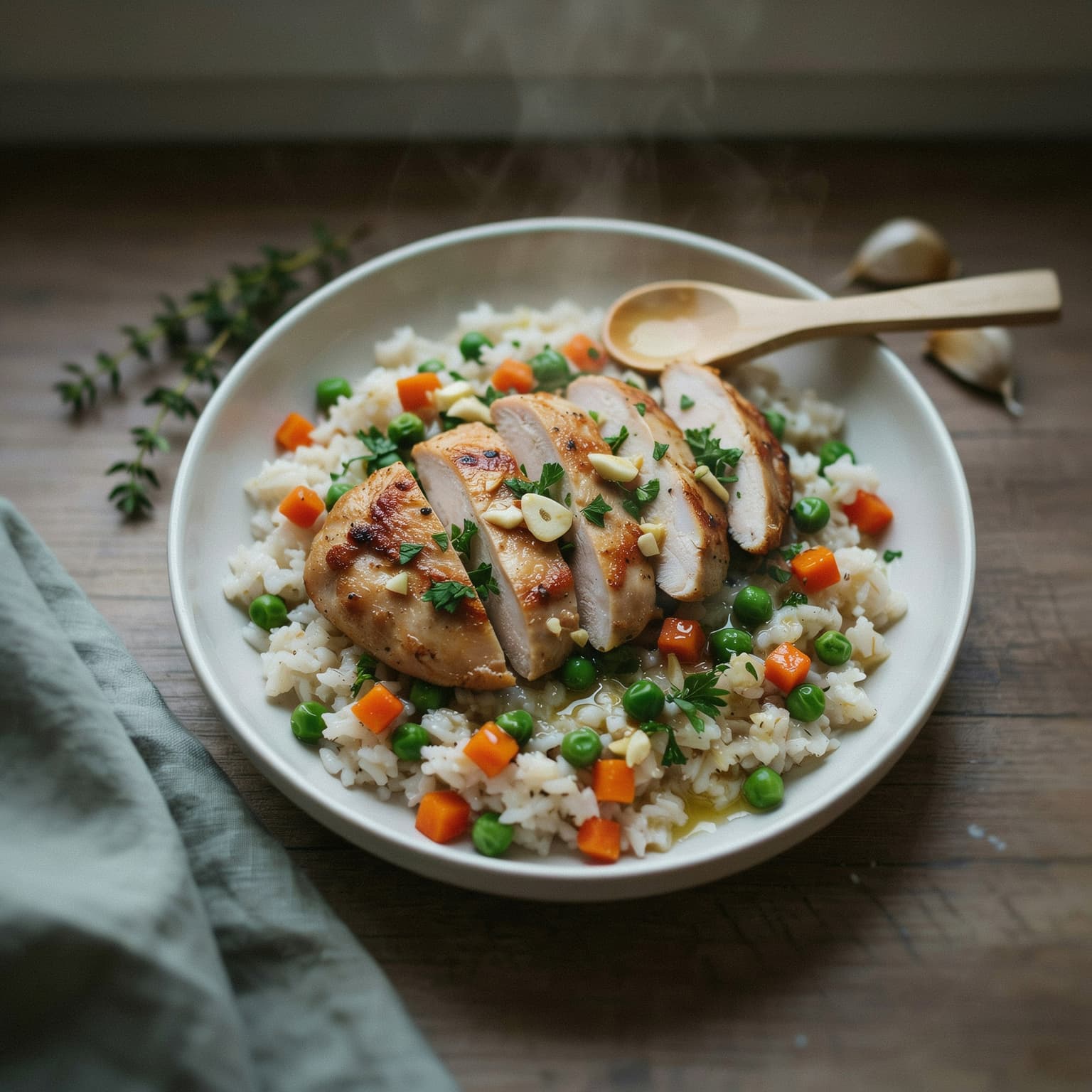
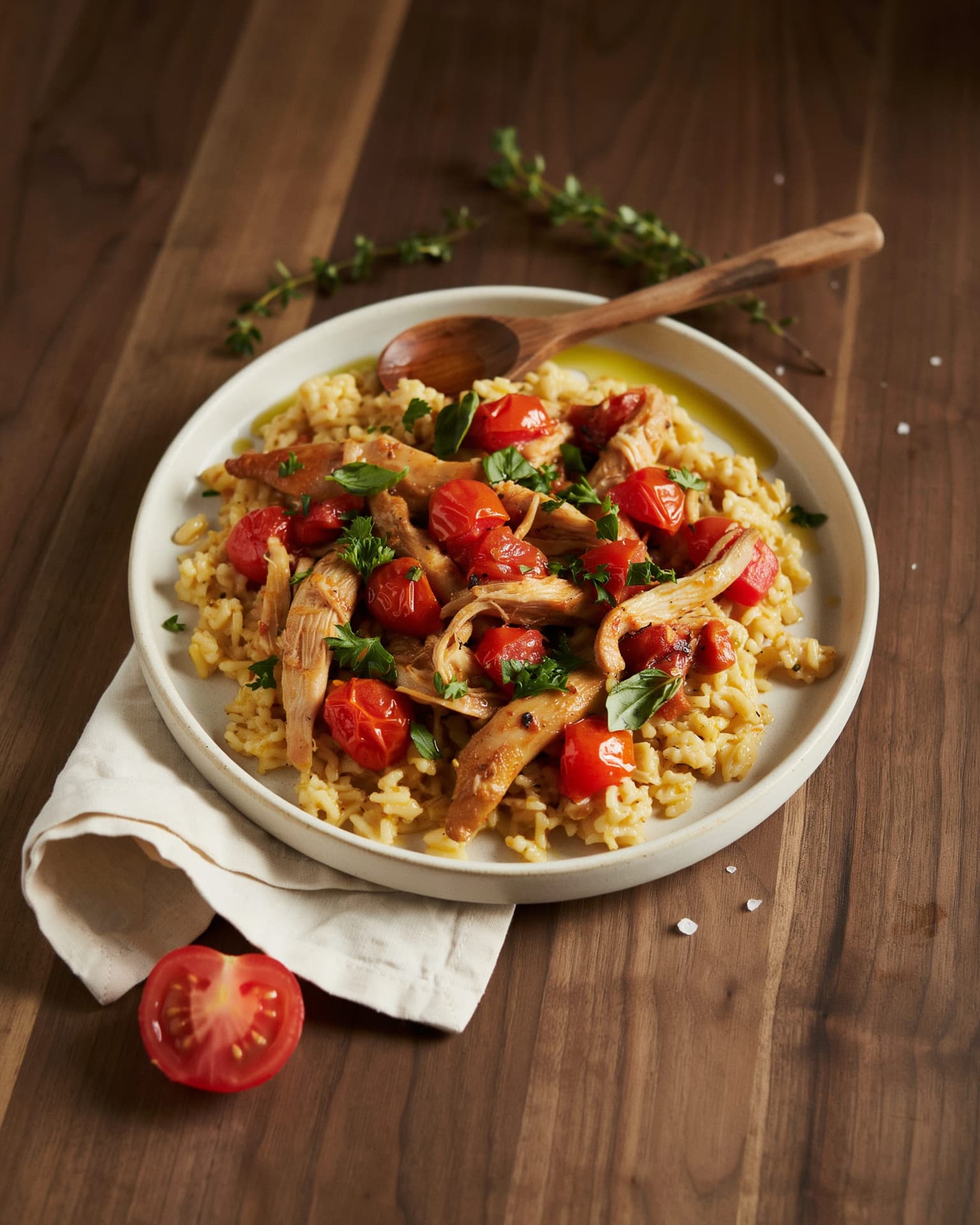
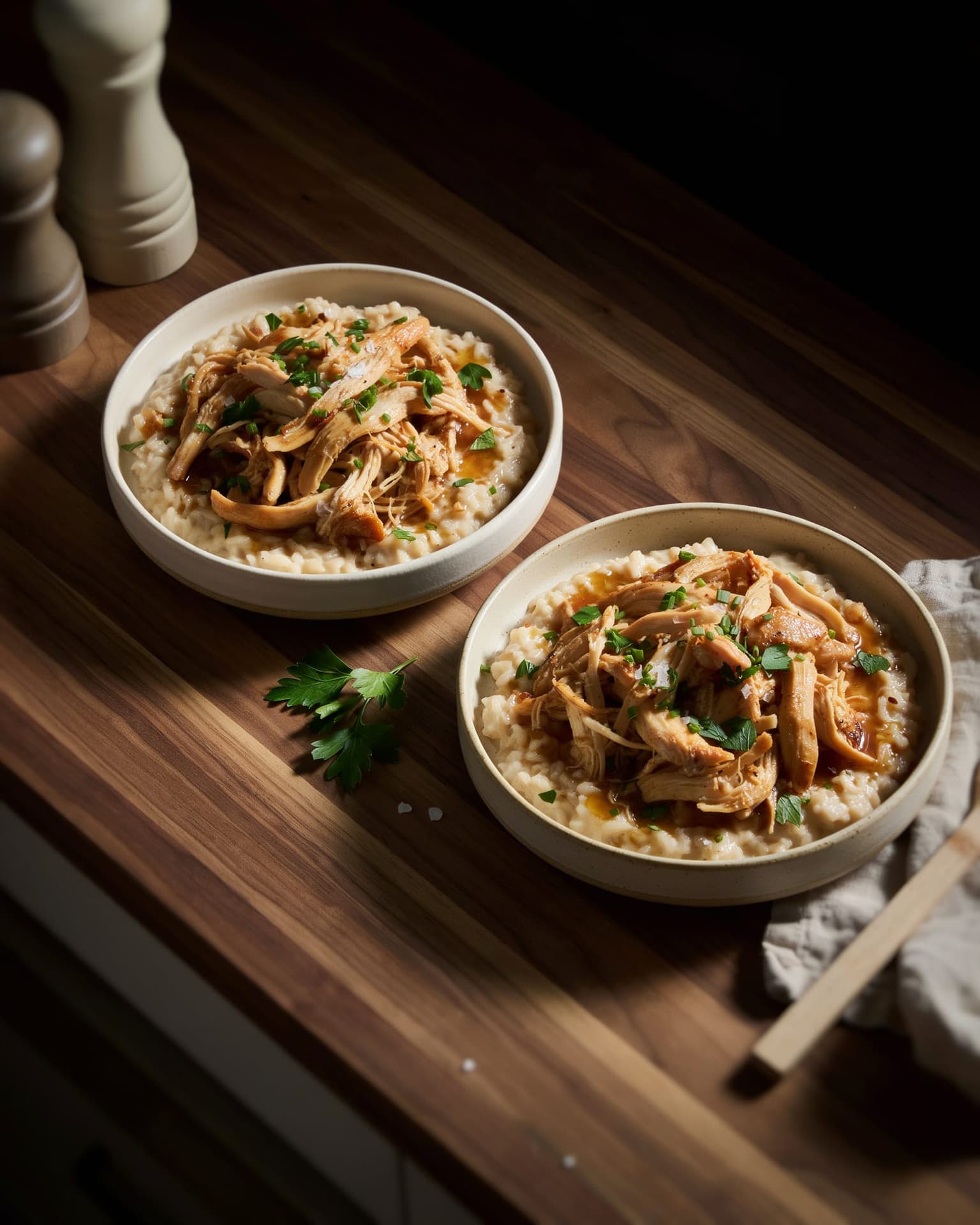
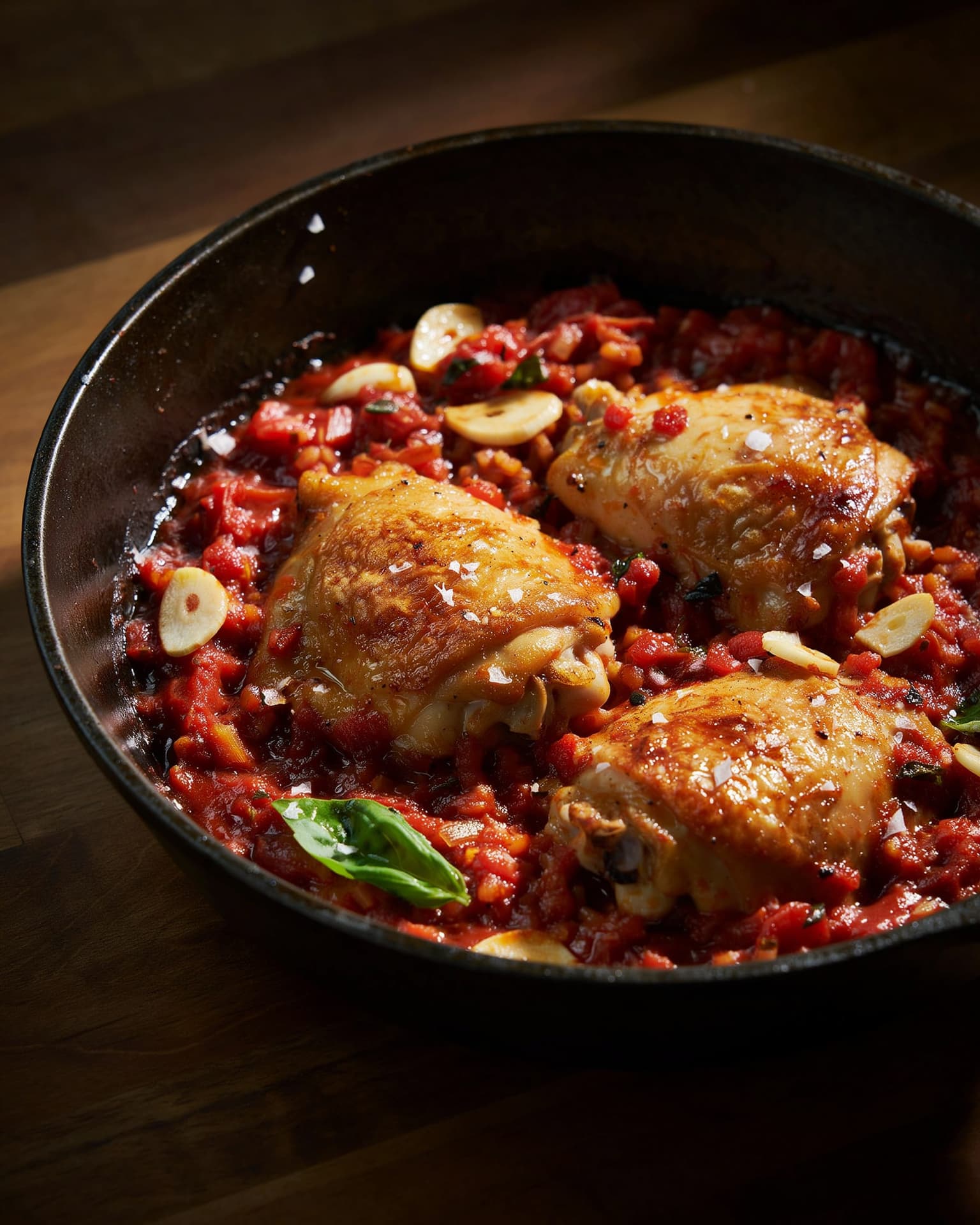
I cook this on the nights when I want real food but have zero patience for a stack of dishes. Chicken breast gets a hard sear, then the same skillet carries garlic, onion, canned tomatoes, and rice through to a soft, savory finish. The chicken rests on top, its juices dripping back into the grains. It scales cleanly to two because a 10-inch skillet is exactly the right footprint for two portions of rice — no crowding, no scorched edges.
(If you've ever made rice in a pan and ended up with a crunchy bottom and mushy top, that's a heat and ratio problem, and I'll fix it for you below.)
Why This Works
Searing is not about color for its own sake — it's about the fond, the browned film that sticks to the pan. When I deglaze with the liquid from the canned tomatoes, that fond dissolves and folds every bit of roasted flavor back into the rice. A pan you scrub too early is flavor you threw away.
The rice ratio matters more than the brand. Long-grain white rice wants roughly 1.75 parts liquid to 1 part rice when it finishes in a covered pan, because canned tomatoes bring their own moisture and acid. Acid slows starch gelatinization slightly, so I bring the liquid to a real simmer before the lid goes on — that head start keeps the grains from turning gummy. Cast iron holds about four times the heat of a thin nonstick pan, which is why the sear happens fast and the fond forms dark and even.
And the chicken? Resting it off the heat while the rice finishes means the fibers relax and reabsorb juice instead of bleeding it onto the cutting board.
What Most Recipes Get Wrong
Most "dinner for two" rice dishes tell you to dump raw chicken and rice in together and walk away. You end up with rubbery, gray chicken and either scorched or soupy rice, because a whole breast and a bed of grains cook on completely different clocks. The fix is the sear-then-nestle method: the chicken gets its crust and flavor first, then finishes gently on top of the rice where the steam cooks it without drying it out. The rice, meanwhile, gets the full simmer-and-cover treatment it actually needs. Two cooking methods, one pan, no compromise.
Chef's Tips & What I've Learned
Chef Augustin's Tip: Rinse the rice until the water runs nearly clear. That rinse removes surface starch, which is the single biggest cause of gummy, clumped grains. Thirty seconds under the tap changes the whole texture.
Chef Augustin's Tip: If your chicken breasts are wildly different sizes, butterfly the thicker one so both hit 165°F / 74°C at the same time. Uneven pieces are why one portion comes out dry.
I've made this with both canned diced and whole peeled tomatoes. Whole peeled, crushed by hand, gives a rounder, less metallic sauce because the pieces are larger and less processed — but on a rushed night, diced is completely fine and nobody will complain.
Salt the chicken, salt the rice liquid, taste at the end. Seasoning in layers is the difference between food that tastes finished and food that tastes like it needs something.
The smoked paprika is doing more than color — a scant half teaspoon adds a low, warm depth that reads almost like the dish was slow-cooked. Skip it and the rice tastes flat.
Two plates, the pan still warm on the stove, the smell of garlic and tomato hanging in the kitchen — you sit down across from someone and there's exactly nothing left to fuss over.
What is a good healthy dinner for two people?
A balanced one-pan meal like this chicken-and-tomato-rice covers the bases: 12 oz of lean chicken breast splits into two solid protein portions, the rice provides steady carbohydrates, and the frozen peas and canned tomatoes add fiber and vegetables. Because it's built in a single 10-inch skillet, you control exactly how much oil and salt go in — I use 2 tablespoons of olive oil total and 3/4 teaspoon of kosher salt for two servings, which is easy to adjust down.
What is the easiest healthiest dinner?
The easiest dinners share one trait: a single cooking vessel and pantry-stable ingredients. This recipe needs one skillet and about 40 minutes total. Everything except the chicken comes from the pantry or freezer — canned tomatoes, rice, garlic, onion, frozen peas. There's no separate pot for the rice and no roasting tray for vegetables. Sear, build, simmer, rest. That's the entire workflow, and it's the reason I can cook it on autopilot after a long day.
What is a good lazy dinner?
A lazy dinner minimizes both active time and cleanup. This one asks for roughly 12 minutes of hands-on work — searing the chicken and building the base — then the pan does the rest while covered on low heat. You get 15-18 minutes to set the table or pour a glass of wine. One pan to wash at the end. That's about as low-effort as a hot, from-scratch meal for two gets.
How to feed two people cheaply?
Build meals around one modest protein stretched with grains and pantry staples. Here, a single 12 oz package of chicken breast, a can of tomatoes, and 3/4 cup of rice feed two people generously for the cost of the chicken alone. Frozen vegetables cost a fraction of fresh and don't spoil, so you buy once and use over several dinners. Rice, canned tomatoes, garlic, and onion are among the cheapest calories in any grocery store.
Can I make this ahead or reheat leftovers?
Yes. The rice and chicken keep well in an airtight container in the refrigerator for up to 3 days. Reheat gently in a covered skillet with a splash of broth or water to loosen the rice, over medium-low, until the chicken registers 165°F / 74°C again. I don't recommend freezing the finished dish — the rice texture suffers — but you can freeze cooked, sliced chicken separately and assemble fresh.