Article and tips
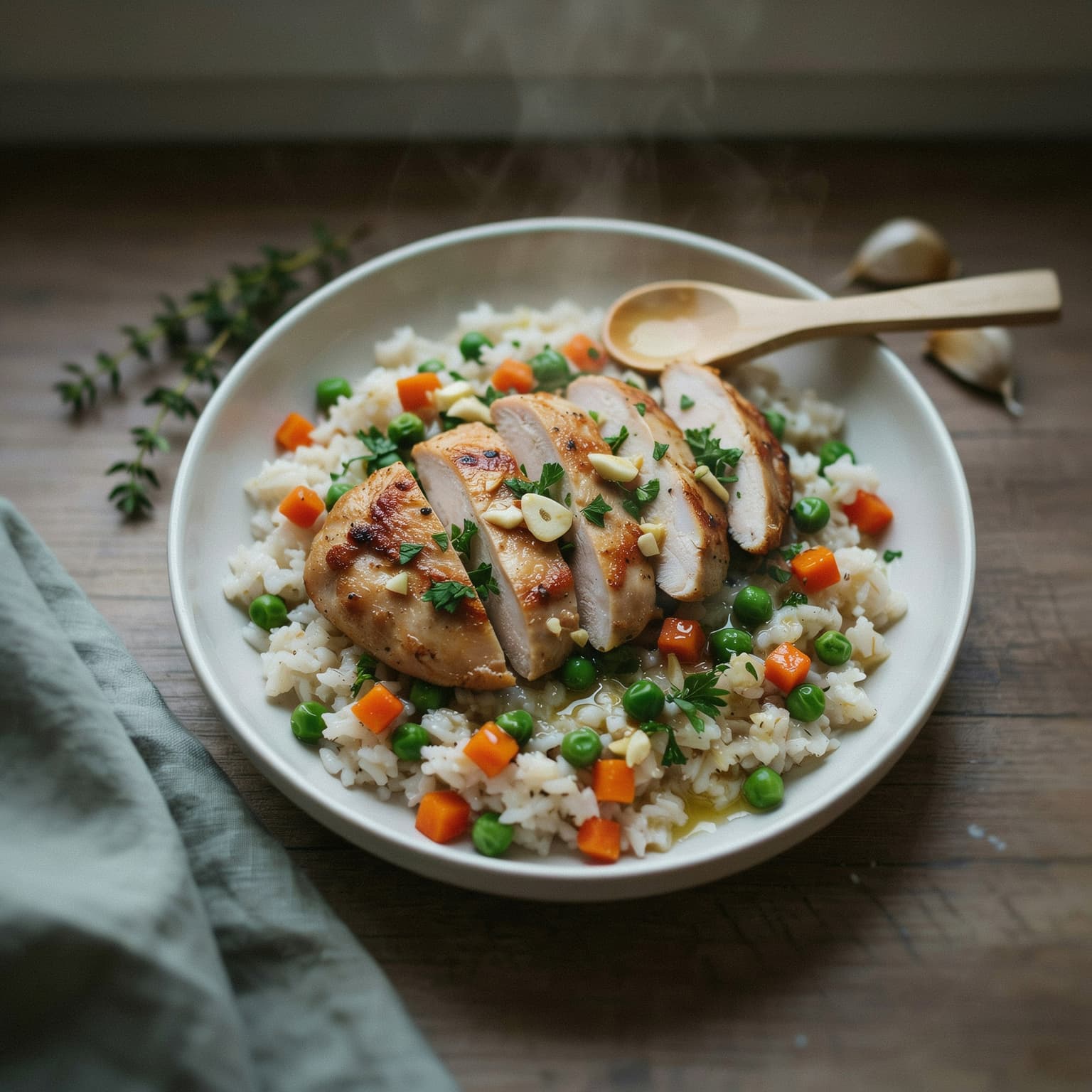
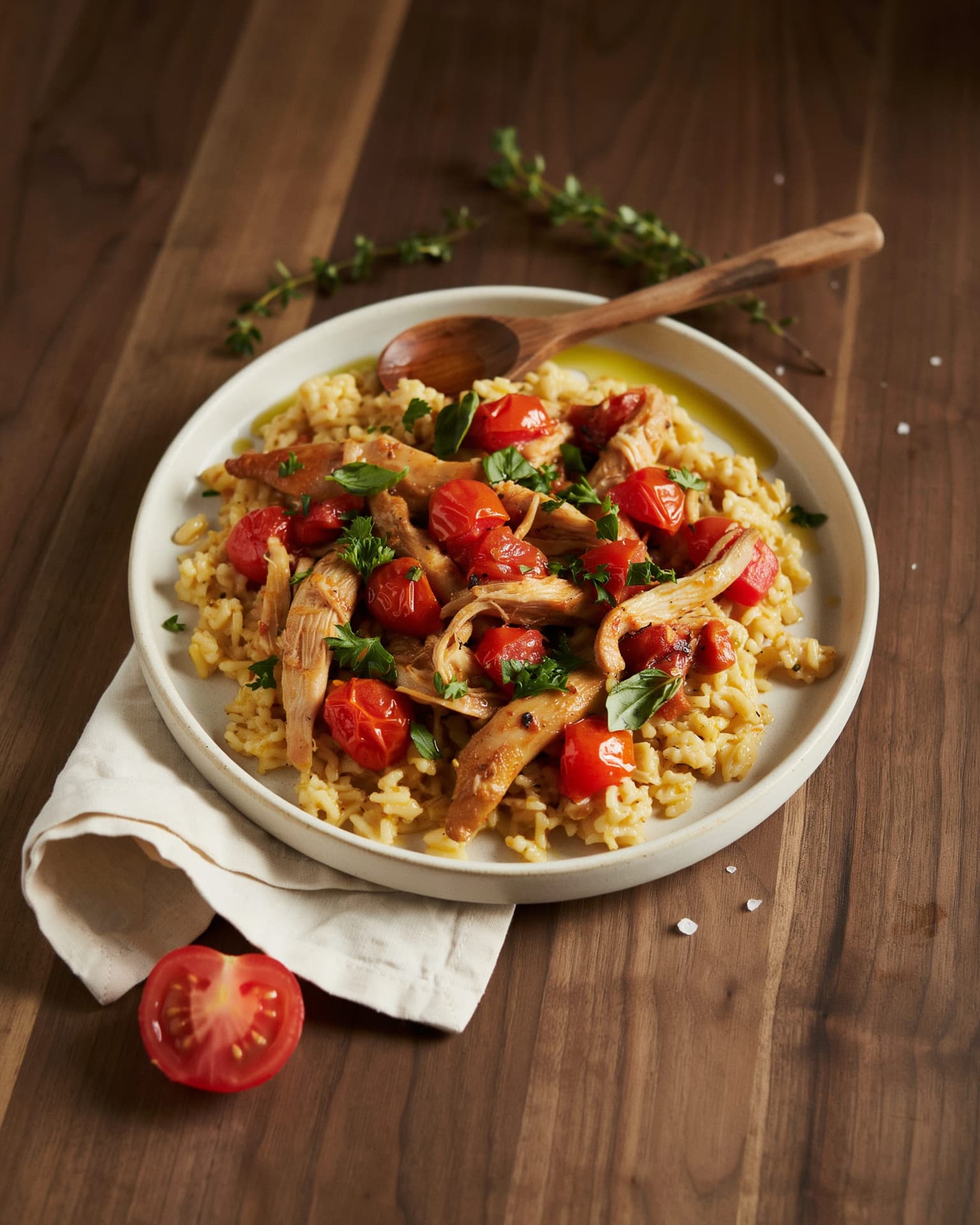
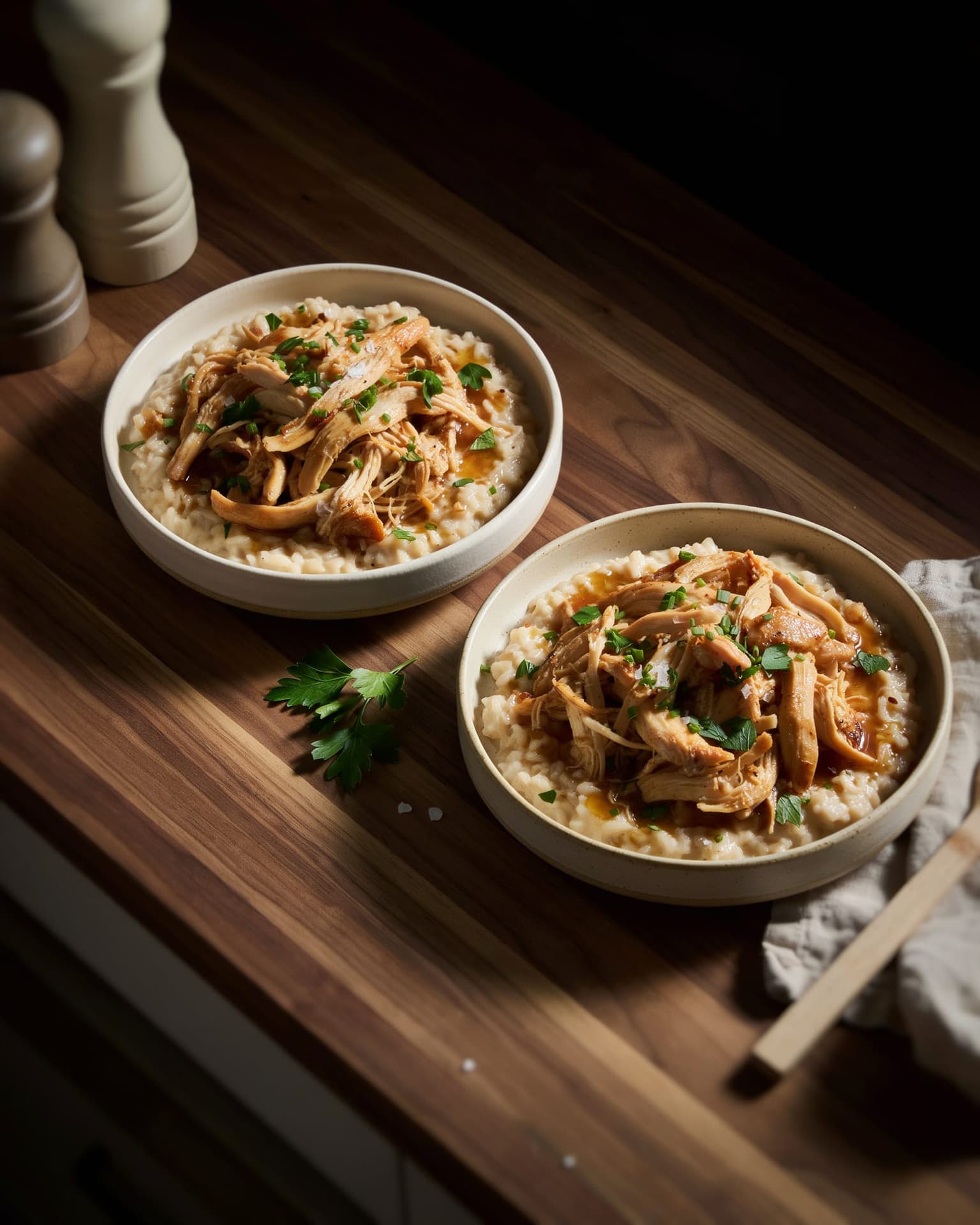
Most recipes scaled "for two" are just family recipes divided by three, which is why they leave you with half a cup of orphaned rice and a mystery portion of sauce in the fridge. This one is built for two from the first sear — right down to the skillet size. Two chicken breasts, one cup of rice, and every drop of browned flavor from the pan folded back into the dish.
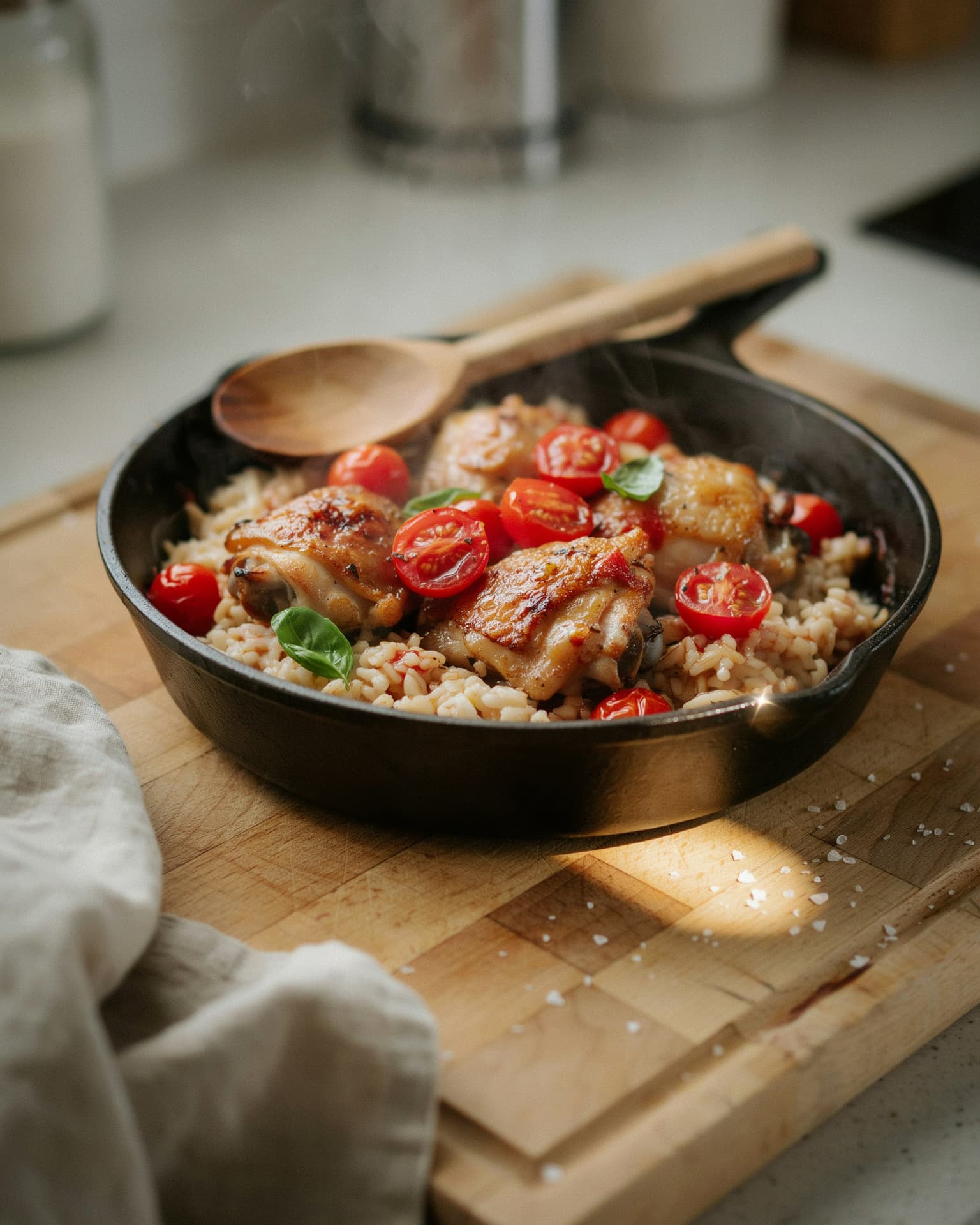
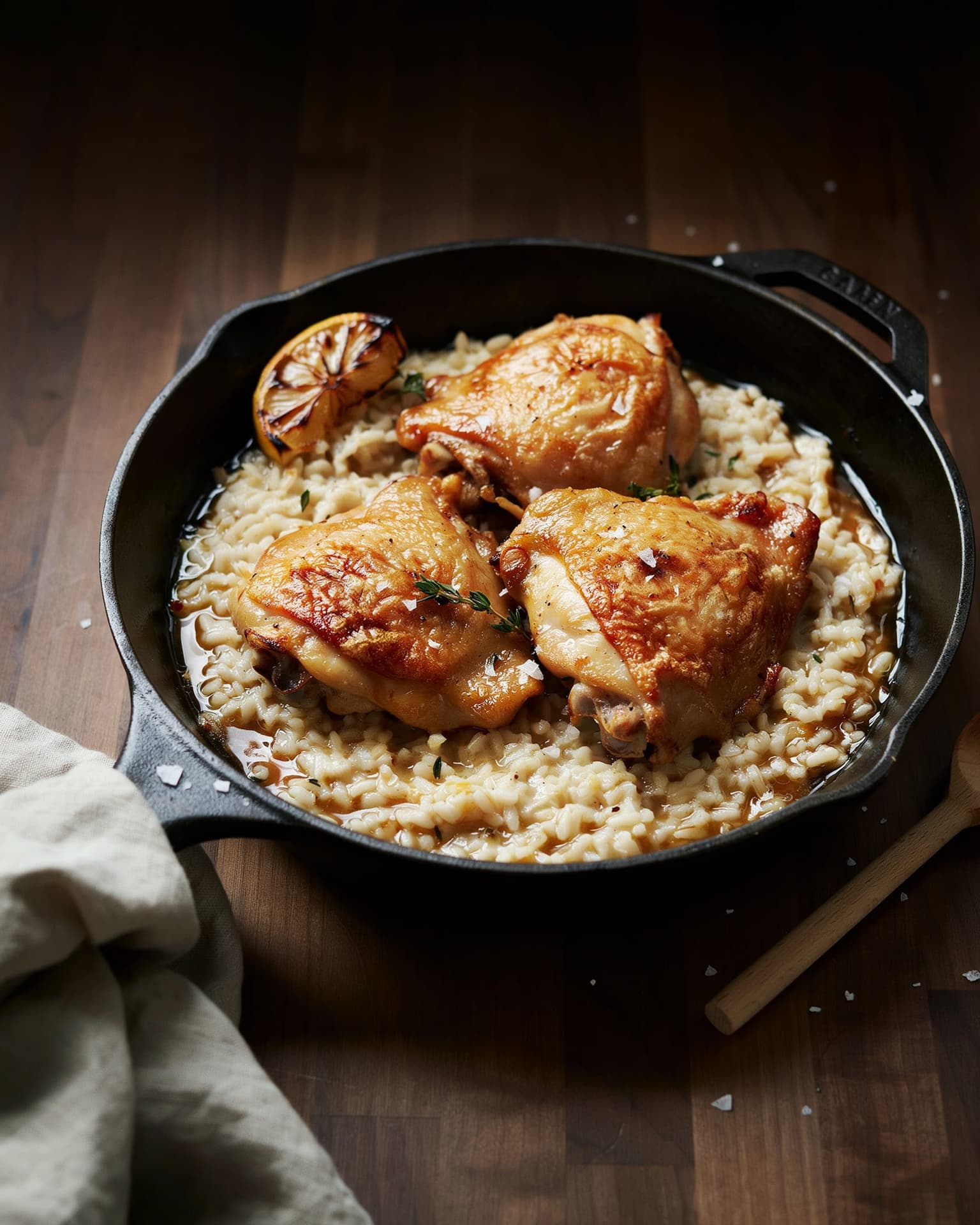
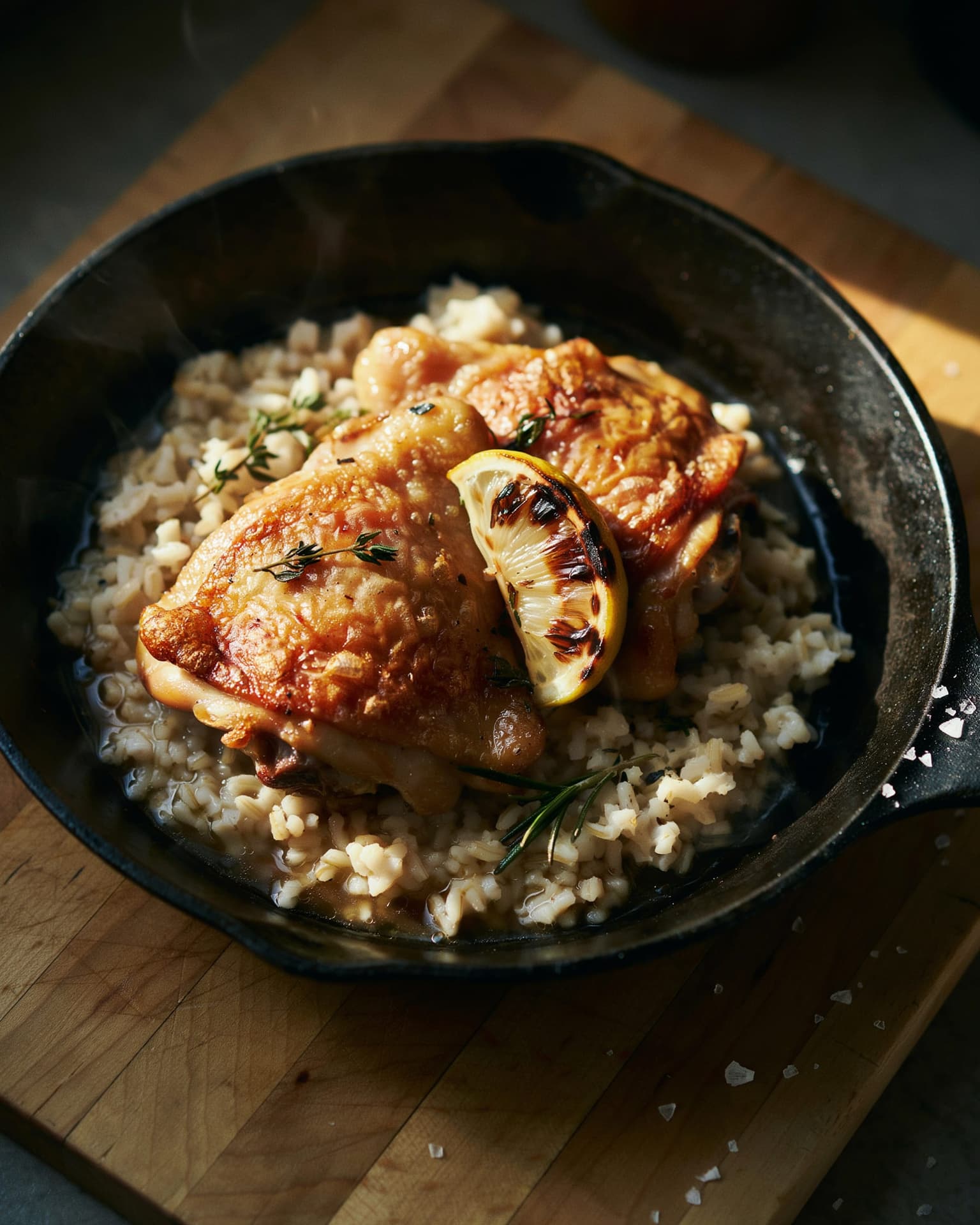
The angle the top results miss: almost every "chicken and rice for two" recipe cooks the chicken and rice separately, then combines them. That throws away the fond — the caramelized bits stuck to the pan after searing. I cook the rice directly in that skillet so it absorbs everything. One pan, one layer of flavor built on another.
Why This Works
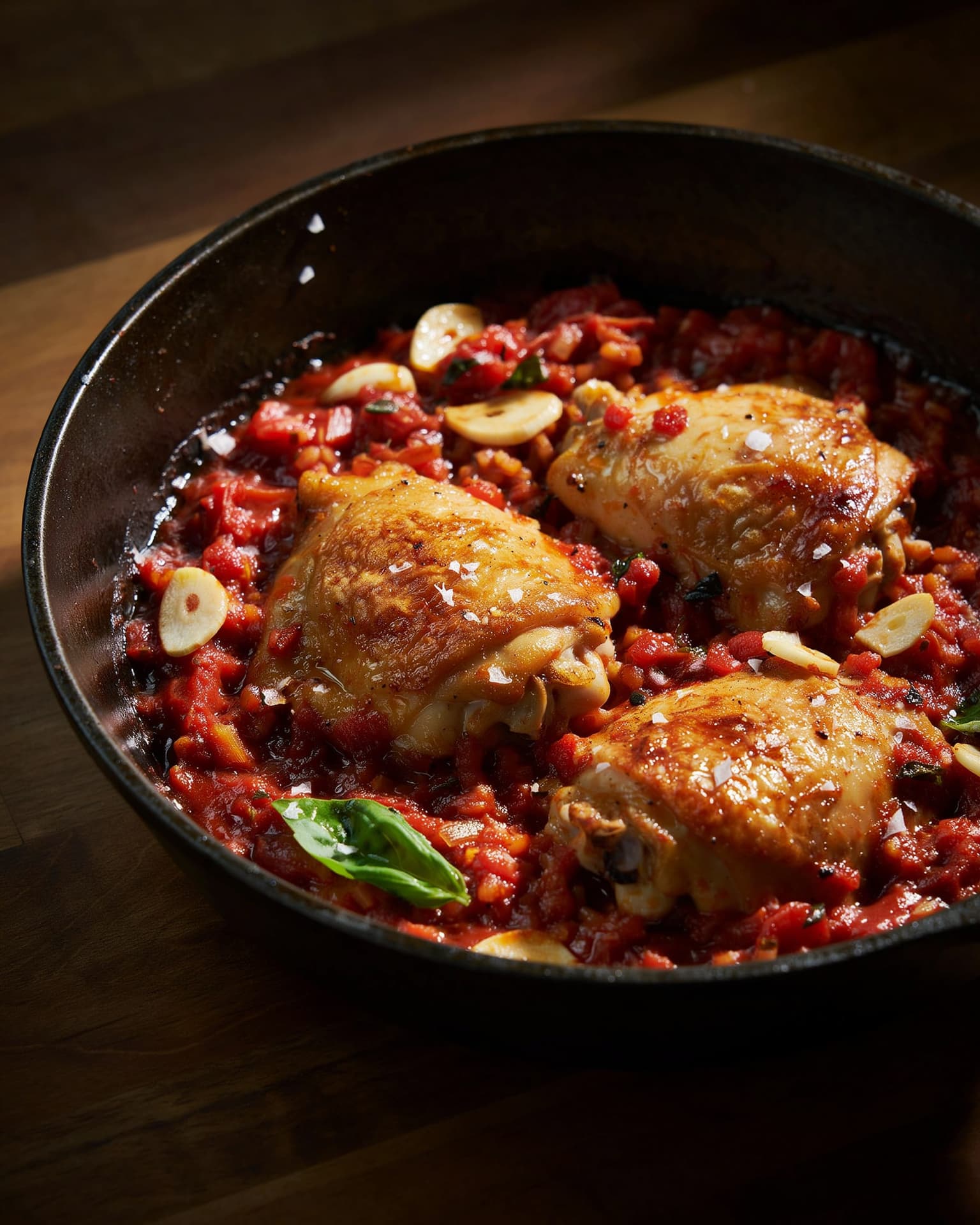
Searing chicken breast creates the Maillard reaction — the browning that produces hundreds of new aroma compounds around 300°F / 149°C. Those browned bits (the fond) are pure concentrated flavor, and they're water-soluble, which is the whole point of deglazing. When I pour stock into the hot pan and scrape, that flavor lifts off the metal and dissolves into the liquid. Then the rice drinks it in.
Cooking rice in seasoned liquid rather than plain water is the difference between rice as filler and rice as an actual component of the meal. I use a 2:1 liquid-to-rice ratio for long-grain white rice, which the USDA and most rice producers confirm as the reliable standard. The lid stays on — steam is doing the work, and every time you lift it you lose the pressure that cooks the grains evenly.
One pan also means the chicken rests on top of the rice at the end, and its juices drip down into the grains instead of pooling on a cutting board. Nothing wasted.
What Most Recipes Get Wrong
They cook the components apart. Search "chicken and rice for two" and you'll find recipe after recipe that pan-fries the chicken, sets it aside, cooks rice in a separate pot, then reunites them — and pours the pan drippings down the drain. That fond is the best-tasting thing in the entire dish, and it ends up in the sink.
The other common mistake is liquid ratios that never got re-tested after scaling. When you halve a big-batch recipe, evaporation doesn't halve with it — a smaller surface area of liquid evaporates at a different rate. I've cooked this in an 8-inch and a 10-inch skillet; the 10-inch needs the full 2 cups of stock, while a narrower, taller pan can get away with a touch less because less steam escapes.
Chef's Tips & What I've Learned
Chef Augustin's Tip: Take the chicken out at exactly 165°F / 74°C and let it rest on the rice, not a cold plate. Resting lets the muscle fibers relax and reabsorb juice — cut too early and that juice runs out onto the board. On top of the rice, even the runoff gets caught.
Don't rinse long-grain rice for this one. That surface starch is what lets the grains cling slightly to the tomato and stock, giving you a cohesive dish rather than loose pilaf.
Chef Augustin's Tip: If your fond starts to look dark and threatens to burn while the onions cook, add a tablespoon of stock early and scrape. Burnt fond turns bitter, and there's no rescuing it — a splash of liquid buys you time.
I've made this with ground beef instead of breasts on nights I had no chicken thawed. Brown 8 oz (225g) of ground beef to 160°F / 71°C, drain, and stir it back in with the peas. The dish loses the elegant seared-breast look but gains a deep, savory backbone — and it's genuinely faster.
A good weeknight dinner respects your time and your dishwasher in equal measure.
How do I make chicken and rice for two without drying out the chicken?
The key is pulling the chicken at 165°F / 74°C and no higher — use an instant-read thermometer rather than guessing by time. Because you sear first and finish gently under a lid on top of the rice, the breasts cook in humid, moderate heat instead of dry direct heat. Resting them on the rice for 5 minutes after cooking lets the juices redistribute. Breasts around 6 oz (170g) each are the sweet spot; larger ones should be butterflied for even cooking.
What ingredients do I need for this recipe for two?
You need two 6 oz (170g) chicken breasts, 1 cup (185g) long-grain white rice, 2 cups (480ml) chicken stock, 1/2 cup (120g) canned diced tomatoes, one small onion, 3 cloves garlic, olive oil, 2 tablespoons (28g) butter, and 3/4 cup (100g) frozen peas. Pantry staples like Diamond Crystal kosher salt, smoked paprika, and black pepper round it out. Everything cooks in one 10-inch skillet, which is deliberate — no orphaned half-ingredients left over.
Can you freeze this chicken and rice?
Yes, and it freezes surprisingly well. Cool it completely first, then portion into airtight containers and freeze for up to 3 months. The USDA notes that cooked chicken keeps quality best when frozen promptly — within two hours of cooking. Reheat from frozen with a splash of stock to loosen the rice, covered, until it reaches 165°F / 74°C throughout. The peas soften a little on reheating, but the flavor holds up beautifully.
How long does it last in the fridge?
Stored in an airtight container, this keeps 3 to 4 days in the refrigerator, which lines up with USDA guidance for cooked poultry and rice. Cool it within two hours of cooking to stay in the safe zone. When reheating, add a tablespoon or two of stock or water since the rice absorbs moisture as it sits, and heat until it reaches 165°F / 74°C. Give it a good stir halfway through so it warms evenly.
What should I serve with chicken and rice for two?
Because the dish already carries protein, starch, and a vegetable, I keep sides light and green. A simple arugula salad with lemon and olive oil cuts through the richness. Crusty bread is perfect for the tomatoey rice at the bottom of the pan. If you want something warm, quick-sautéed green beans or a wedge of roasted lemon on the side both work. A dry white wine — something crisp — is the natural pairing for two.
The skillet goes straight to the middle of the table, two forks, the peas still bright green against the tomato-stained rice, and the whole apartment smelling like garlic and something worth sitting down for.