Article and tips
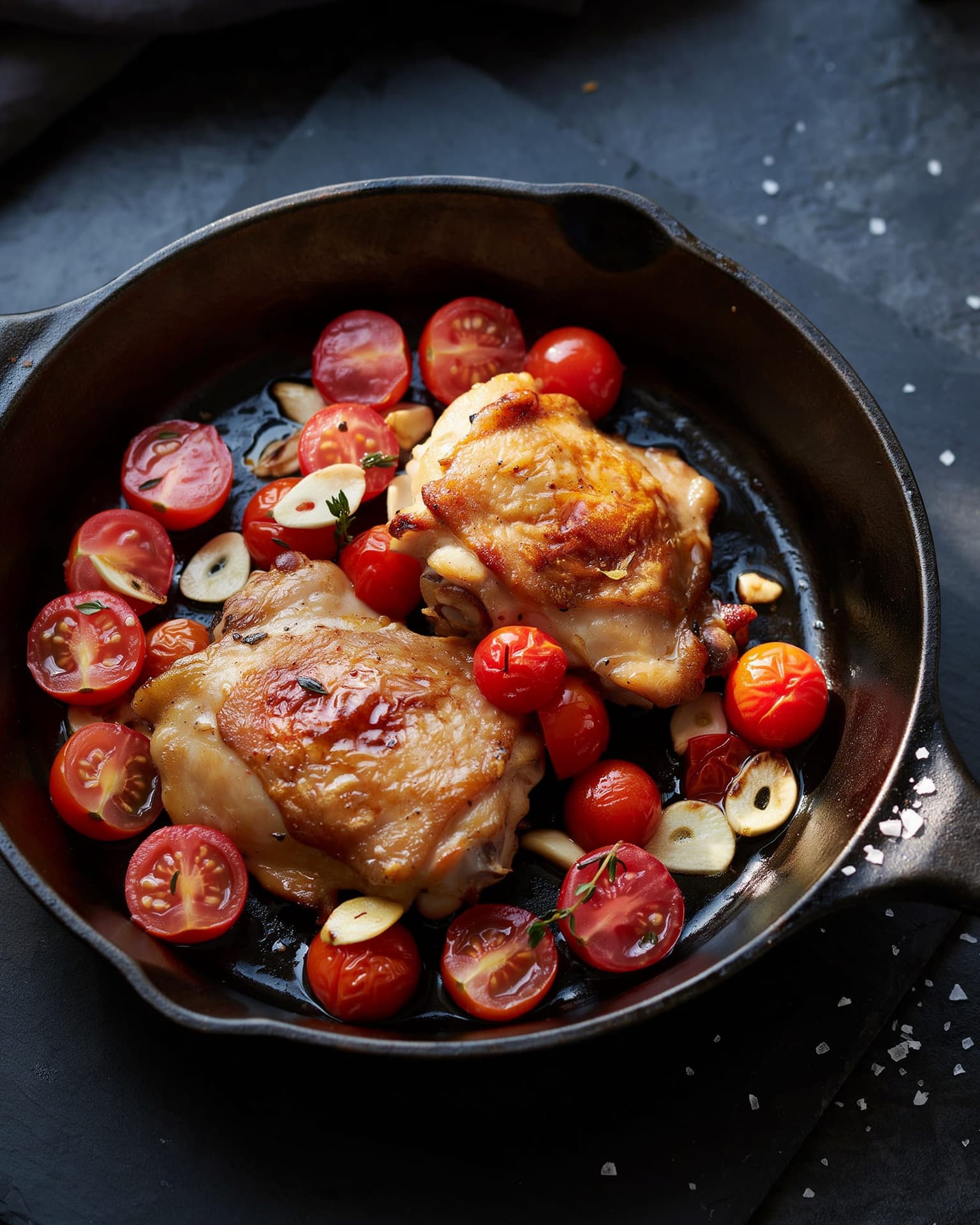
Most easy Whole30 recipes hand you a list of ingredients and leave you to guess how the sauce actually thickens without cornstarch, cream, or a splash of wine. That gap is exactly where dinner falls apart on a Tuesday. This skillet closes it: seared chicken breast, a garlic-and-onion base, and a canned-tomato sauce reduced until it clings to the meat — no flour, no dairy, no compliant-in-theory shortcuts that taste like penance. I built it for two people and one pan, so the whole thing lands on the table in under half an hour and leaves you a single dish to wash.
The angle here is simple. The top-ranking Whole30 roundups promise "30 minutes" but skip the one technique that makes a dairy-free tomato sauce worth eating: reducing hard enough to concentrate the sugars in the tomatoes. That's the whole secret, and nobody spells it out.
Why This Works
Whole30 strips away the usual thickeners — flour, butter-and-cream reductions, sugar — so a sauce has to earn its body honestly. Canned tomatoes are roughly 90% water, and that water is your lever. When you reduce the sauce by nearly half over medium heat, you drive off water and concentrate the natural glutamates and sugars already in the tomato. The result reads as rich even though there's nothing in the pan but tomato, aromatics, and olive oil.
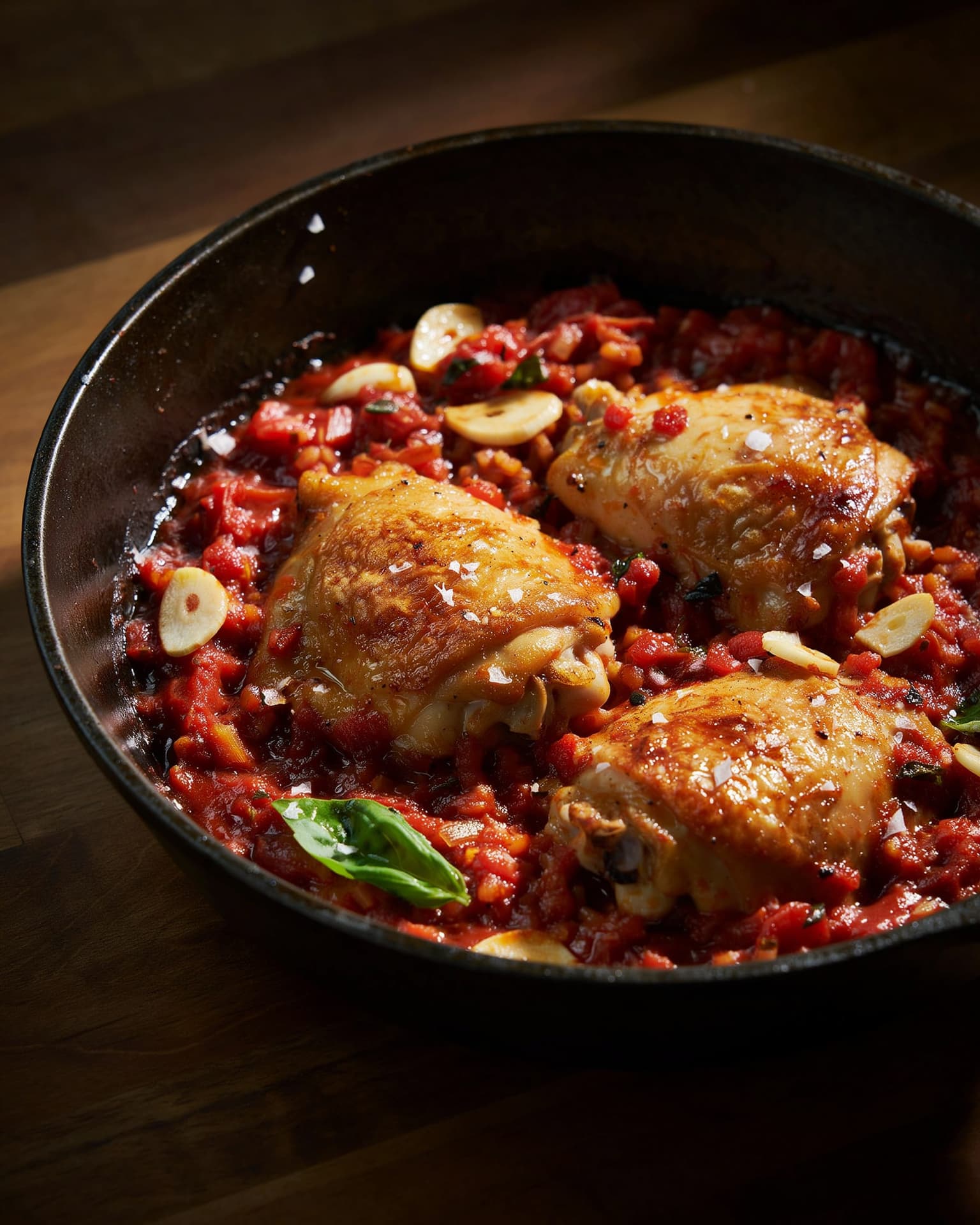
Searing the chicken first does double duty. The browned fond stuck to the pan is pure flavor, and when you add the tomatoes, that liquid lifts the fond off the metal — a deglaze in everything but name. I've made this in both a nonstick and a stainless skillet, and stainless wins here because it develops a deeper fond; nonstick barely browns. Resting the seared chicken while the sauce reduces means it finishes cooking gently in the simmering tomato rather than drying out over direct heat.
A good tomato sauce is patience disguised as a recipe.
What Most Recipes Get Wrong
The standard Whole30 skillet recipe treats the tomato sauce as an afterthought — dump the can in, simmer two minutes, done. The problem is that under-reduced canned tomato tastes thin and slightly tinny, and without dairy or a starch to mask it, there's nowhere for that flavor to hide. The fix costs you six extra minutes: reduce the sauce hard, uncovered, before the chicken goes back in. You're not adding anything — you're removing water so what's left tastes like more. The other common miss is cooking the chicken all the way through in step one, then simmering it in sauce, which guarantees dry meat. Sear, rest, and let it finish gently in the sauce instead.
Chef's Tips & What I've Learned
Chef Augustin's Tip: If your sauce reduces faster than the chicken cooks, add a splash of broth rather than pulling the chicken early. The temperature target rules, not the clock.
Chef Augustin's Tip: Frozen vegetables release water as they thaw in the pan. If you're doubling this recipe, drain them of ice crystals first or your carefully reduced sauce will thin right back out.
Salt the chicken, not just the sauce — seasoning from the inside out is the difference between flat and finished.
I've made this with ground beef instead of chicken breast for a faster night; brown 8 oz of ground beef to 160°F / 71°C, drain, and stir it into the sauce at step 3. It's a completely different dinner and just as compliant.
The two of you at the table, one skillet between you, basil still bright green against the red sauce, steam rising while you argue about who gets the last spoonful of tomatoes.
What should I make for dinner on Whole30?
A one-pan protein-and-vegetable skillet is the most reliable Whole30 dinner because it sidesteps every non-compliant crutch at once. This chicken skillet uses no dairy, grains, or added sugar, and it scales cleanly for two. Keep three building blocks on hand: a lean protein like chicken breast, aromatics (onion and garlic), and a no-sugar-added canned tomato base. From there you can rotate frozen vegetables endlessly, so dinner never feels repetitive across a full 30 days.
Is this recipe good for Whole30 beginners?
Yes — it's one of the friendliest starting points. There are no unusual ingredients, no compliant-brand hunting beyond checking two labels (canned tomatoes and broth for added sugar), and the whole thing lives in a single pan. The only skill you need is reading a thermometer to hit 165°F / 74°C on the chicken. Beginners often stumble on hidden sugar and dairy; this recipe removes both by design, so you can focus on technique rather than decoding the program.
Can I make this Whole30 chicken skillet ahead of time?
Absolutely. The sauce actually improves after a night in the fridge because the flavors marry and concentrate further. Cook it fully, cool within two hours, and refrigerate for up to 3 days in an airtight container. Reheat gently on the stove with a splash of broth to loosen the sauce, warming the chicken just until it's hot through — around 165°F / 74°C again if you want certainty. Avoid the microwave for the chicken if you can; it tends to toughen the reheated breast.
What are the downsides of Whole30?
Whole30 is a 30-day elimination program, and the trade-off is convenience: no grains, dairy, added sugar, legumes, or alcohol means most restaurant and packaged options are off the table. Many people report an adjustment period in the first week as the body adapts to the change. It also takes label-reading diligence, since sugar hides in broth, bacon, and canned goods. That's precisely why home cooking one-pan meals like this one makes the month manageable — you control every ingredient.
Can I swap the chicken for ground beef?
Yes, and it's my favorite variation for a fast night. Skip the searing step and instead brown 8 ounces of ground beef in the olive oil, breaking it up until it reaches an internal temperature of 160°F / 71°C with no pink remaining. Drain the excess fat, set the beef aside, build the sauce as written, and fold the beef back in with the frozen vegetables. The tomato base and aromatics carry over perfectly, so the dish stays balanced and fully compliant.
Chef Augustin