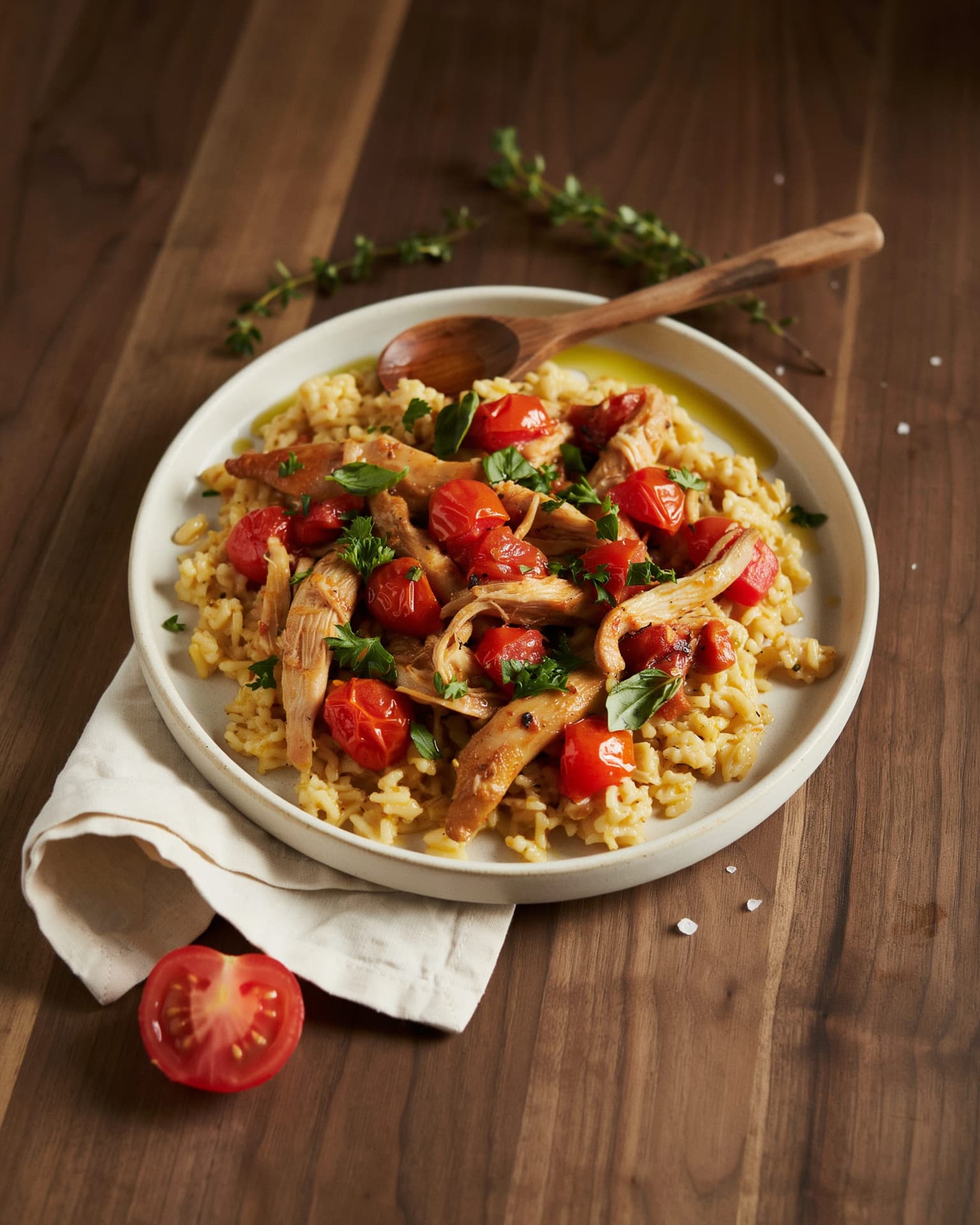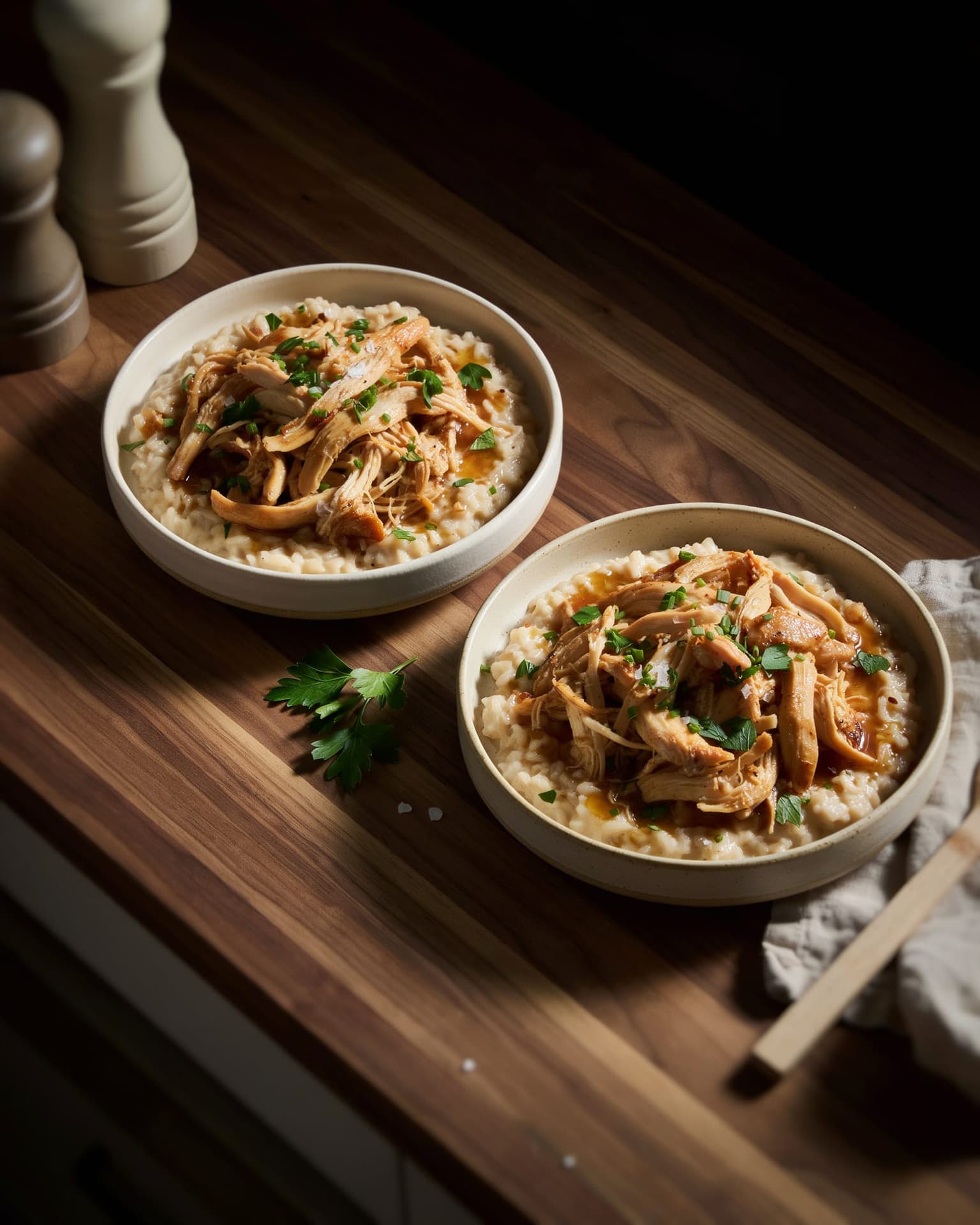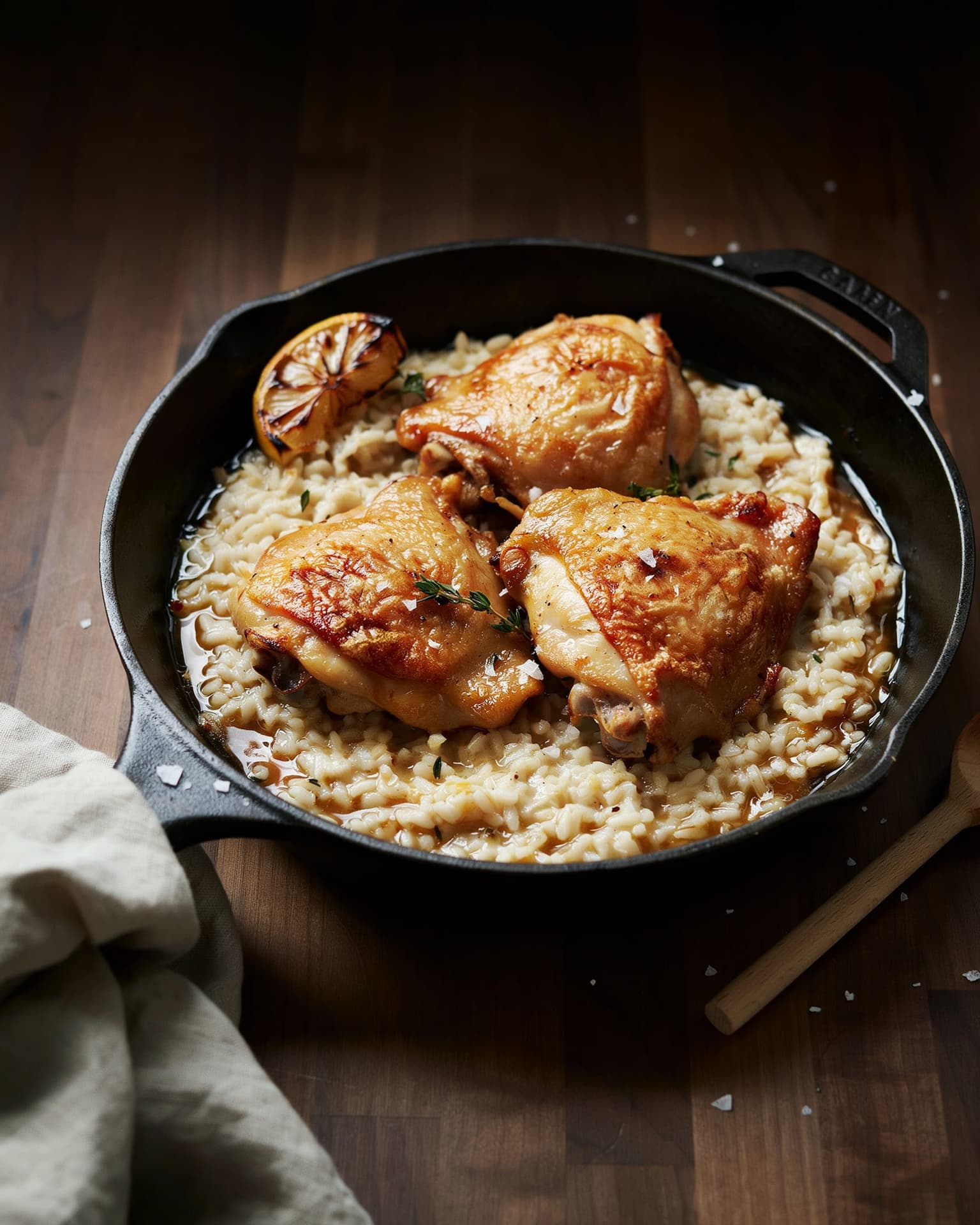
Article and tips
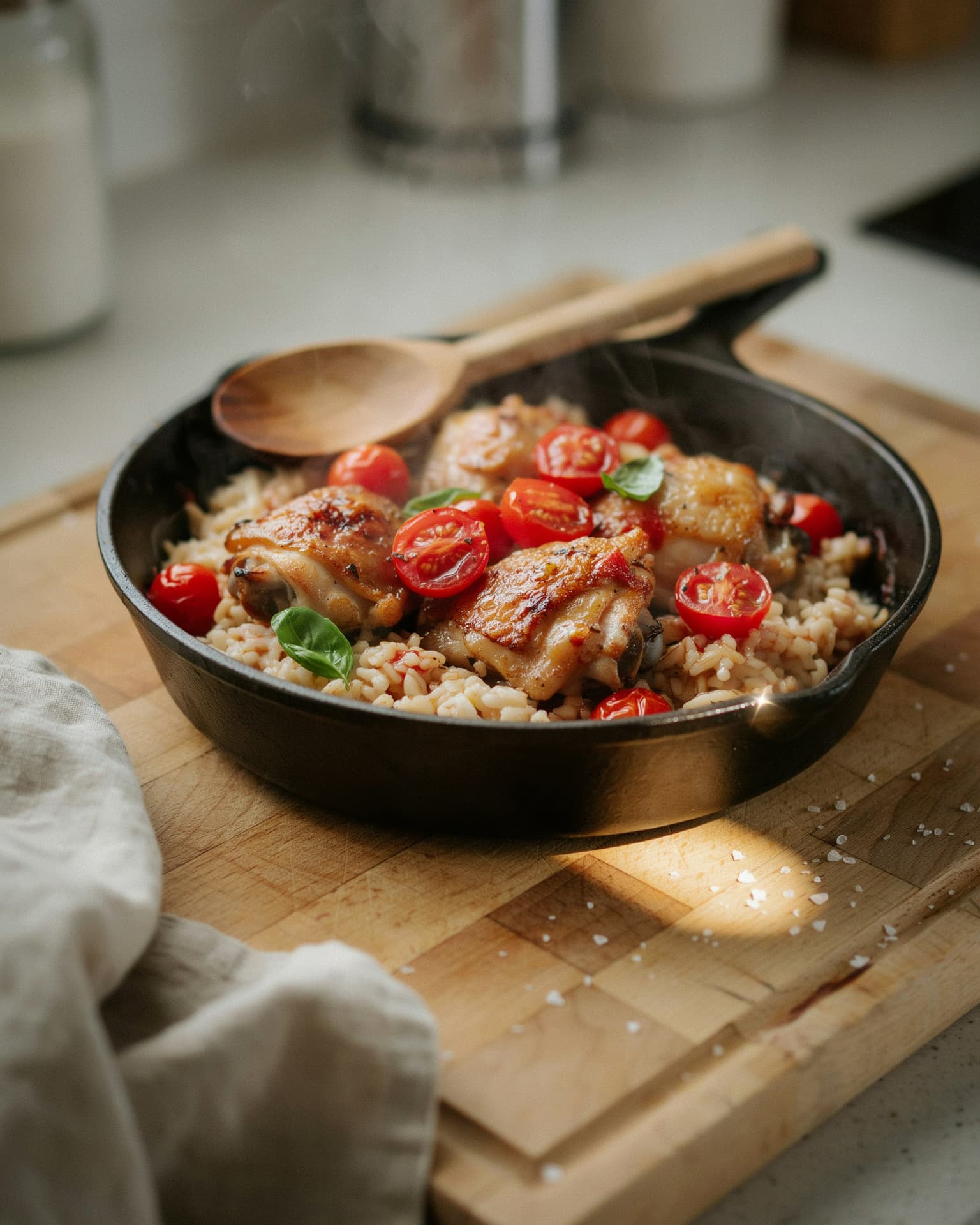
Most recipes for two hand you a scaled-down casserole and pretend the math works. It doesn't — a dish built for six, quartered, gives you soupy rice and dry chicken, because pan surface area and liquid ratios don't shrink linearly. This one was built at the two-serving scale from the first sear, which is why the rice comes out with distinct grains and the chicken stays juicy in a 10-inch skillet.
Here's my angle, and it's the thing the top results miss: every "dinner for two" roundup gives you a list of recipes, but none of them explain the one variable that makes small-batch rice fail — the lid-to-liquid ratio in a shallow pan. I'm going to fix that, and you'll get a genuinely one-pan meal that respects both your time and your dishwasher.
Good food for two isn't a smaller version of food for a crowd. It's its own discipline.
Why This Works
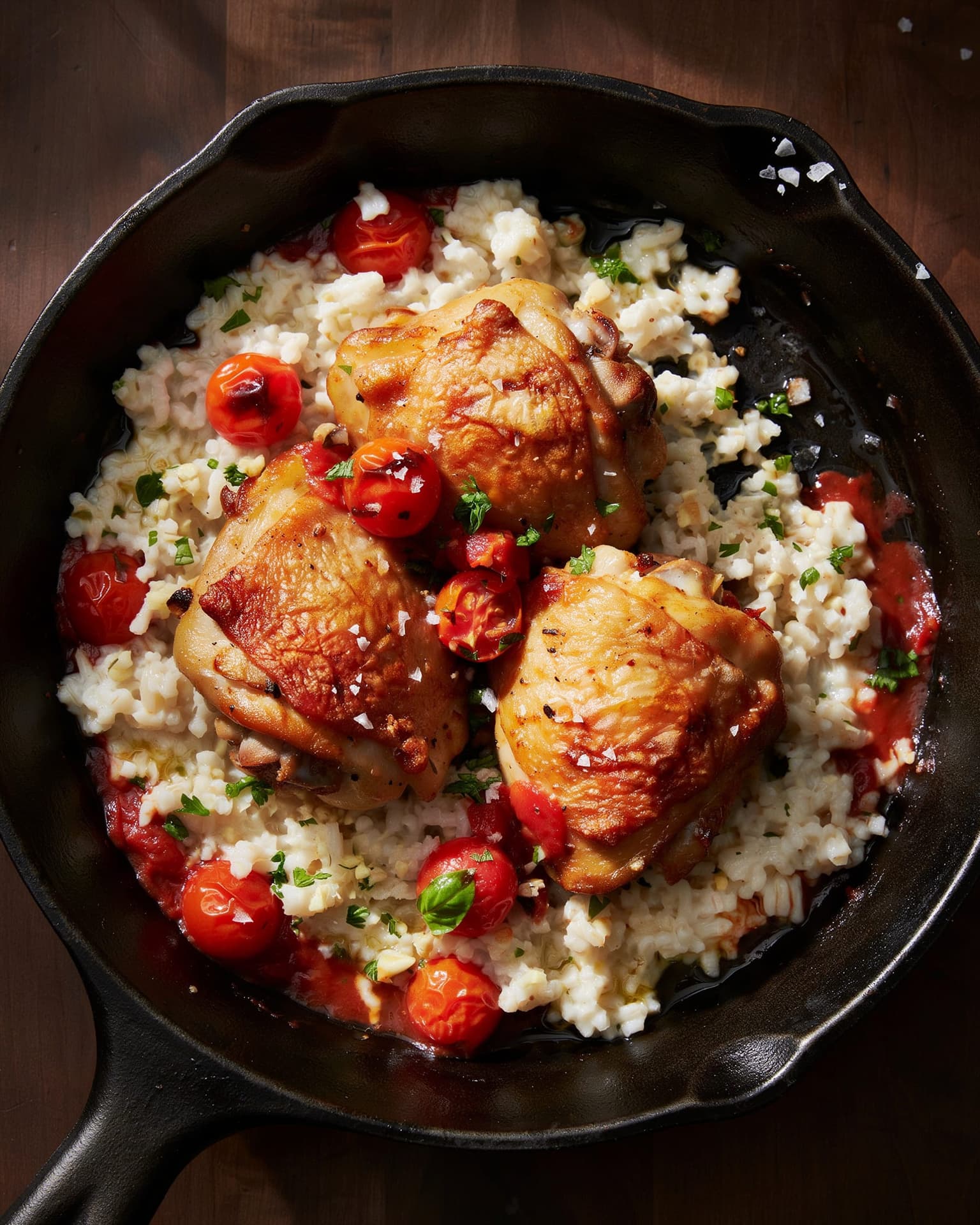
The secret is toasting the rice in the fat left behind after searing the chicken. When you sear chicken breast in olive oil and butter, you build a layer of browned proteins — the fond — stuck to the pan floor. Deglazing that fond with canned tomatoes lifts all of it into the sauce, so nothing you worked for gets scraped into the sink. Then the raw rice goes in and toasts for ninety seconds, coating each grain in fat. That fat barrier slows water absorption just enough to keep the grains separate instead of gummy.
Rice for two is where small-batch cooking usually collapses. A 10-inch skillet has wide, shallow geometry, so liquid evaporates faster than it does in a tall pot. I use a firm 1.75:1 liquid-to-rice ratio here (instead of the usual 2:1) precisely because the shallow pan loses more steam. I've tested this with both a snug lid and a loose foil tent — the snug lid wins because it traps the steam that a wide pan otherwise wastes. Get that ratio right and you never touch the rice again until it's done.
What Most Recipes Get Wrong
They give you a 2:1 liquid ratio and a deep pot, then wonder why your small-batch rice turns to mush. In a shallow 10-inch skillet — the pan you actually own for cooking-for-two — evaporation is faster and the geometry is different. The 2:1 ratio floods it. I dropped mine to 1.75:1 and the difference is the whole ballgame: fluffy, separate grains instead of a starchy raft. The other mistake is dumping frozen vegetables in with the rice, where they overcook into gray mush over 18 minutes. Add them in the last 5, off-heat, and they stay bright.
Chef's Tips & What I've Learned
Rinsing the rice isn't optional theater — it washes off surface starch that otherwise gums the grains together. Thirty seconds under cold water until it runs clear.
Chef Augustin's Tip: If you want to bend this toward ground beef instead of chicken, brown 8 oz (225g) of ground beef in Step 1 to 160°F / 71°C, drain most of the fat, and skip the searing-and-returning dance — just simmer it right in the sauce. It'll still work, and honestly it's faster.
A dish scaled for two forgives less than a big-batch pot. There's no margin — one extra splash of broth is the difference between fluffy and soggy, so measure.
Chef Augustin's Tip: No fresh garlic? Use 1/2 teaspoon garlic powder stirred into the tomatoes instead of fresh cloves. You lose a little of the sweet mellowness that comes from cooking fresh garlic in butter, but the sauce carries it fine — bump the paprika by a pinch to cover the gap.
The pan is still hot when you pull it. Let it rest the full five minutes — that's when the rice finishes and the chicken juices settle back into the meat instead of running onto the cutting board.
Two plates, one pan cooling on the stove, and no Tupperware avalanche waiting for you tomorrow. That's the quiet luxury of cooking at the right scale — you make exactly what two people will eat tonight, and the kitchen is clean before the plates are.
How Do You Make Easy Recipes for Two Without Leftovers?
The trick is scaling by pan size, not just by dividing a big recipe. This dish uses a 10-inch skillet, 3/4 cup of rice, and two 6-oz chicken breasts — enough for two full plates with nothing extra. Cooking for two means matching your ingredient quantities to a smaller pan's surface area, because liquid ratios and evaporation don't shrink at the same rate as portion counts. Start with the protein at 6 oz per person and build the rest around it.
Can You Freeze This Chicken and Rice?
Yes, though rice changes texture after freezing — the grains firm up and can turn slightly grainy on reheating. Let the dish cool completely, then freeze in an airtight container for up to 2 months. Reheat from frozen in a covered pan over low heat with a splash of chicken broth to restore moisture, stirring occasionally until it reaches 165°F / 74°C throughout. For the best texture, though, this is a dish I'd cook fresh — it takes about 40 minutes, which is roughly the time you'd spend defrosting anyway.
How Long Does It Last in the Fridge?
Stored in an airtight container, this chicken and rice keeps for 3 to 4 days in the refrigerator at or below 40°F / 4°C, per USDA guidance for cooked poultry. Cool it within two hours of cooking to stay in the safe zone. Reheat single portions in the microwave with a damp paper towel over the top, or in a covered skillet with a tablespoon of broth, until the center reaches 165°F / 74°C. Give it a stir halfway so it heats evenly.
What Should You Serve With It?
Because the rice already carries the starch and the peas cover a vegetable, you only need something bright and simple alongside. A crisp green salad with a sharp lemon vinaigrette cuts through the richness of the tomato-butter sauce. Crusty bread is welcome for mopping the pan. If you want a glass of wine, a dry unoaked white — something with acidity — mirrors the tomato beautifully. Keep the sides light; the point of this dish is that it's already a complete plate.
What Are Common Mistakes When Making Rice for Two?
The biggest one is lifting the lid to check on the rice mid-cook, which releases the trapped steam that's doing all the work — resist it for the full 18 minutes. The second is using too much liquid: a shallow skillet needs a 1.75:1 liquid-to-rice ratio, not the standard 2:1, because it loses steam faster. Third, don't add frozen vegetables early, or they'll overcook to mush. And always rinse the rice first to wash away surface starch that causes gumminess.