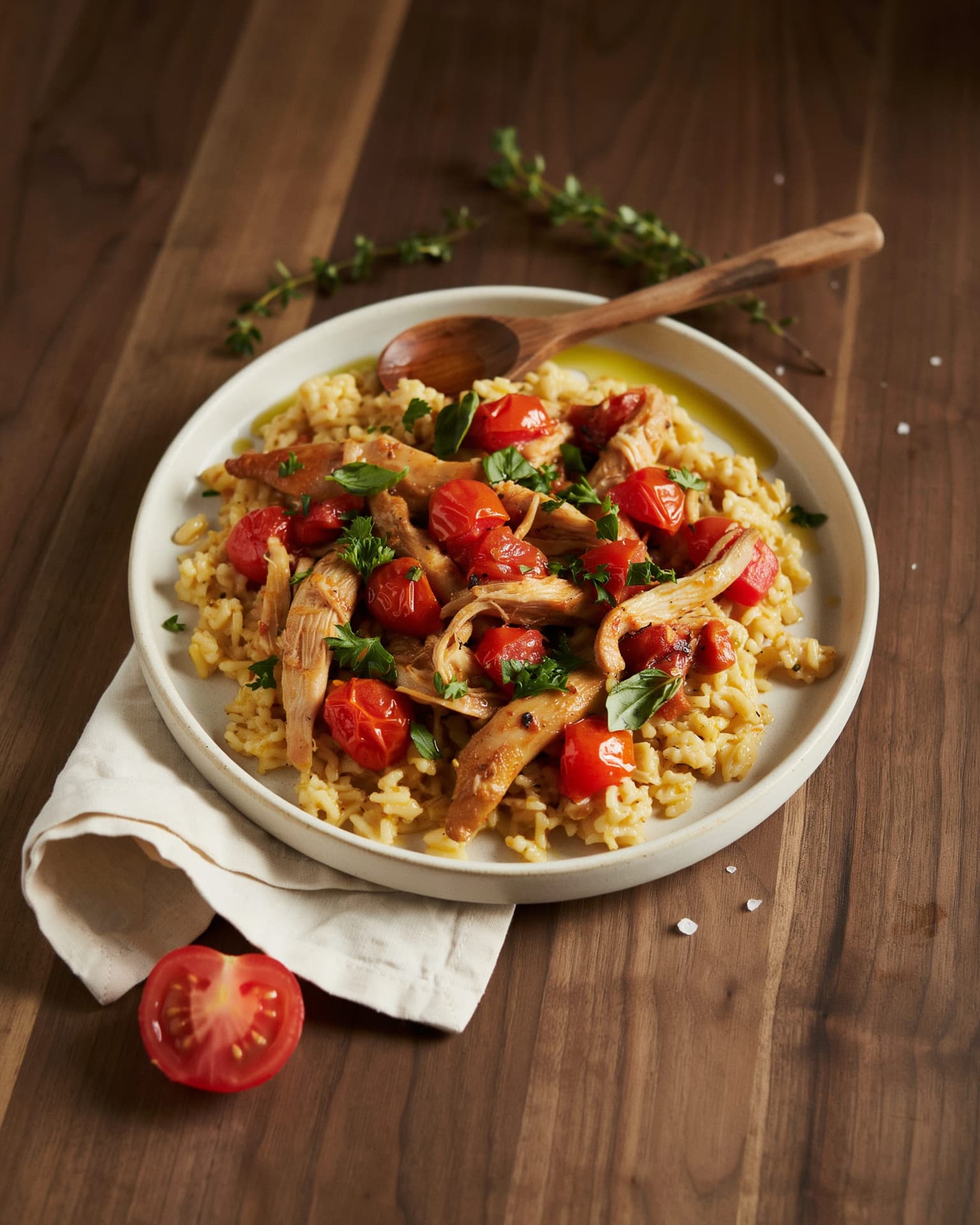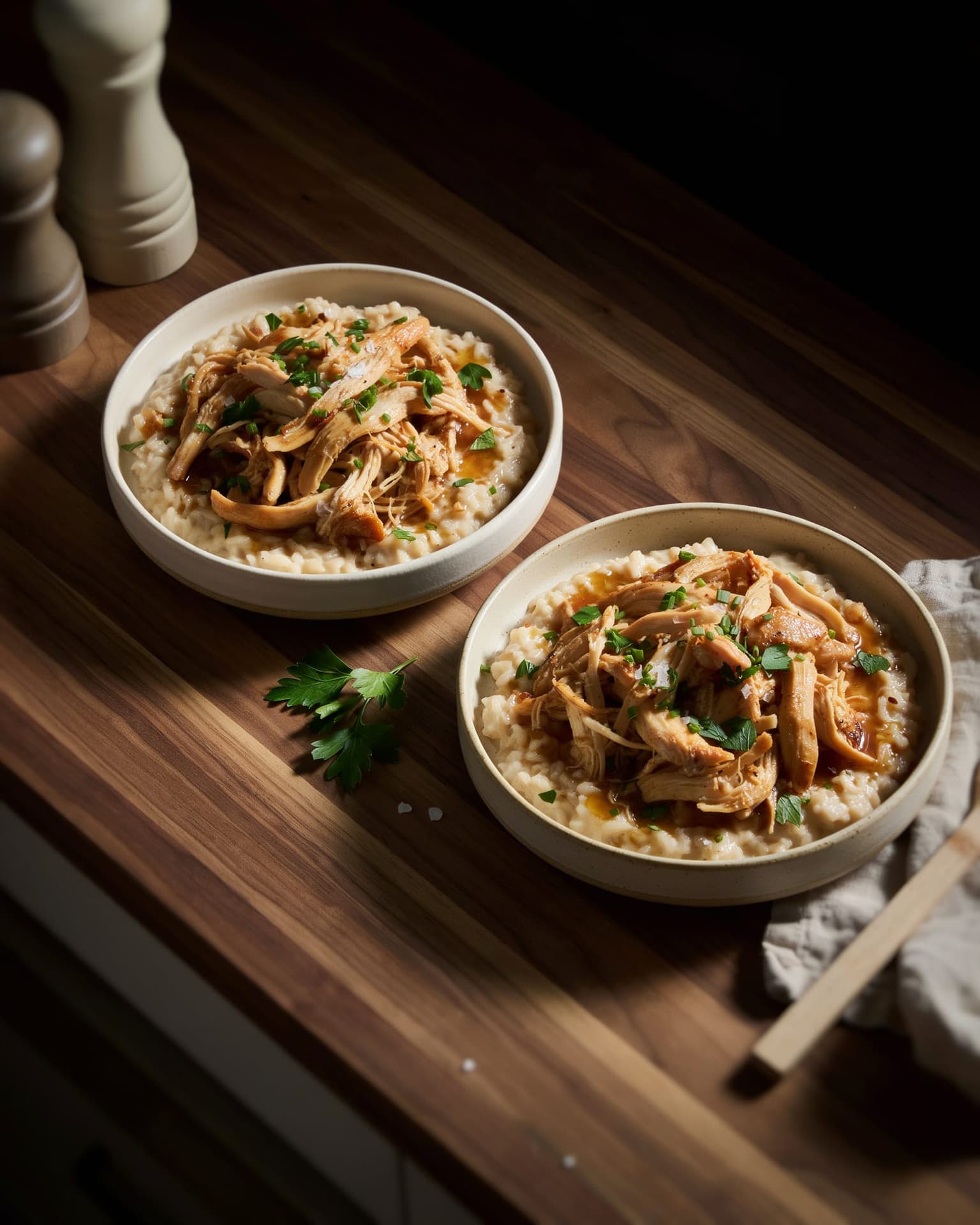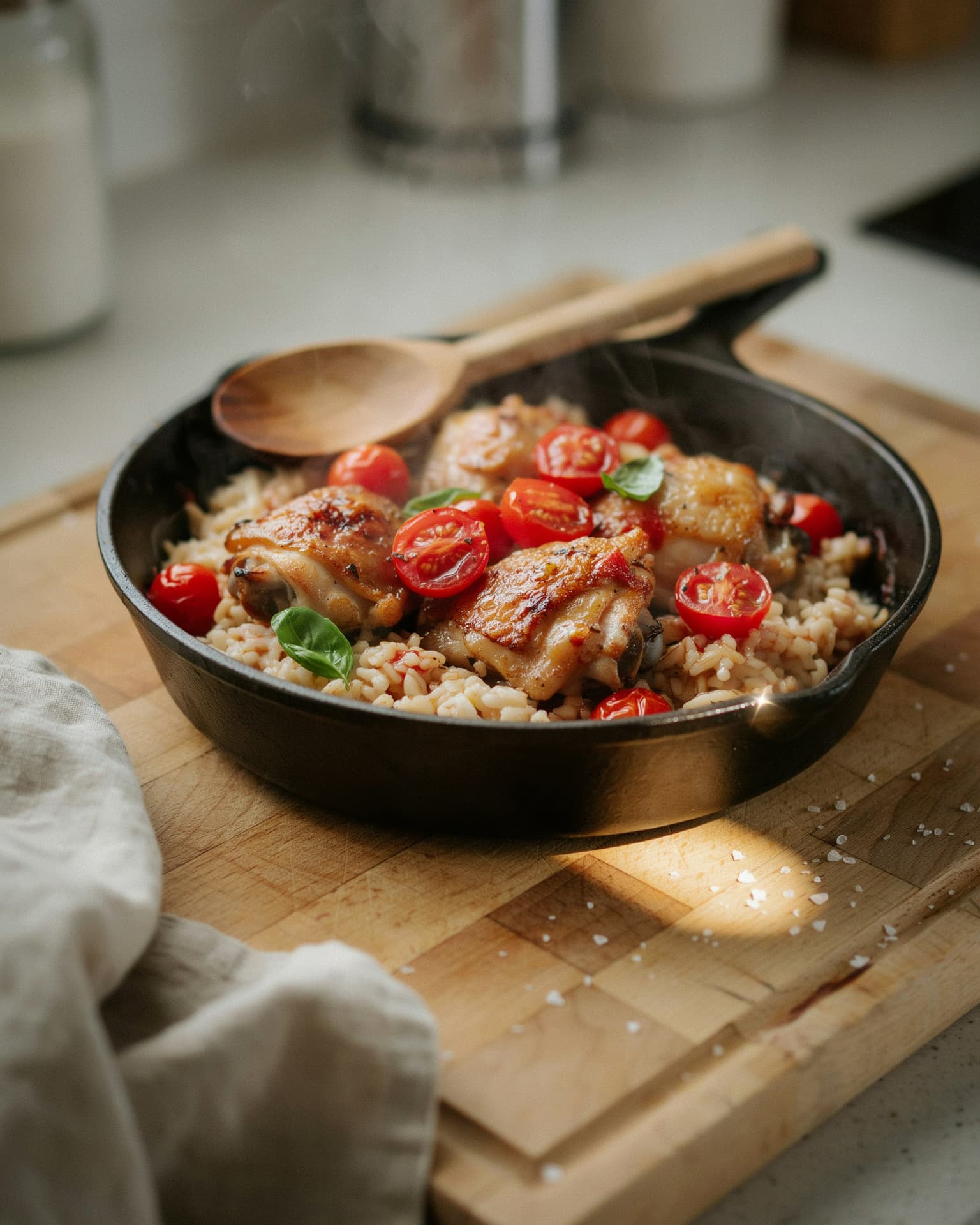
Article and tips
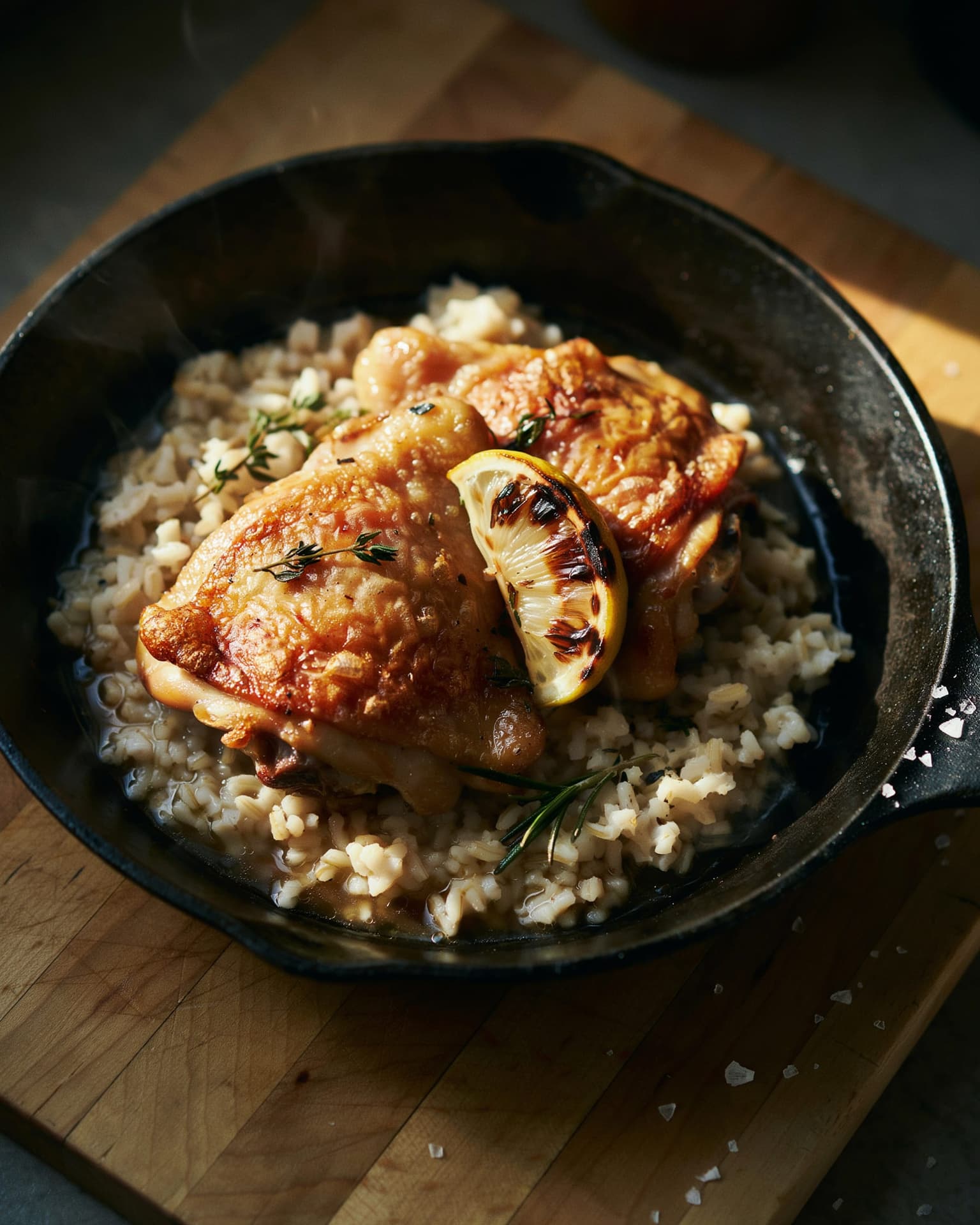
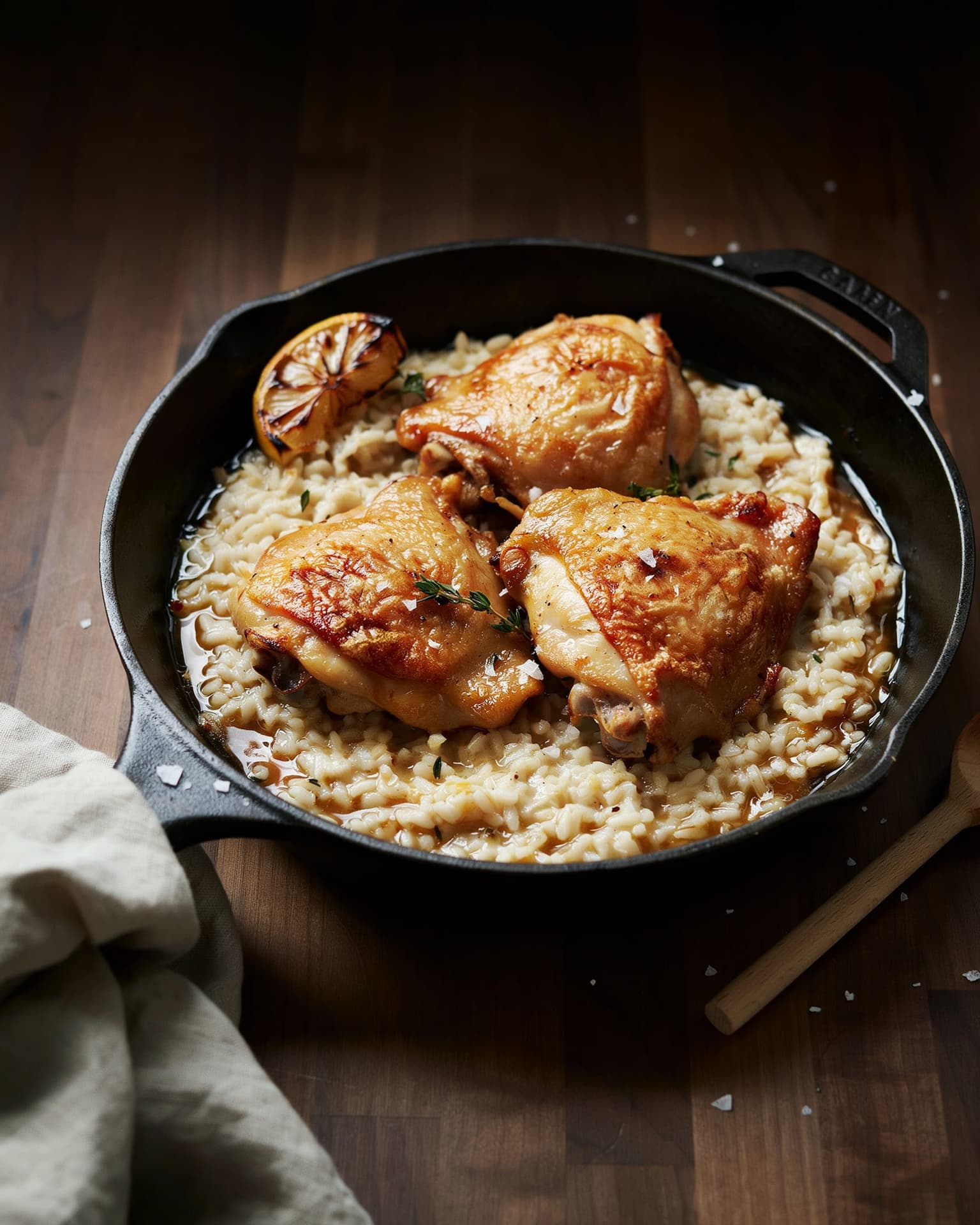
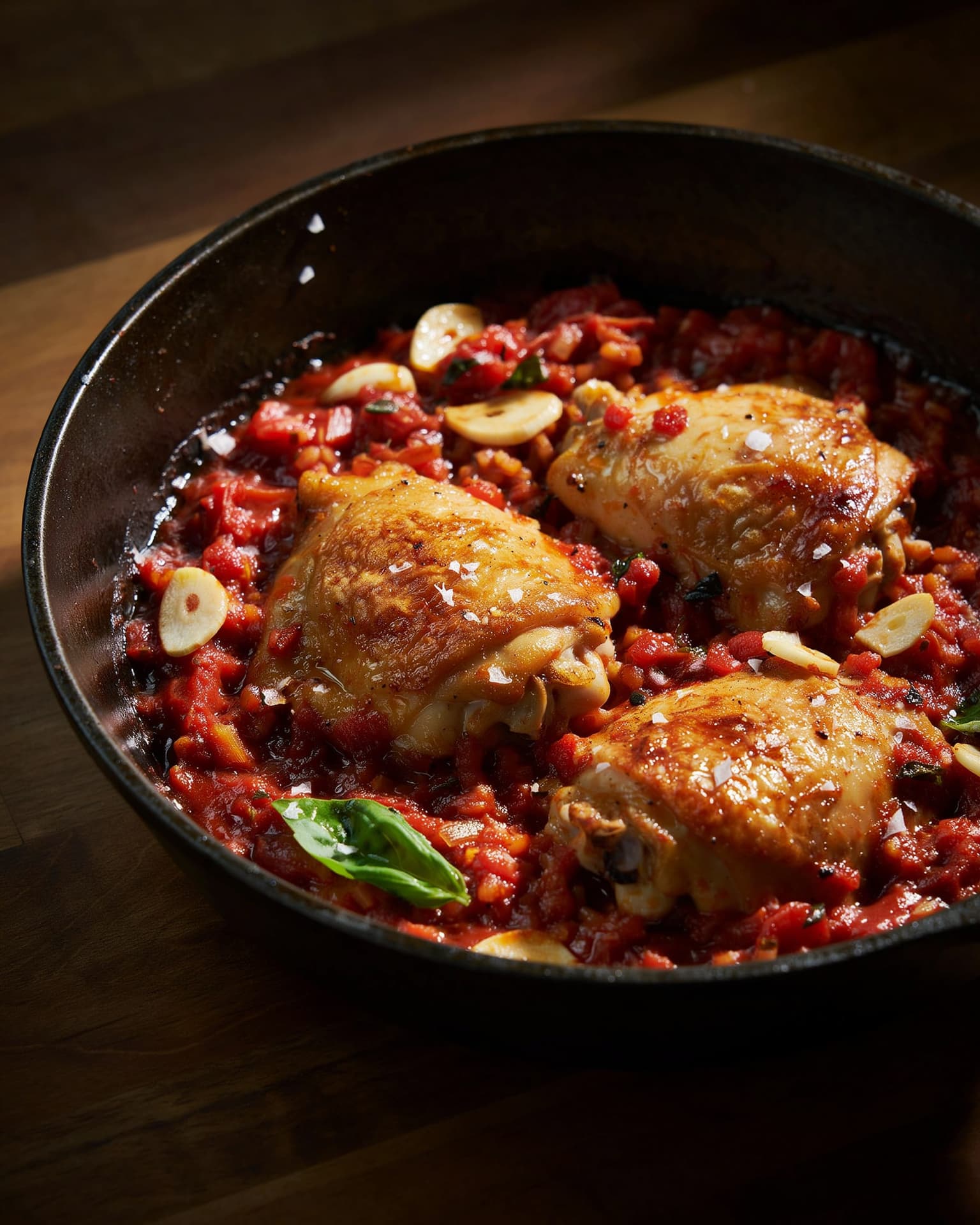
Most easy dinners for two die the moment you realize you've dirtied four pans for a Tuesday. This one lives in a single skillet, and the rice cooks in the same pan where you seared the chicken — which means it drinks up the browned bits (the fond) instead of leaving them to soak forgotten in the sink. That is the whole trick, and it's the one thing nearly every 30-minute recipe I read on the topic skips: they tell you to add rice and liquid, but never to deglaze first.
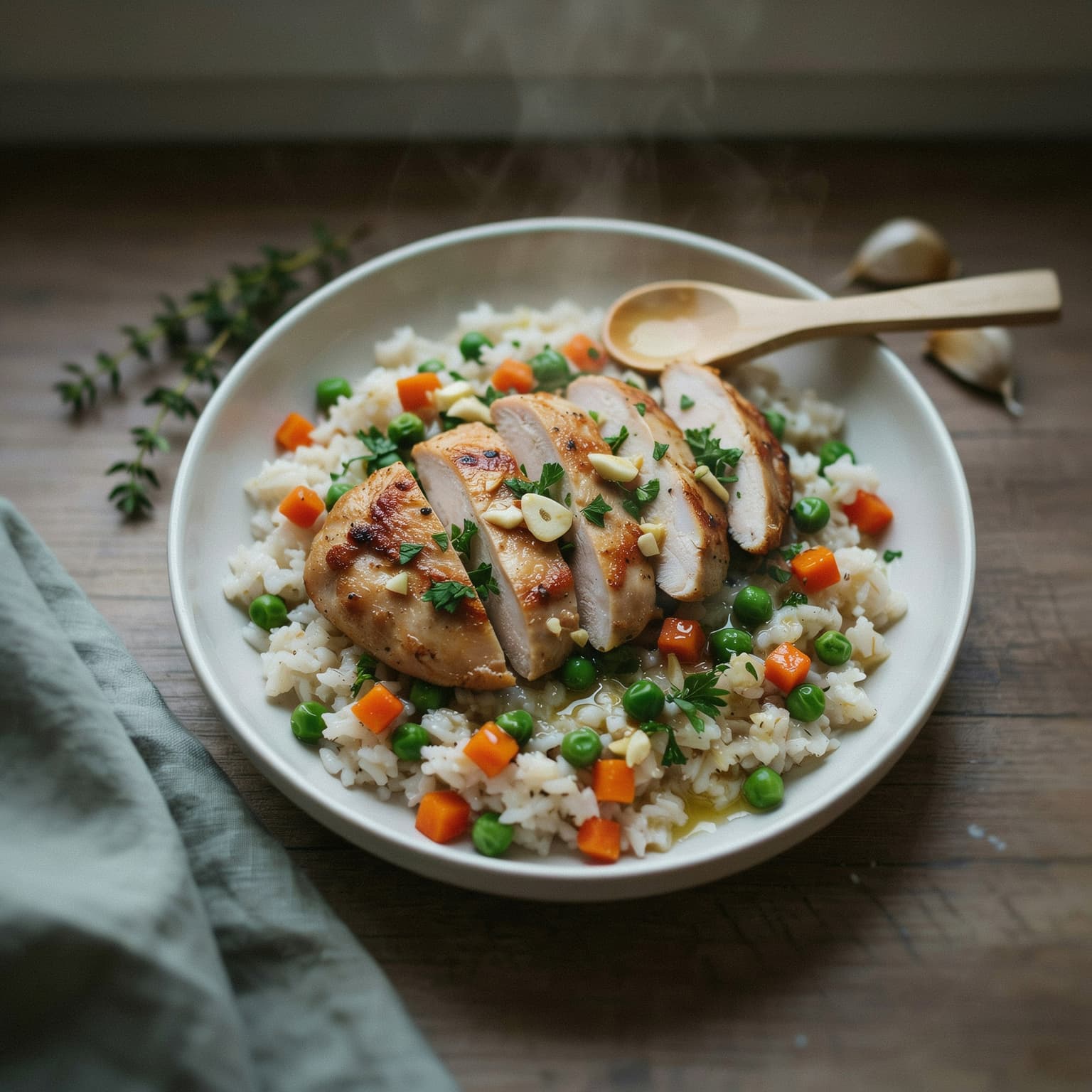
I cook for two most nights, and the math of two is unforgiving — too much and you eat leftovers you resent, too little and someone's still hungry. This recipe scales cleanly. Two chicken breasts, one cup of rice, one can of tomatoes. You sear, you build a quick sauce, you let the rice do the quiet work while you set the table.
This is not a soup, not a bake, not a noodle stir-fry (the SERP is full of those). It's the dish I reach for when I want something that tastes like I fussed but didn't.
Why This Works
Searing chicken breast in a hot pan does two jobs at once. It builds the Maillard crust — that deep golden color that carries most of the savory flavor — and it leaves a layer of stuck-on protein and rendered fat called fond on the pan bottom. That fond is pure concentrated flavor, and if you pour rice and water over it dry, you waste it.
Instead, you deglaze: you add liquid (here, the juice from the canned tomatoes) and scrape while it bubbles, dissolving the fond back into the dish. According to the USDA, chicken must reach an internal temperature of 165°F / 74°C to be safe, but a whole breast keeps cooking after it leaves heat. I pull mine at 160°F and let carryover finish it while I build the rice, then it goes back in. This keeps the breast from turning to chalk.
Rice cooked in tomato liquid absorbs more slowly than rice in plain water because the acid firms the starch — so this recipe uses a touch more liquid and a few extra minutes than a plain pilaf. That's deliberate, not a typo.
What Most Recipes Get Wrong
The entire genre of "easy dinner for two" treats the pan like a delivery vehicle — brown the meat, dump the starch, walk away. But the browned residue left after searing is the single richest flavor in the dish, and pouring dry rice over it does nothing to release it. I've cooked this both ways in the same skillet on the same night. The deglazed version tastes roasted and layered; the skipped version tastes like rice with tomato on it. The other quiet mistake is cooking the chicken breast all the way through during the sear, then simmering it another twenty minutes — that's how you get rubber. Pull it early, let it finish gently in the rice, and it stays tender.
Chef's Tips & What I've Learned
A heavy pan with a lid is worth more than any gadget for this kind of cooking.
Chef Augustin's Tip: If your rice looks dry before it's tender, add broth two tablespoons at a time — never a big splash, which drops the pan temperature and stalls the cook. Small additions keep the simmer steady.
Chef Augustin's Tip: Rinse the rice until the water runs clear before it goes in. That rinse strips surface starch, and it's the difference between distinct grains and a risotto you didn't ask for.
I've tested this with both stainless steel and cast iron. Cast iron wins because it holds roughly 4× more heat than a thin pan, so the sear doesn't stall when you lay cold chicken down. If all you have is nonstick, sear a minute longer and accept a paler crust.
Taste before you serve. Canned tomatoes vary wildly in acidity, and a pinch more salt or a knob of butter at the end rounds a sauce that reads sharp.
Frequently Asked Questions
What's a quick easy dinner for two on a budget?
This one-pan chicken and tomato rice runs about $6–8 total for two servings, since it leans on pantry staples — a can of tomatoes, a cup of rice, and two chicken breasts. Rice and canned tomatoes cost pennies per portion, and stretching two breasts across a full pan of rice means the protein goes further. Swap chicken for 8 oz of ground beef cooked to 160°F / 71°C and it's cheaper still.
Can I make this with ground beef instead of chicken?
Yes, and it's excellent. Brown 8 oz (225g) ground beef in the pan first, breaking it into crumbles, and cook to an internal temperature of 160°F / 71°C per USDA guidance for ground meat. Remove it, build the base and rice as written, then stir the beef back in with the peas at the end. You'll skip the resting step since the beef is fully cooked, and the whole dish comes together about five minutes faster.
Why is my rice mushy or crunchy?
Mushy rice usually means too much liquid or short-grain rice, which releases more starch. Crunchy rice means the simmer was too high and the liquid evaporated before the grains hydrated. Keep the heat genuinely low with the lid on, use long-grain rice rinsed clear, and resist lifting the lid — every peek releases steam you need. If it's crunchy at 20 minutes, add two tablespoons of broth and give it five more.
How do I know the chicken is safe without a thermometer?
Honestly, buy a thermometer — they cost under $15 and end the guessing. But if you're stuck, cut into the thickest part: the juices should run clear with no pink, and the meat should be opaque all the way through. The reliable answer is still 165°F / 74°C measured at the thickest point, which is the USDA safe minimum for all poultry. Visual cues are a backup, not a standard.
Can I double this recipe for four people?
Yes, but use a wider pan, not a taller pile. Rice cooks by steam and even contact, so if you double it in the same skillet the bottom layer overcooks while the top stays raw. Use a 12-inch or larger pan, keep the rice in a single even layer, and add 3–4 minutes to the simmer. Sear the chicken in two batches so the pan stays hot enough to brown rather than steam.
By the time the lid comes off, the peas are bright green against the tomato-stained rice, the chicken is resting in its own steam, and the kitchen smells like garlic and smoke. Two plates, one pan, and the quiet of a table set for the person across from you.