Article and tips
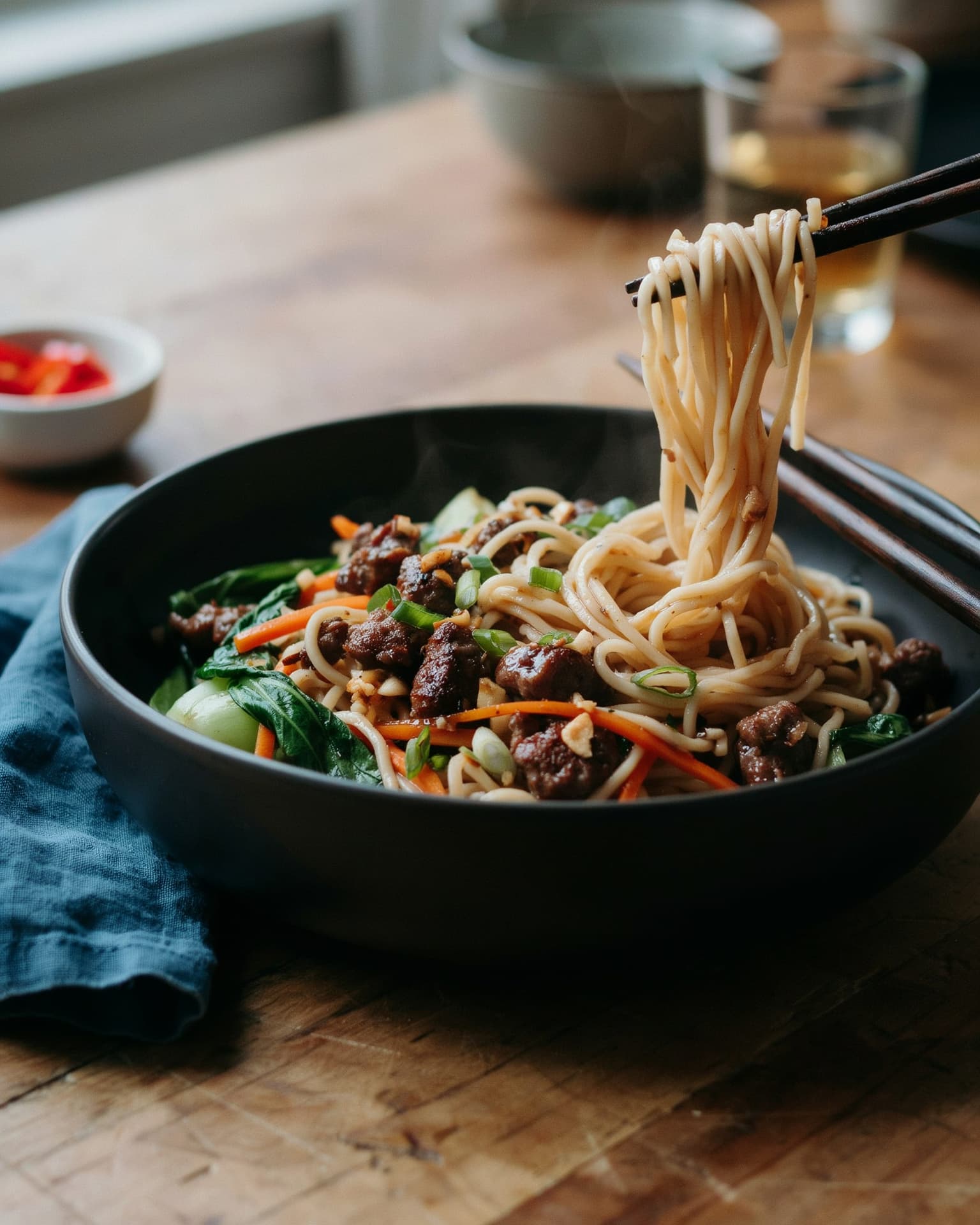
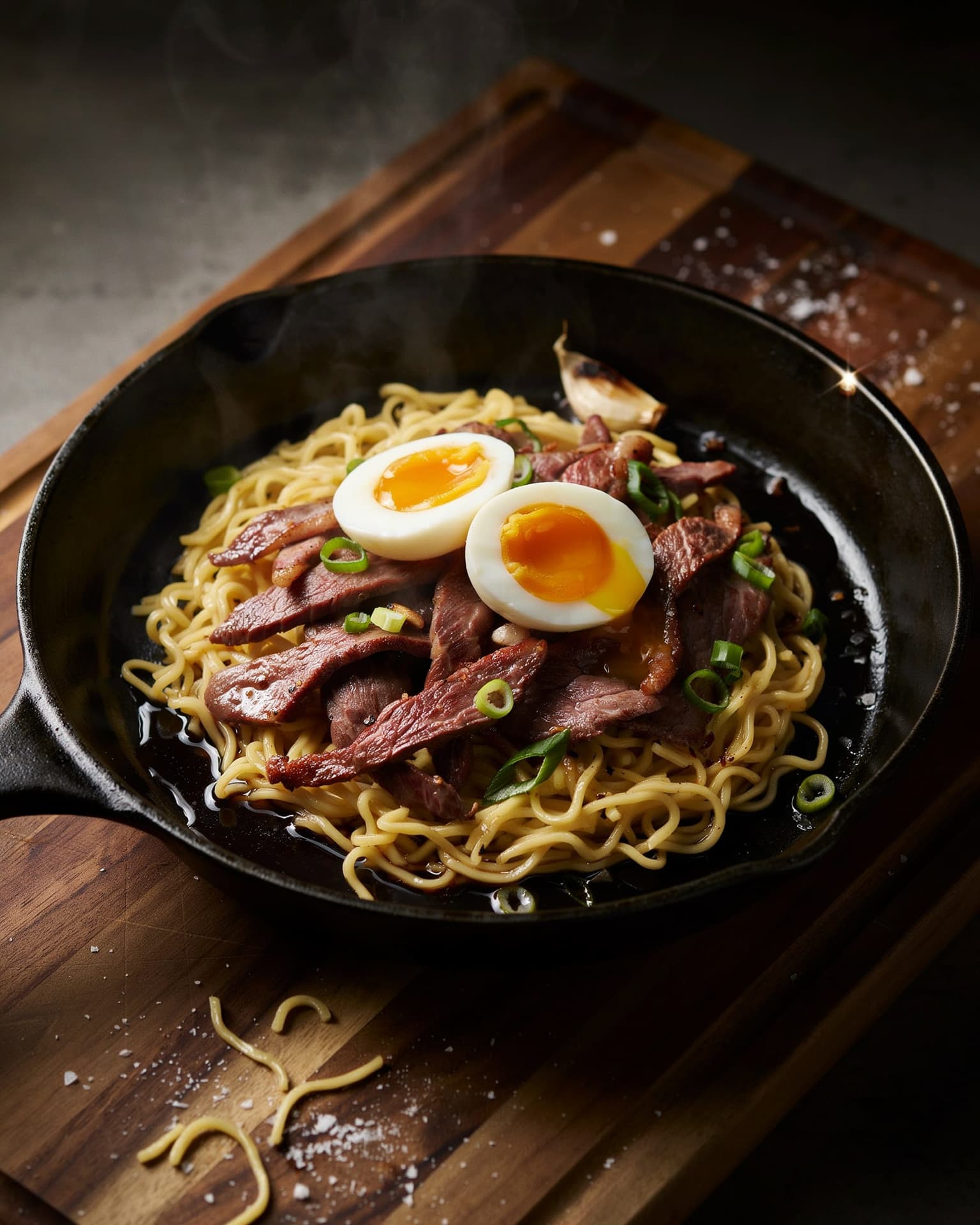
The seasoning packet that comes with instant ramen is the least interesting thing in the package, and I want you to throw it away before we start. What we're building instead is a fast, glossy sauce of soy, brown sugar, and garlic that clings to browned ground beef and slippery noodles — all in one pan, scaled precisely for two people. (I portion for two because that's how I actually cook at home, and doubling is simple when you have company.)
Here's the angle almost every top result misses: they all use hoisin, or they lean on a bagged coleslaw shortcut, and the noodles go rubbery because the sauce is too thin to coat them. The fix is treating the ramen like pasta — you finish cooking it in the reduced sauce so the starch it releases thickens everything into a clingy glaze. That one change is the whole recipe.
Why This Works
Ground beef browns best when you leave it alone. When beef hits a hot pan, the surface proteins and sugars undergo the Maillard reaction — that's the deep savory crust — but it only happens above roughly 300°F / 149°C on dry contact. If you stir constantly, you release steam and drop the surface temperature below that threshold, and the meat greys instead of browning. So I press the beef flat and wait.
The sauce does double duty. Soy sauce brings glutamates (natural savoriness), brown sugar caramelizes slightly against the hot pan, and the starch that leaches from the ramen as it simmers thickens the liquid into a glaze without any cornstarch slurry. I've made this both ways — with cornstarch and without — and the noodle-starch version tastes cleaner and never turns gluey. Reducing the sauce with the noodles in it is the difference between ramen that sits in a puddle and ramen that wears its sauce like a coat.
What Most Recipes Get Wrong
Most beef ramen recipes boil the noodles separately, drain them, then toss them into a thin sauce. You end up rinsing away the surface starch that would have thickened your sauce, and the noodles never absorb any flavor — they're just carriers. The competitors leaning on hoisin mask this with sweetness, but the texture is still off. Cook the noodles in the sauce and let that released starch do the thickening. You'll never reach for a cornstarch slurry again, and the noodles taste of the dish instead of tasting of the pot you drained them in.
Chef's Tips & What I've Learned
A hot pan forgives a lot of sins; a cold pan forgives none.
Chef Augustin's Tip: Taste the sauce before the noodles go in and adjust then — once the ramen is absorbing liquid, the seasoning is locked in and you can only chase it with more soy.
Chef Augustin's Tip: If your sauce reduces faster than the noodles soften, add water a splash at a time rather than turning down the heat. You want the noodles cooking in active, bubbling liquid, not a lukewarm bath.
I've cooked this in both a nonstick skillet and a stainless one. Stainless gives you a better fond (those browned bits) to deglaze, but nonstick is more forgiving if you're new to searing — pick your battle.
What can I do with plain beef ramen noodles?
Strip them down and rebuild. Discard the seasoning packet, brown 8 oz of ground beef, and make a quick sauce from 3 tablespoons soy sauce, 1 tablespoon brown sugar, and two cloves of garlic. Cook the noodle bricks directly in that sauce so they absorb flavor instead of water. Finish with frozen vegetables and green onion. This turns a 40-cent noodle brick into a genuine dinner for two in about 25 minutes.
How do you make beef ramen noodles better?
Three moves, in order of impact. First, brown the beef hard and don't stir it for the first two minutes so it develops a crust at around 300°F / 149°C. Second, cook the noodles in the sauce, not in separate water, so the released starch thickens everything. Third, finish off the heat with a tablespoon of butter — dairy fat rounds out the salty soy and gives the sauce a restaurant-style gloss. Fresh garlic over the packet seasoning is the whole difference.
What vegetables go well in beef ramen?
A frozen stir-fry blend is the easy answer — usually snap peas, carrots, and bell pepper, already cut and quick to warm through. Beyond that, broccoli florets, shredded cabbage, mushrooms, and baby spinach all work. Add sturdy vegetables like carrots and broccoli with the noodles so they soften; add delicate ones like spinach in the last 30 seconds. For two people, about 1.5 cups (roughly 200g) of vegetables keeps the beef-to-veg balance right.
Can I use chicken instead of ground beef?
Yes, and it's a genuinely good swap. Use 8 oz of ground chicken or thin-sliced chicken breast, and cook it to an internal temperature of 165°F / 74°C — poultry needs a higher safe temperature than beef. Chicken has less fat, so add an extra teaspoon of olive oil to the pan and don't skip the finishing butter. The sauce and method stay exactly the same. It'll be a little lighter, but every bit as satisfying.
How do I store and reheat leftovers?
Ramen absorbs sauce as it sits, so leftovers will be less saucy the next day. Store in an airtight container in the fridge for up to 3 days. To reheat, add a splash of water or broth and warm gently in a skillet over medium, tossing until the noodles loosen and the sauce comes back to life. I don't recommend freezing — the noodles turn mushy on thaw.
By now the pan smells like garlic and caramelized soy, the noodles are wearing their glaze, and there are exactly two bowls steaming on the counter. Pull up a stool, grab chopsticks, and eat it while the green onion is still bright.