Article and tips
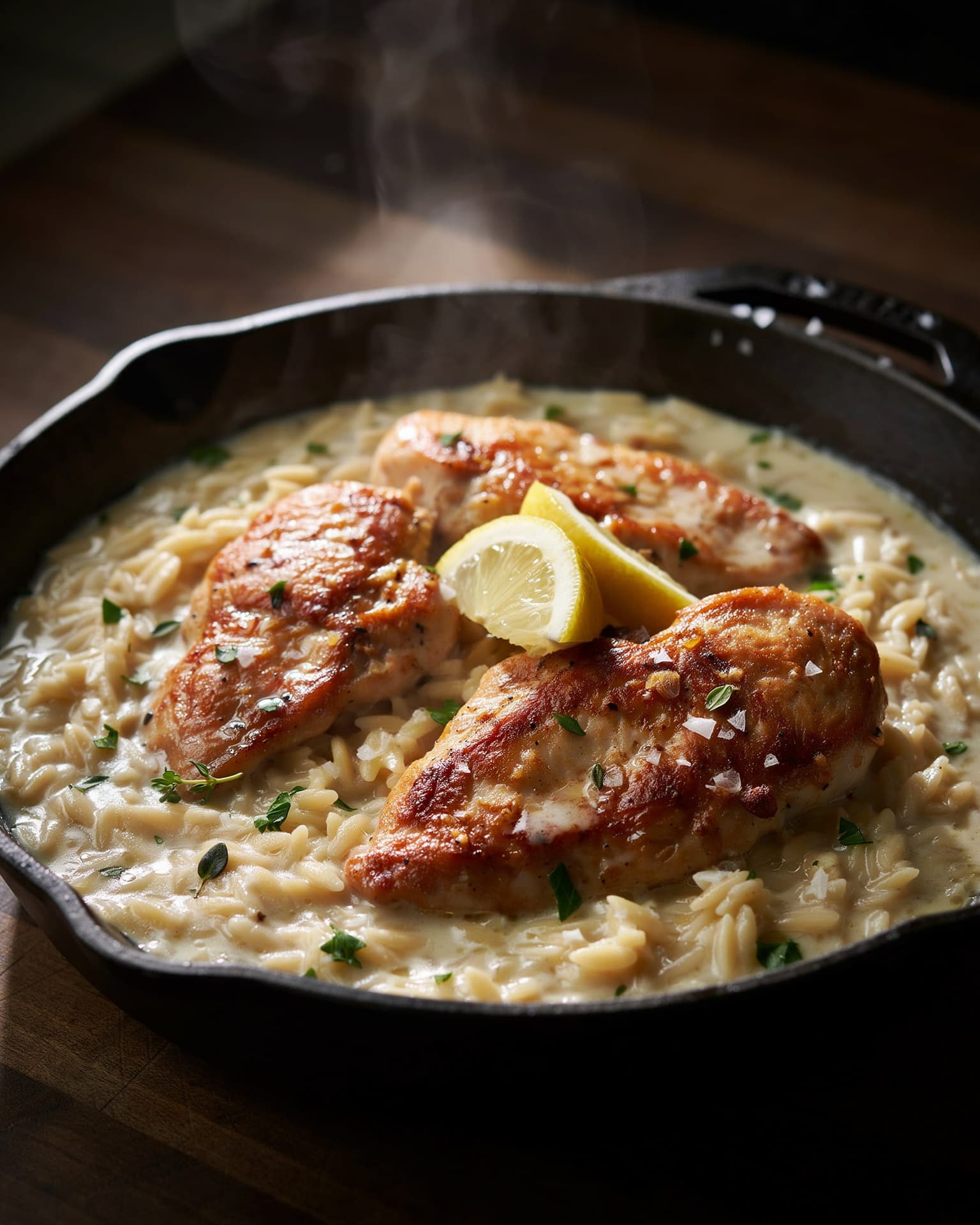
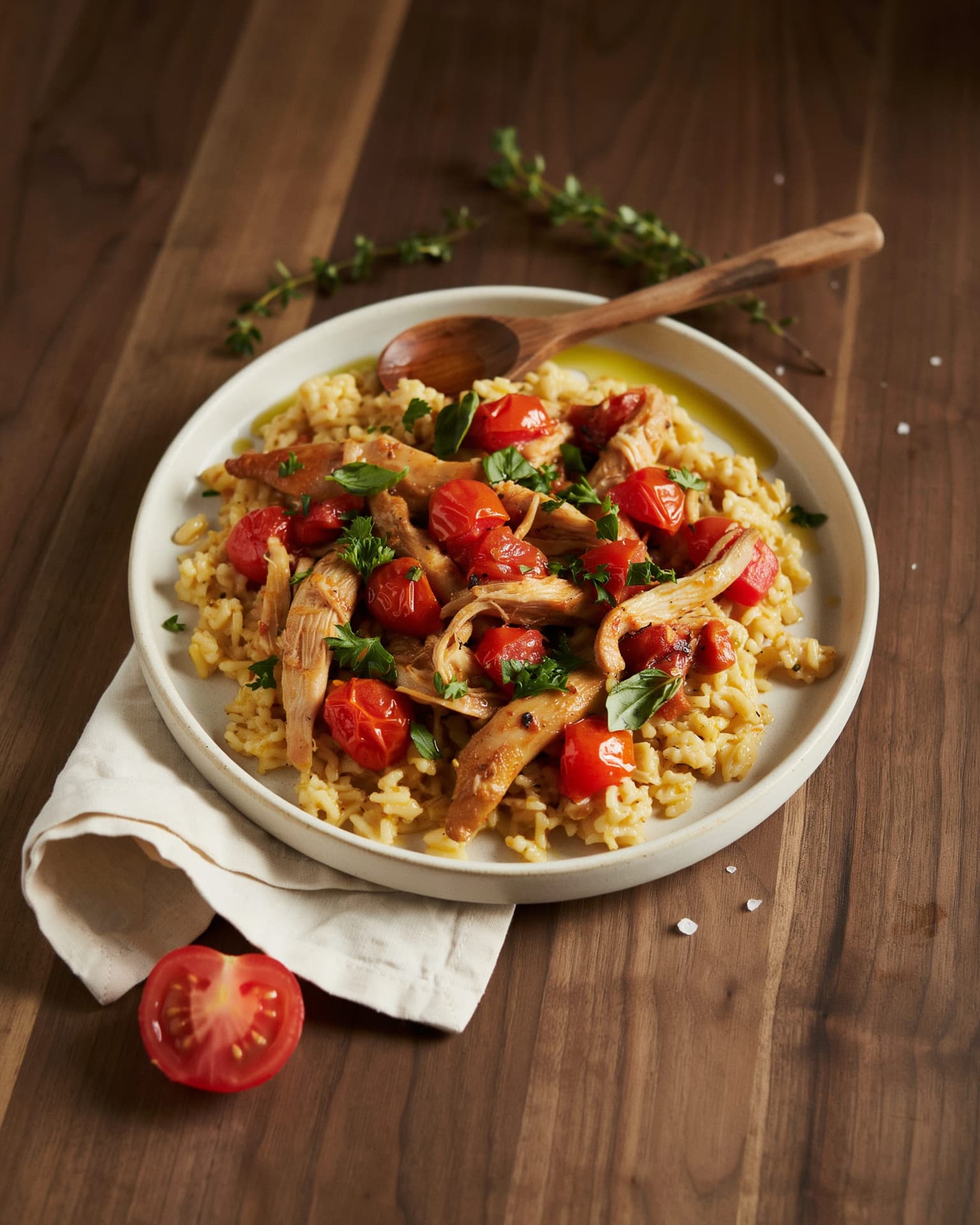
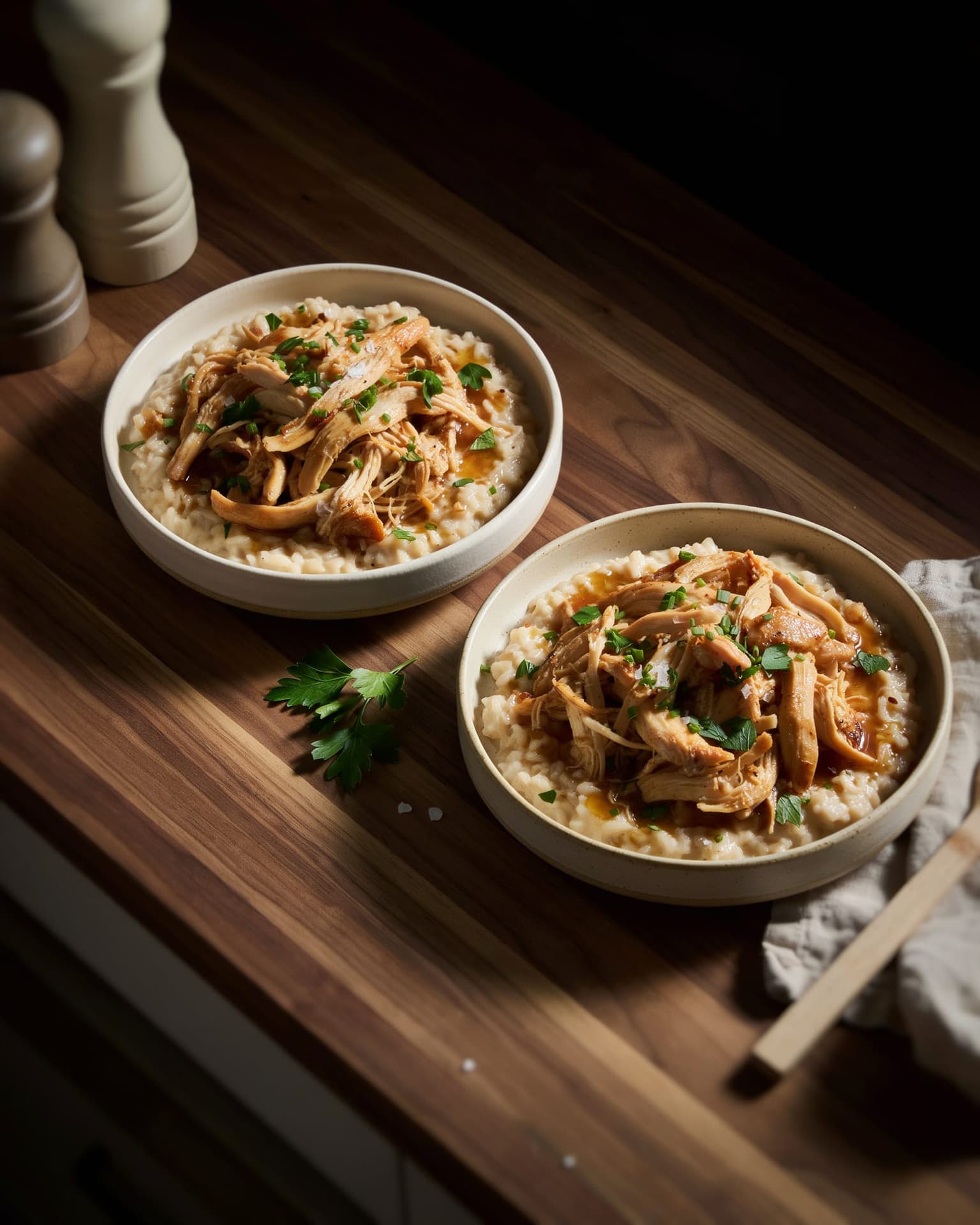
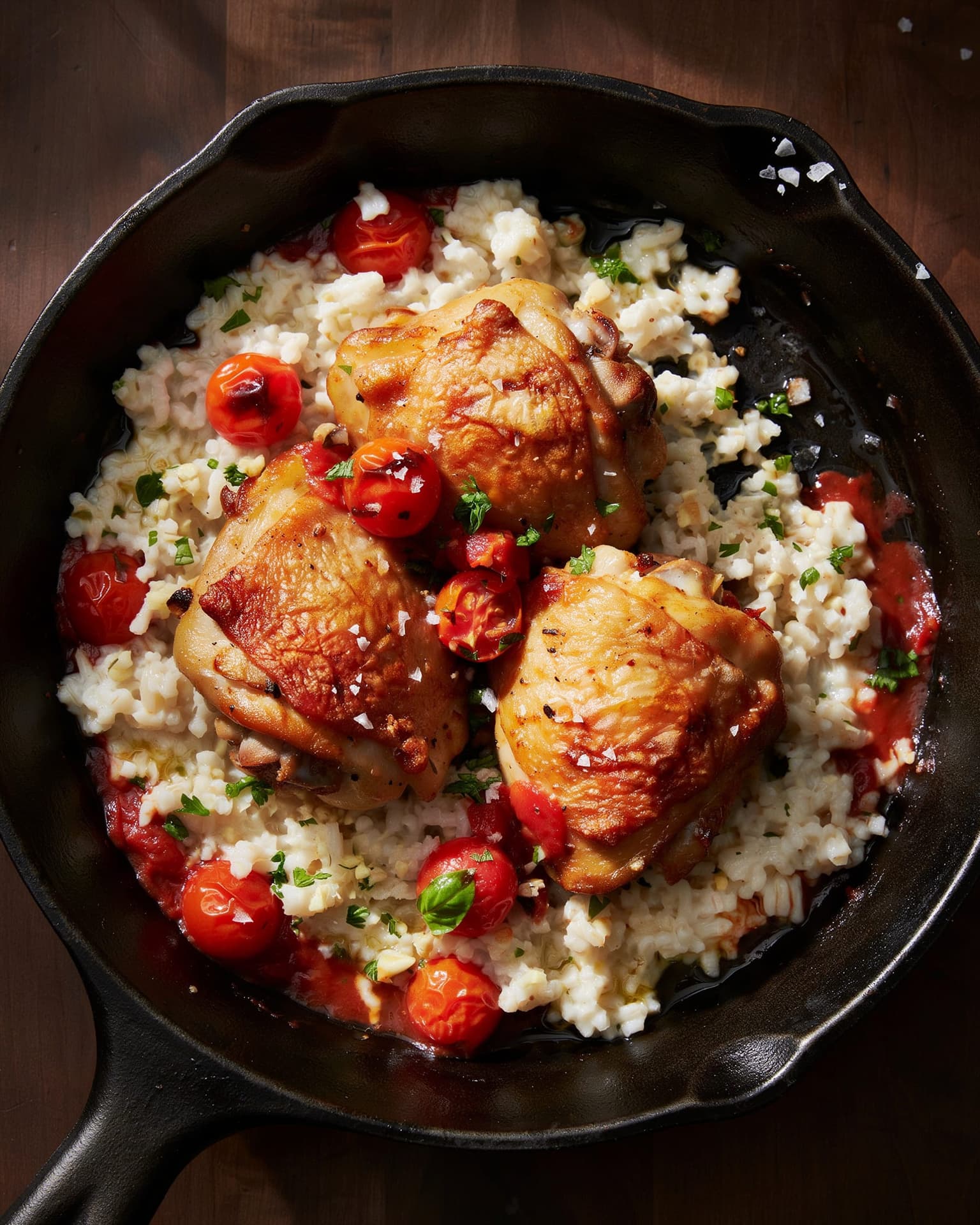
Most dinner-for-two recipes hand you a full-size skillet and let you figure out the scaling on your own — and that's exactly where they leave you stranded with leftovers you didn't want. This one is built for two plates and one pan, which means the rice absorbs the seared-chicken fond instead of getting rinsed down the drain. You sear two chicken breasts, build a quick garlic butter tomato sauce right in the same pan, then let the rice cook in that sauce until every grain tastes like the browned bits underneath it.
I went looking through the top dinner-for-two roundups and they all share one blind spot: they treat "cooking for two" as "cook the normal recipe and eat half." That doesn't work with rice, because the liquid-to-grain ratio doesn't scale linearly when you shrink the pan — the surface area changes and you scorch the bottom. So my angle here is real portion scaling: a 10-inch pan, a precise 1.5-to-1 liquid ratio, and a lid-on finish that guarantees fluffy rice for exactly two people with nothing wasted.
This is the kind of Tuesday dinner that tastes like you tried harder than you did.
Why This Works
The magic is the fond — those sticky, caramelized browned bits the chicken leaves on the pan when it sears. That fond is pure concentrated flavor (mostly Maillard-reaction compounds), and if you deglaze it into your sauce, it flavors the entire dish from the bottom up. I've seared chicken in both nonstick and stainless steel, and stainless wins every time here because nonstick refuses to build fond — the whole point of this method.
The second thing that works is cooking the rice directly in the tomato sauce rather than boiling it separately. Rice is basically a sponge; whatever liquid it drinks becomes its flavor. Boil it in water and you get bland grains you have to season after the fact. Simmer it in garlicky, buttery tomato liquid and each grain carries the sauce inside it. The starch the rice releases also lightly thickens the sauce, so you get a glossy coating without any flour or cornstarch.
One pan, two cooking stages, no separate pots — the flavor compounds instead of scattering.
What Most Recipes Get Wrong
They scale the ingredients but not the pan. If you halve a four-serving recipe and dump it into a big 12-inch skillet, the liquid spreads thin, evaporates too fast, and scorches the rice before it's tender. The fix is matching your pan to your portion: a 10-inch skillet holds two servings of rice at the right depth so the liquid ratio actually behaves. The other common miss is rinsing the fond away by cooking the rice in a separate pot — you're literally pouring your best flavor down the sink. Cook everything in the seared pan and the dish tastes twice as deep for zero extra effort.
Chef's Tips & What I've Learned
Chef Augustin's Tip: Butterfly thick chicken breasts before searing. A breast over 8 ounces won't hit 165°F / 74°C in the center before the outside overcooks — slicing it horizontally into two thinner pieces gives you even cooking and more surface area for that golden crust.
Chef Augustin's Tip: If your sauce looks too thick before the rice is done, add water two tablespoons at a time. Rice keeps drinking liquid until the very last minute, and a dry pan is what causes scorching.
I keep frozen peas in the door of my freezer specifically for finishing dishes like this — they thaw in the residual heat, add color, and never turn to mush the way they do when you boil them.
Season the cooking liquid, not just the finished plate — a grain of rice can only taste like what it cooked in.
How do I make this dinner recipe for two?
Sear two seasoned chicken breasts in a 10-inch stainless pan until they hit 165°F / 74°C, then remove them. Cook diced onion and garlic in butter, deglaze the fond, toast 3/4 cup rice, and add crushed tomatoes plus 1 cup broth. Nestle the chicken back in, cover, and simmer on low for 18 minutes. Rest 5 minutes, stir in frozen peas, and finish with butter. Total time is about 45 minutes for two plates.
What can I substitute for chicken breast?
Ground beef works wonderfully — brown 8 ounces in the pan first, cook it to 160°F / 71°C, then set it aside and stir it back in with the peas at the end so it doesn't overcook during the rice simmer. Chicken thighs are also excellent and more forgiving; they still need 165°F / 74°C but stay juicy even if you go a minute over. In every case you keep the fond, so the sauce stays deeply flavored no matter which protein you choose.
Can I freeze this chicken and rice?
Yes, though the texture changes slightly. Cool it completely, then freeze in an airtight container for up to 2 months. Rice can turn a little grainy after freezing because the starches recrystallize, so I add a splash of broth when reheating to bring back moisture. Reheat covered on the stovetop over low heat or in the microwave until the center reaches 165°F / 74°C. For the best texture, I honestly prefer eating it fresh and freezing only if I've genuinely made extra.
How long does it last in the fridge?
Stored in an airtight container, this keeps for 3 to 4 days in the refrigerator, in line with USDA guidance for cooked poultry and rice. Cool it within two hours of cooking to stay in the safe zone. When you reheat, bring it back to 165°F / 74°C throughout and add a tablespoon or two of water or broth to loosen the rice, which firms up as it chills. Give it a good stir halfway through reheating so it warms evenly.
What should I serve with it?
Because the rice and protein are already in one pan, I keep the sides light and quick. A simple green salad with a sharp vinaigrette cuts through the buttery tomato richness perfectly. Crusty bread is ideal for mopping the sauce. If you want something warm, a handful of roasted broccolini or a few blistered green beans on the side rounds out the plate without adding another complicated dish. A crisp white wine, if that's your evening, does the rest.
Pour two glasses, set the pan right on a trivet in the middle of the table, and let the steam rise between you — that's the whole point of cooking for two.