Article and tips
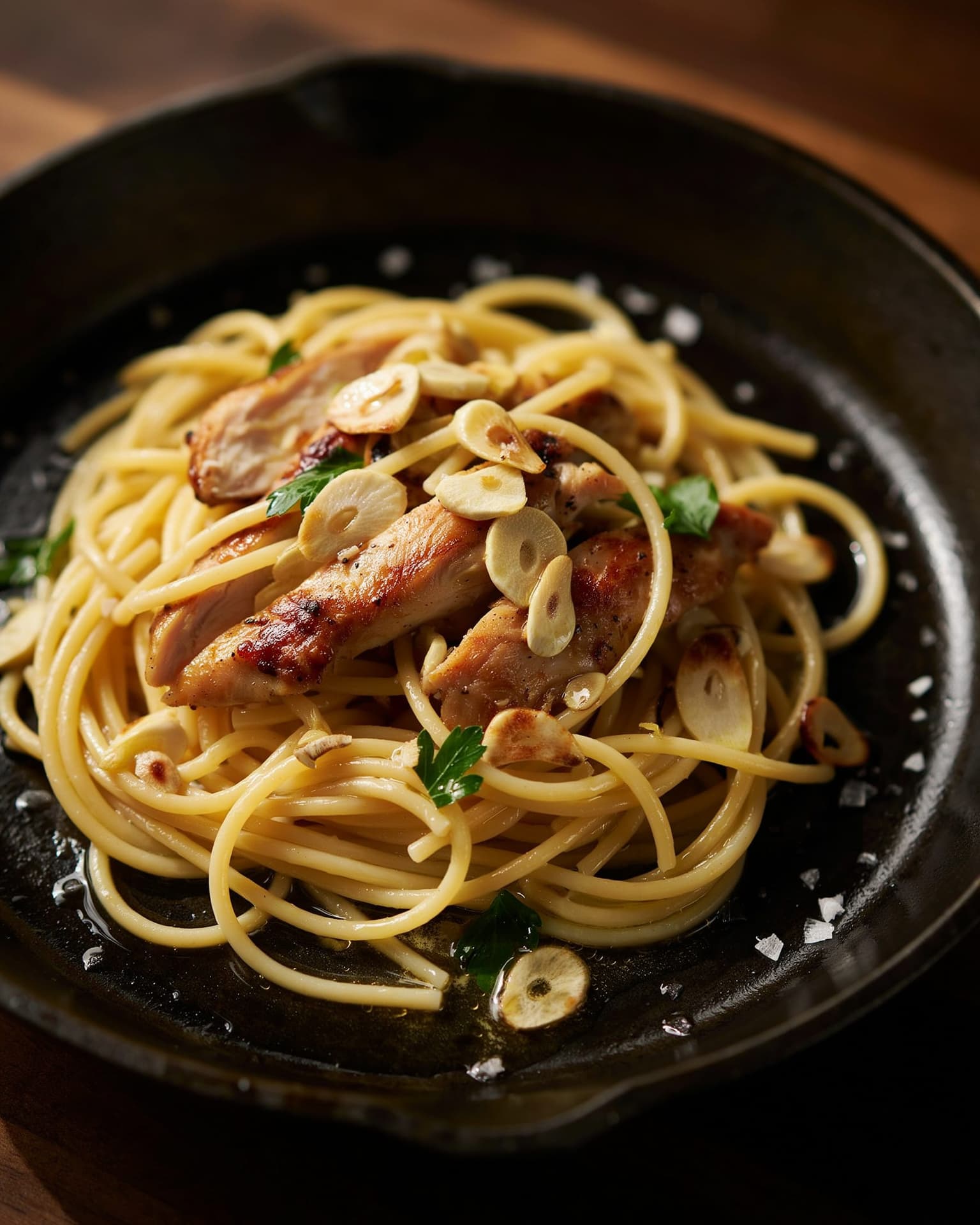
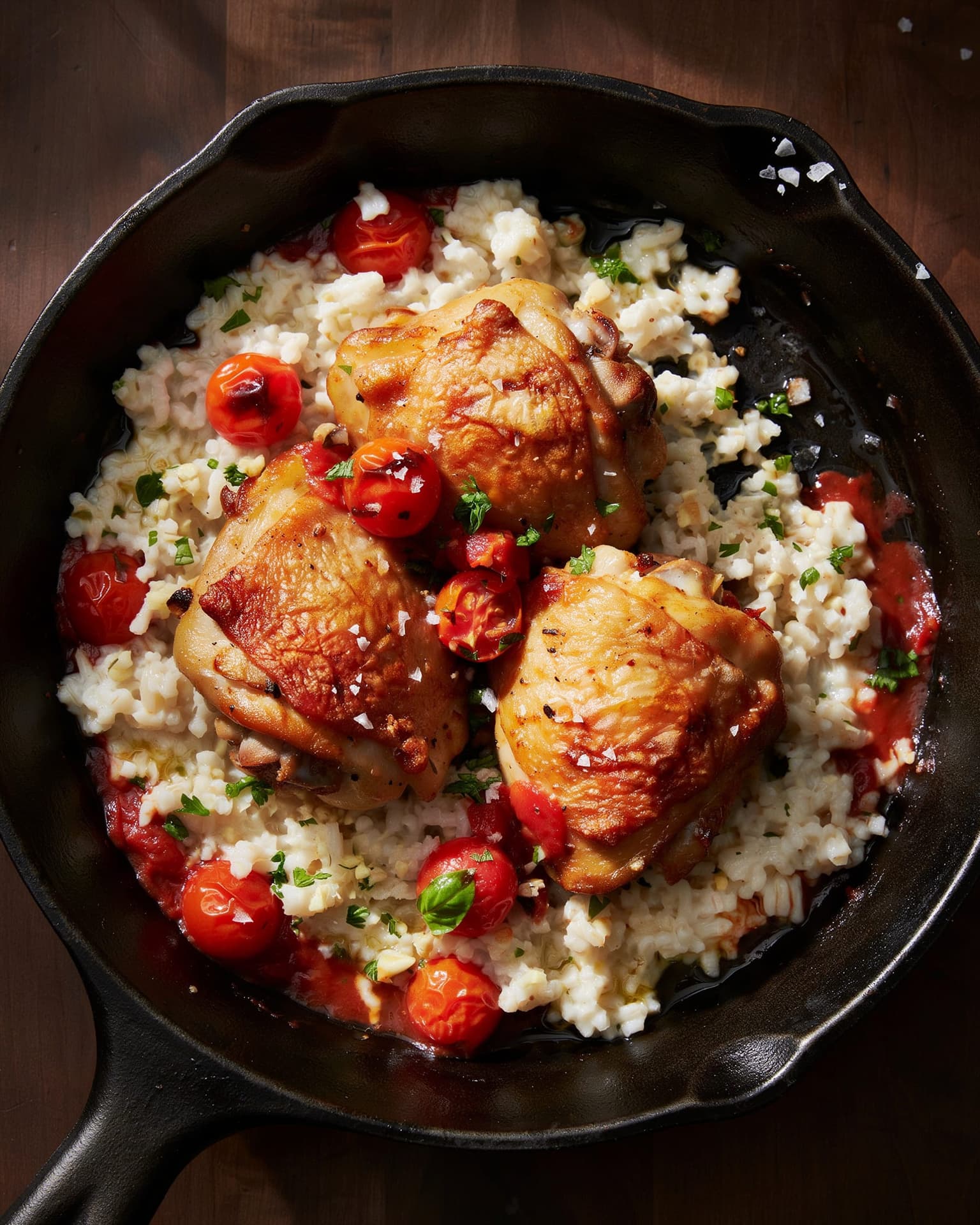
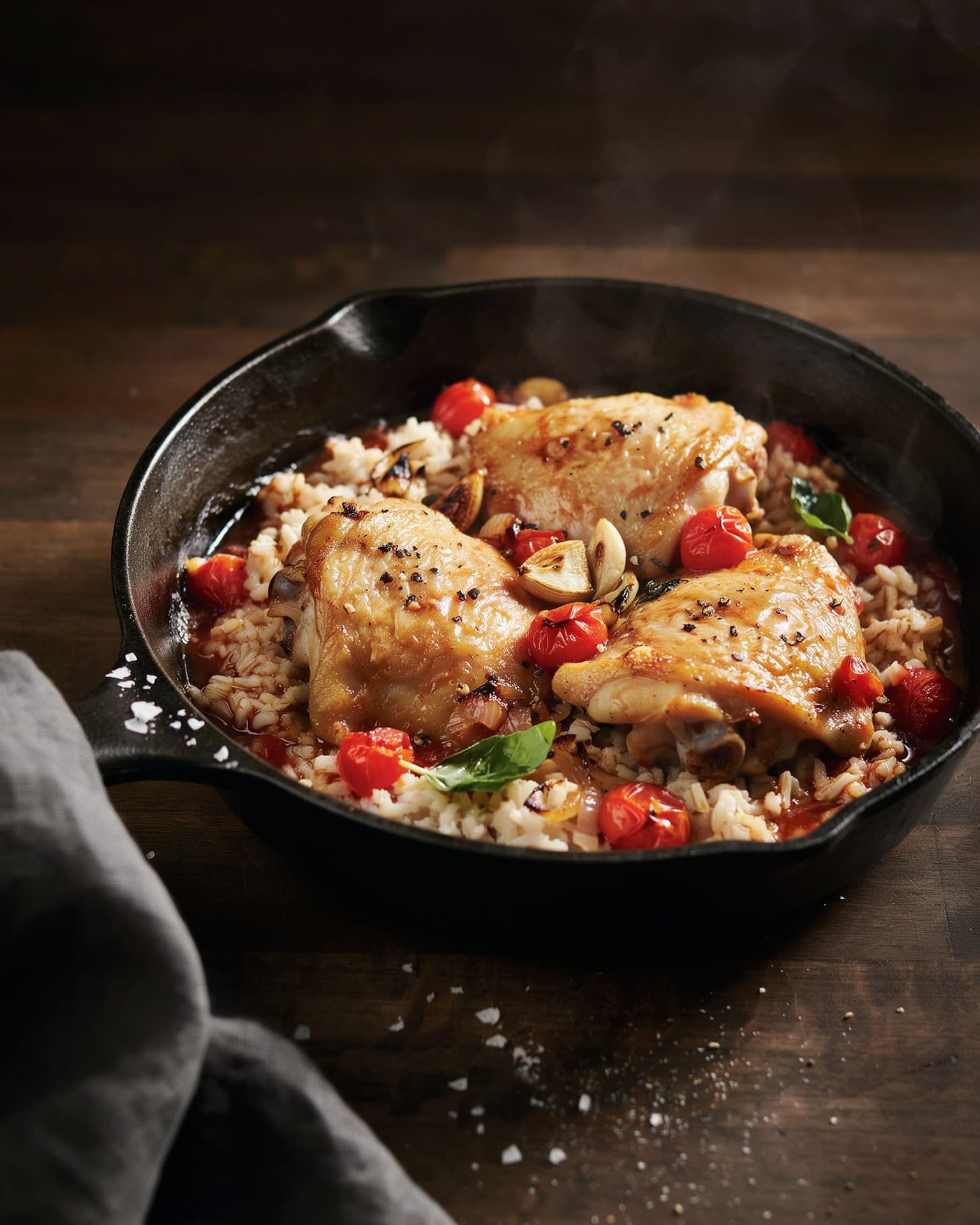
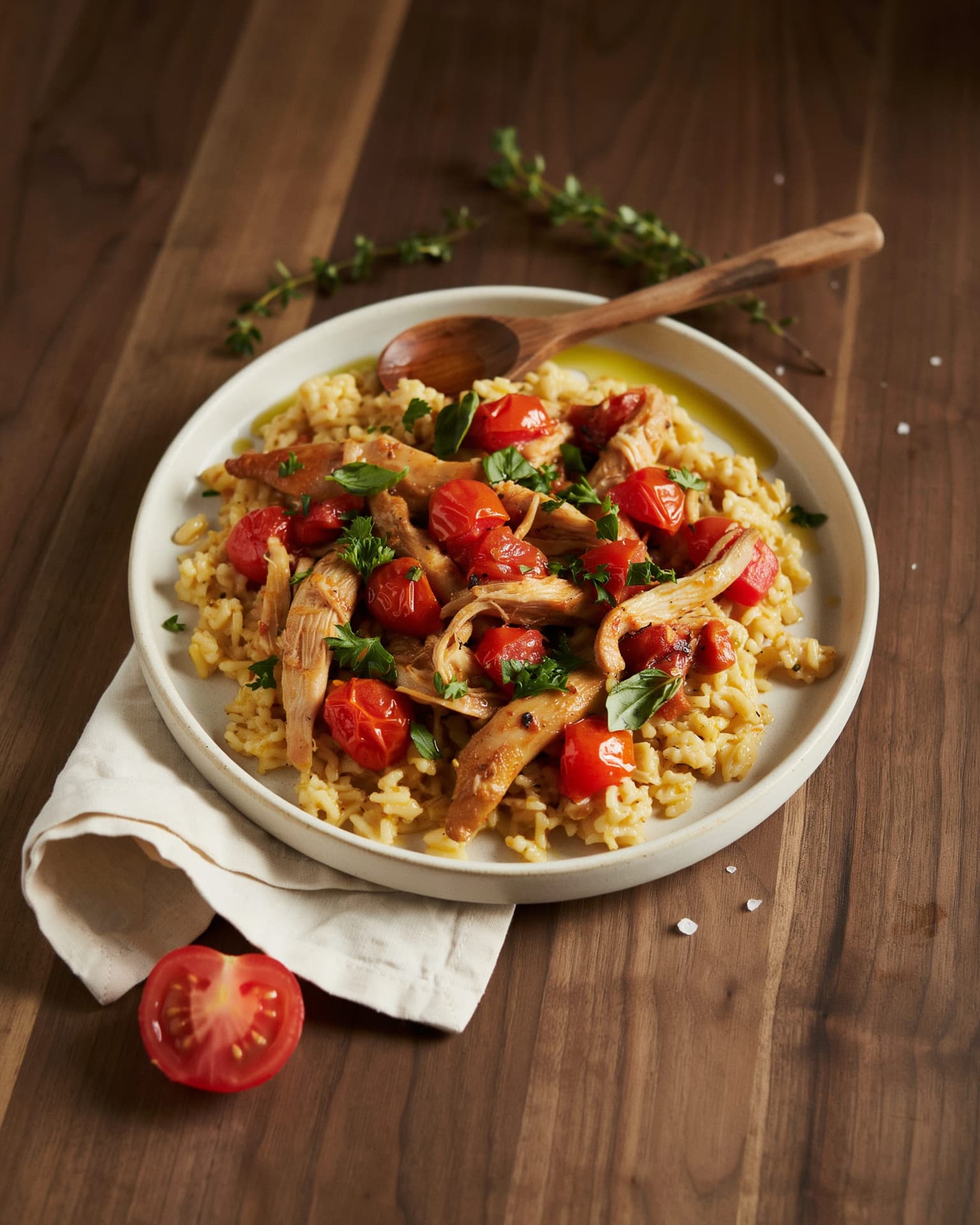
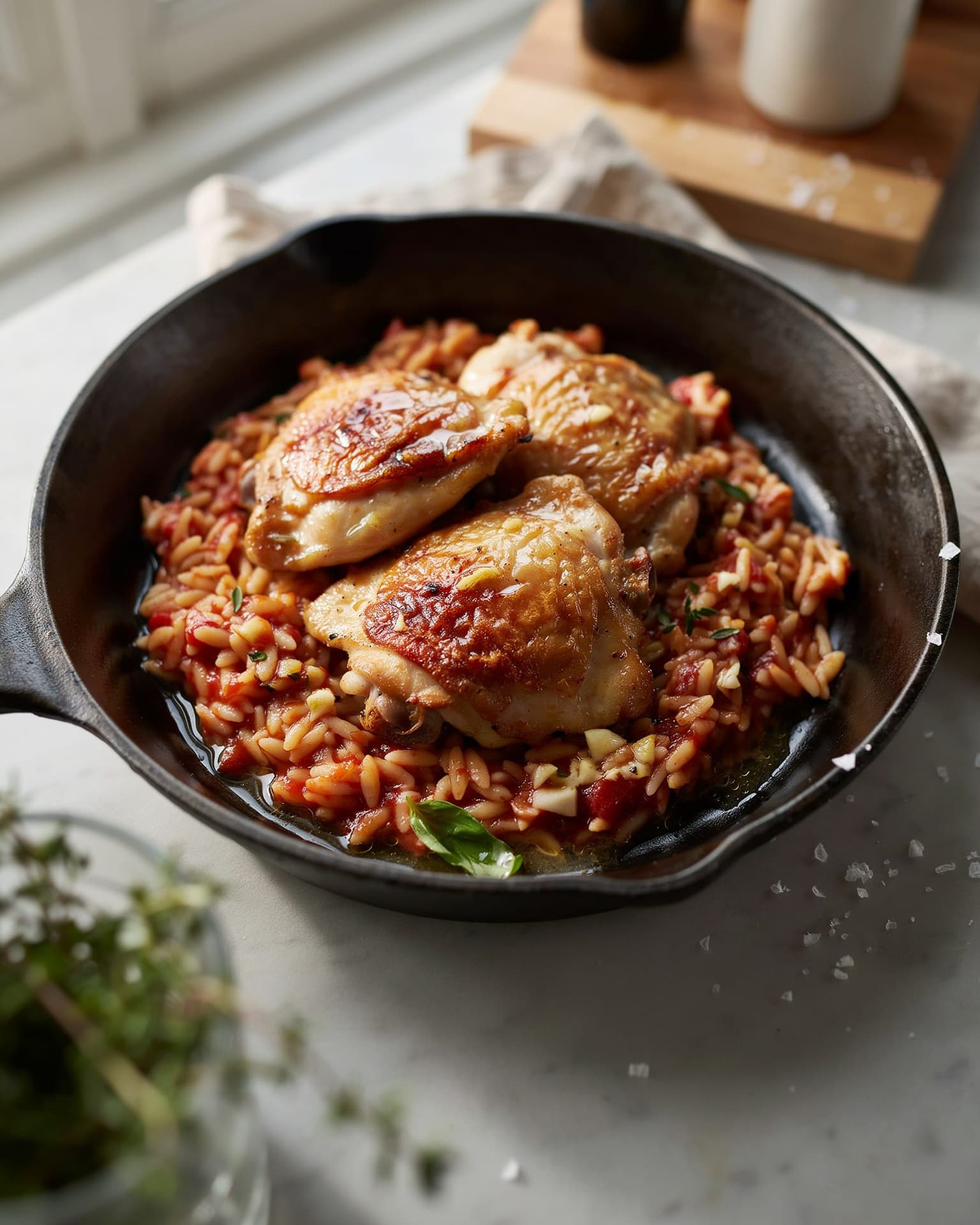
The best easy dinner for two is the one where the pasta cooks in the same pan as the chicken, soaking up every browned bit left behind by the sear. That's the whole idea here — you sear two chicken breasts, pull them out, and cook orzo directly in the garlicky, tomato-stained fond they leave in the skillet. One pan, two hungry people, and a sink that stays nearly empty.
I scrolled through the usual roundups while planning this — the sheet-pan nachos, the tuna melts, the Instant Pot butter chicken. They're fine. But almost every "easy dinner for two" list treats the pan as a place to cook things separately and then combine them. Nobody uses the pan itself as an ingredient. That's my angle: the fond (the sticky brown residue from searing) becomes the backbone of the sauce, and the orzo drinks it up as it cooks. You get restaurant depth from a Tuesday-night skillet.
This scales cleanly for two without leftovers you'll forget in the back of the fridge. Half a pound of chicken, three-quarters of a cup of orzo, one can of tomatoes. Enough for two plates with maybe a spoonful extra to fight over.
Why This Works
Searing chicken breast does two jobs at once. The Maillard reaction — the browning that happens above roughly 300°F (149°C) — creates hundreds of new flavor compounds on the surface of the meat. But it also leaves behind fond, those caramelized proteins stuck to the pan. When I add liquid and scrape (that's deglazing), those compounds dissolve back into the sauce. Skip the sear and you've thrown away half your flavor.
Cooking orzo in the sauce instead of separately means the pasta releases its starch directly into the liquid. That starch thickens everything into a glossy, risotto-like consistency without a drop of cream. I've made this both ways — boiling the orzo separately and stirring it in versus cooking it in the sauce — and the in-pan version is noticeably silkier and more cohesive. The separate-pot version tastes like two things sharing a plate. This tastes like one dish.
The butter goes in at two points: a little for searing, a knob at the end. That final swirl of cold butter emulsifies into the sauce and gives it shine and richness that oil alone can't match.
What Most Recipes Get Wrong
Most easy-dinner-for-two recipes tell you to boil the pasta in one pot and make the sauce in another, then combine. It works, but you've now dirtied two vessels and lost the single biggest flavor opportunity in the whole dish: the fond. Every roundup I read while planning this treated the skillet as a container, not a component.
The fond — that crusty brown film left after searing chicken — is concentrated, caramelized flavor. When recipes have you wipe the pan clean before starting the sauce, or cook the pasta somewhere else entirely, that flavor goes down the drain. Cooking the orzo directly in the deglazed pan captures it. It's also why I don't rinse the pan between the sear and the sauce, and why I scrape so aggressively when the tomatoes go in. That one habit is the difference between a sauce that tastes flat and one that tastes like it simmered for hours.
Chef's Tips & What I've Learned
A thermometer is not optional for chicken breast. I've tested pulling breasts by feel and by clock, and I still miss by 10 degrees in either direction more often than I'd admit. An instant-read thermometer to 165°F / 74°C is the only way to guarantee juicy, safe chicken every time. The USDA is firm on this, and so am I.
Chef Augustin's Tip: If your chicken breasts are thick, butterfly them or pound them to an even 3/4 inch before searing. Even thickness means even cooking, which means no dry edges wrapped around a raw center.
Salt in stages, taste at the end. Because the Parmesan and broth both bring salt, I hold back at the finish and adjust only after everything's combined. It's far easier to add than to fix.
Warm your bowls. Run them under hot tap water and dry them while the orzo finishes. A creamy pasta dish cools fast in a cold bowl, and this one deserves to stay hot to the last bite.
Can I make this without orzo?
Absolutely. Any small pasta shape works — ditalini, small shells, or even broken spaghetti. The key is keeping the shape small so it cooks in roughly the same 10-12 minutes and releases enough starch to thicken the sauce. Larger shapes like penne will need more broth (add another 1/2 cup / 120ml) and a few extra minutes. Avoid long noodles; they won't distribute through the sauce the same way and you'll lose the risotto-like texture that makes this dish work.
What can I substitute for chicken breast?
Boneless skinless chicken thighs are an easy swap and honestly more forgiving — they stay juicy even if you overshoot slightly, though you still cook them to 165°F / 74°C. You can also use about 12 oz (340g) of ground beef; brown it in the pan first to 160°F / 71°C, remove it, build the sauce, and stir it back in at the end. Either way you keep the fond and the one-pan method intact, so the dish still comes together beautifully.
How do I feed two people cheaply with this?
This recipe already leans budget-friendly — chicken breast, orzo, canned tomatoes, and frozen peas are among the cheapest proteins and staples in the store. To stretch it further, swap the chicken for ground beef or skip the protein entirely and double the orzo for a meatless tomato-Parmesan pasta. A can of tomatoes runs under two dollars and does most of the flavor work. The whole dish costs roughly the price of a single takeout entrée and feeds two.
Can I make this ahead or reheat leftovers?
Orzo continues absorbing liquid as it sits, so leftovers thicken considerably in the fridge. Store the chicken and orzo together in an airtight container for up to 3 days. To reheat, add a splash of chicken broth or water and warm gently on the stove, stirring, until loosened and hot throughout (165°F / 74°C for the chicken). I don't recommend freezing — cooked orzo turns mushy after thawing and loses that just-right bite.
What's the fastest way to make this a lazy dinner?
The biggest time sink is the sear and the 10-minute orzo simmer, both of which are hands-off enough to prep the rest during. To go even lazier, skip slicing the chicken and serve the breast whole on top. Use pre-minced garlic and frozen diced onion if you keep them. You can have this from fridge to table in about 35 minutes with maybe 10 minutes of actual active work, and one pan to wash.
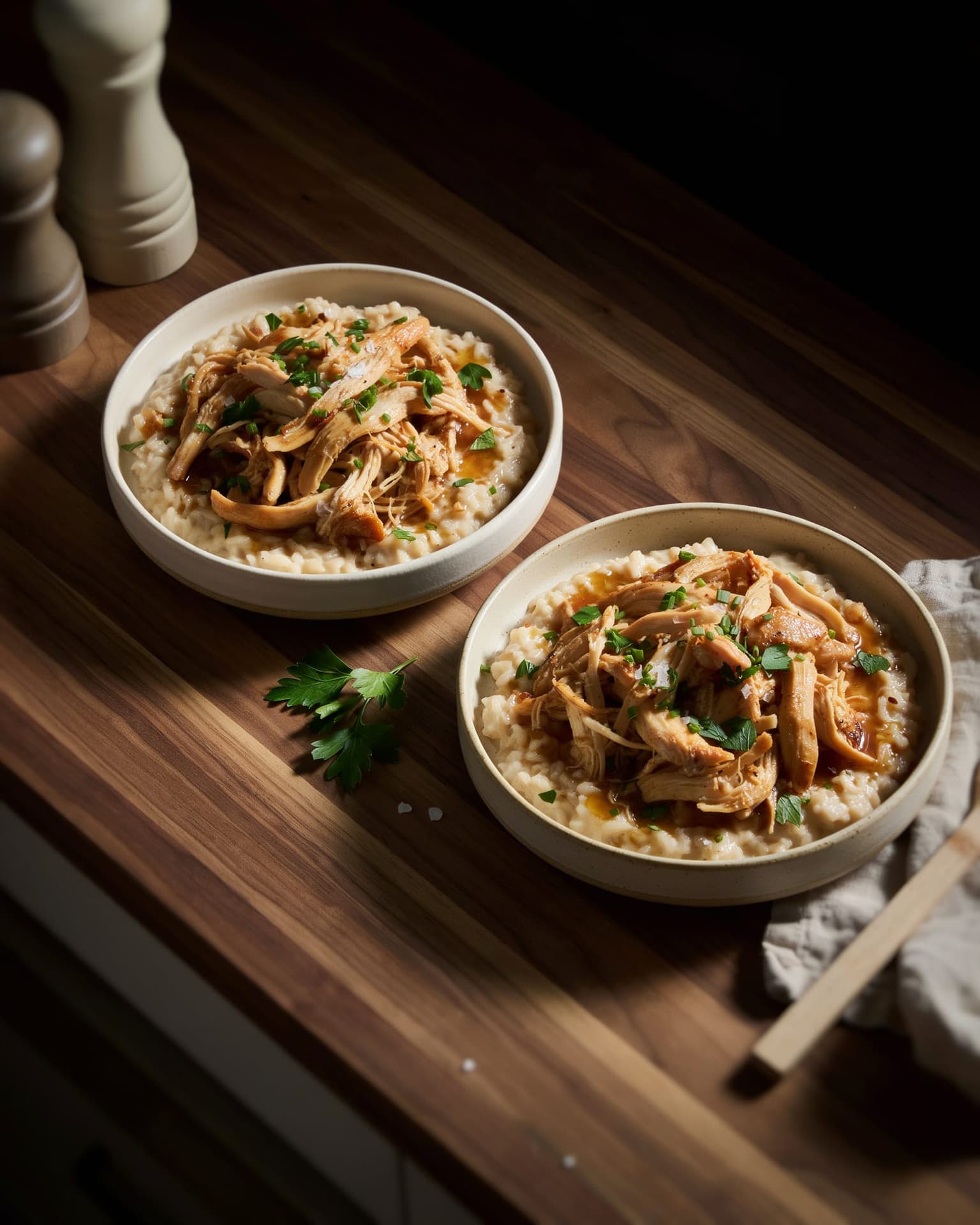
Picture it: two shallow bowls steaming on the table, the chicken glossy with pan juices, a little cloud of Parmesan settling into the orzo, and a single skillet cooling in the sink behind you.