Article and tips
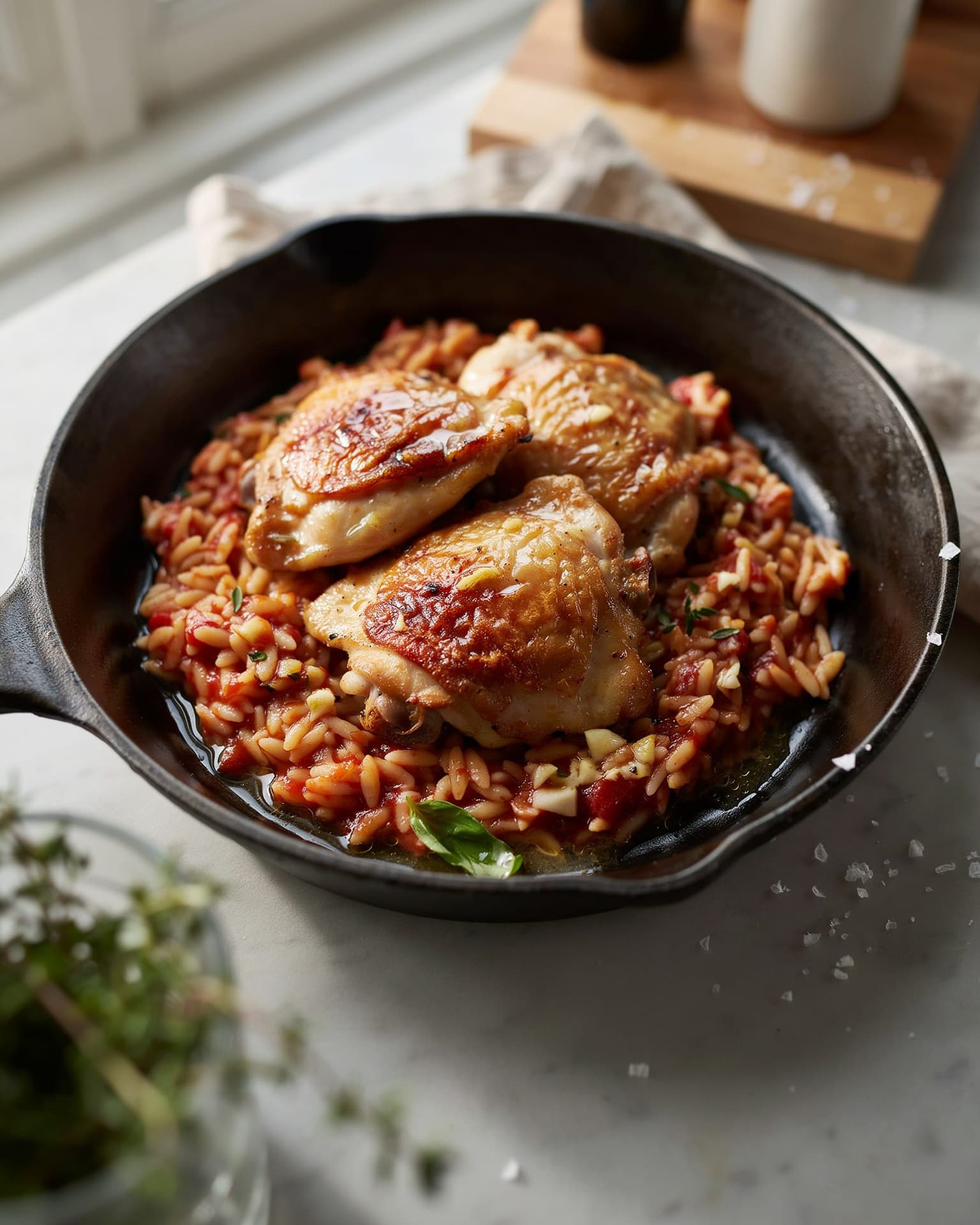
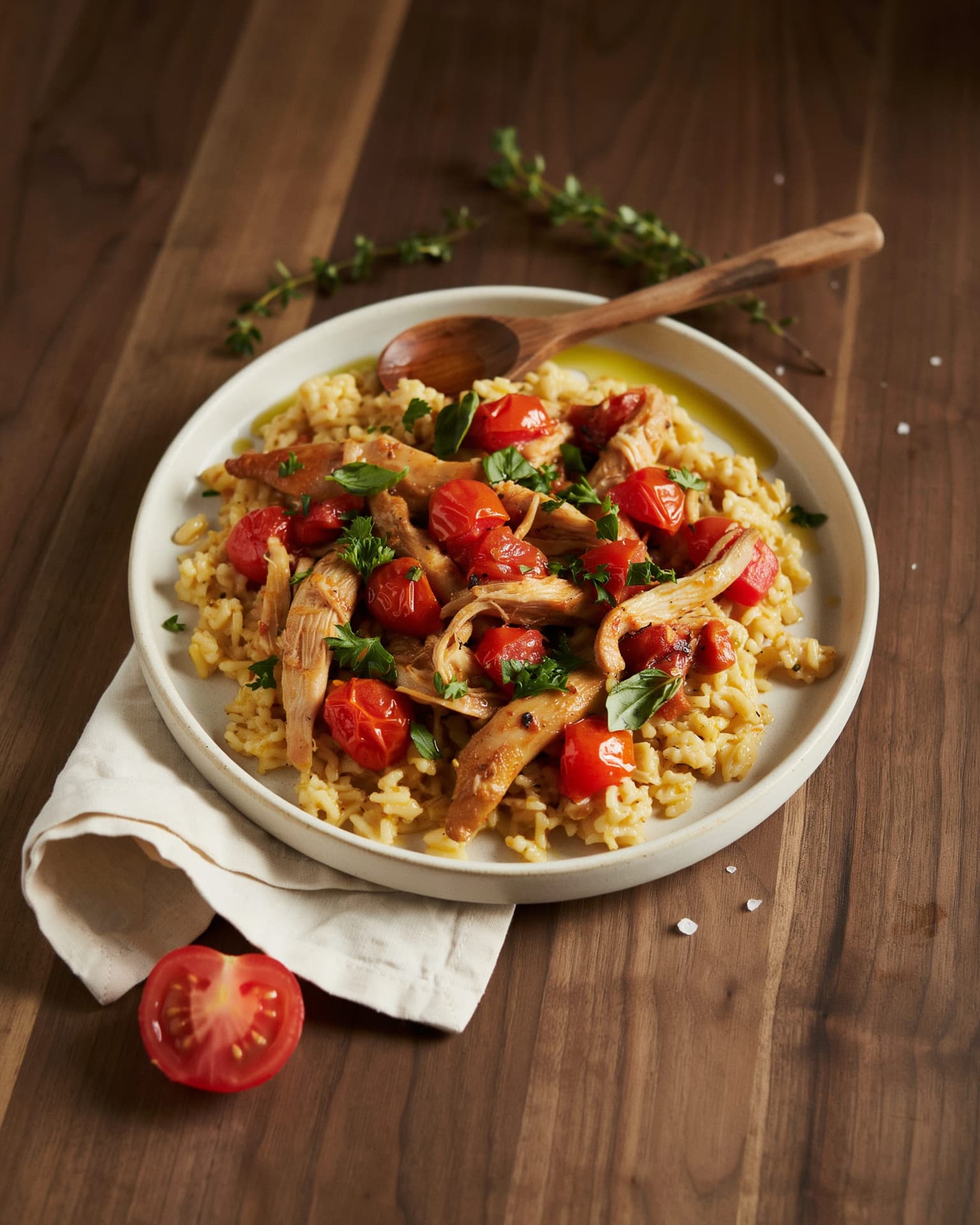
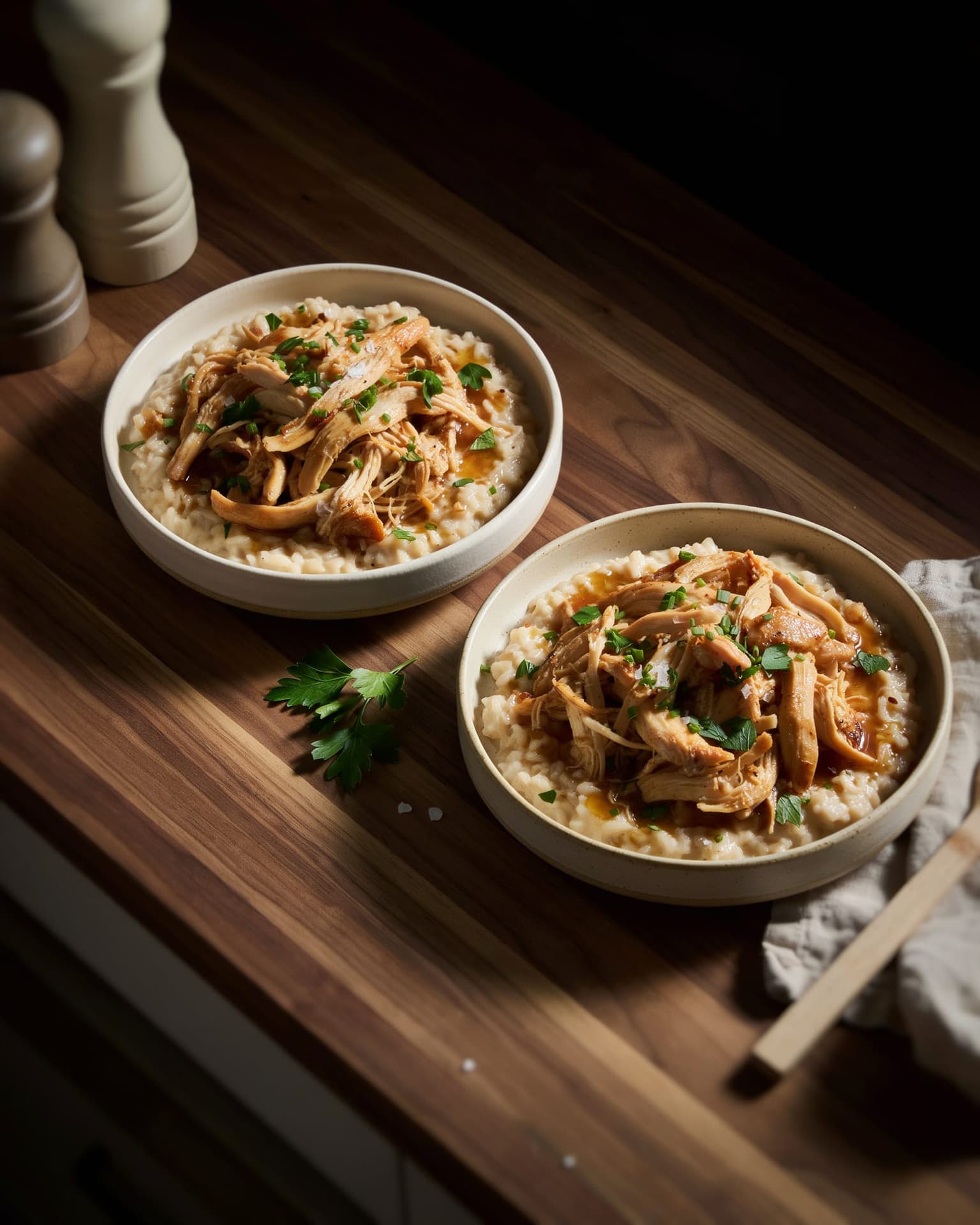
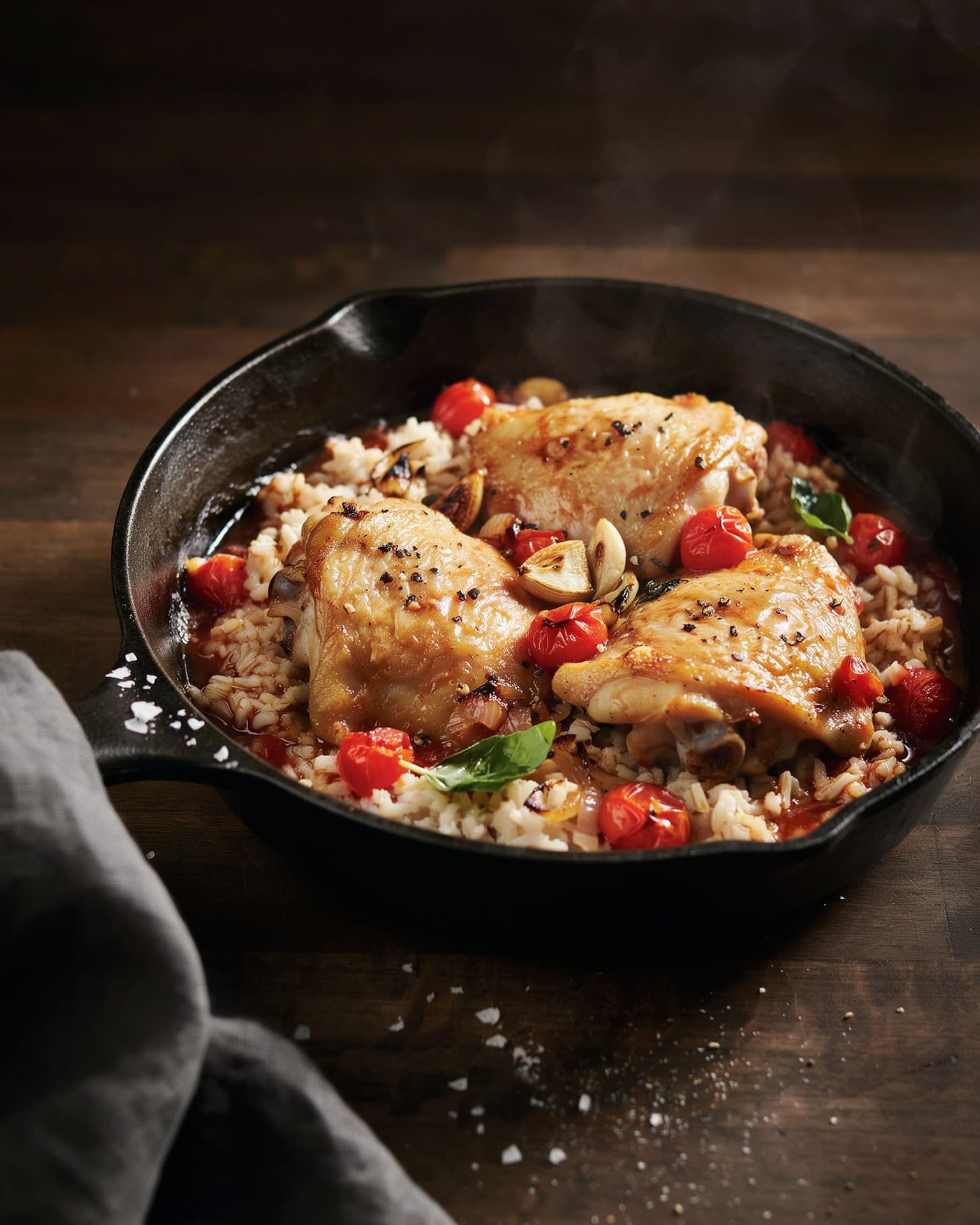
One pan, two portions, and a single wooden spoon between you and dinner. Most dinner-for-two recipes still ask you to dirty a pot for rice, a skillet for the chicken, and a saucepan for whatever sauce ties it together — three pans for two people is the mathematics of resentment. This one keeps everything in a single skillet, building flavor in layers so the rice drinks up the fond from the seared chicken instead of letting it wash down the drain.
Here's the angle none of the top results bother with: they treat "one-pan" as a convenience, then serve you dry rice or rubbery chicken because they rush the sear. The secret isn't speed — it's the order. Sear first, deglaze with the tomatoes, then let the rice cook in that liquid. That's the whole trick, and it's why this tastes like it took an hour when it took thirty-five minutes.
Why This Works
When chicken breast hits a hot, dry pan, the surface proteins undergo the Maillard reaction — a cascade of browning that generates hundreds of new flavor compounds around 300°F (150°C). Those browned bits stick to the pan as fond. If you throw that away, you throw away the best part of the dish.
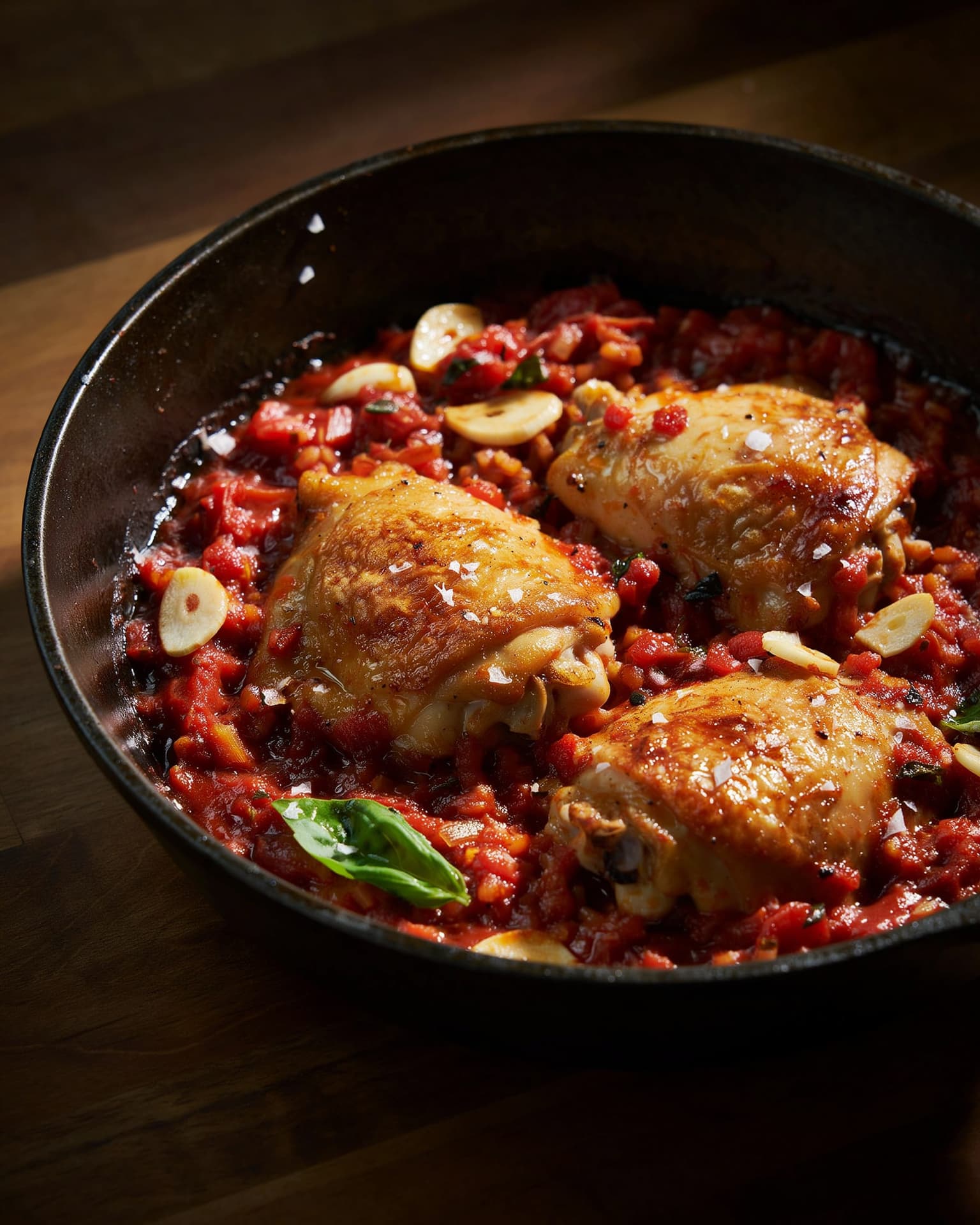
Deglazing with canned tomatoes lifts the fond back into the liquid, and because tomatoes are acidic (around pH 4.3), they also help tenderize. When you then add rice and let it simmer covered, the starch granules gelatinize and absorb that seasoned tomato liquid directly — every grain carries the flavor of the sear. I've tested this side by side with rice cooked separately in water and folded in at the end; the cooked-in-the-sauce version wins every single time because the flavor lives inside the grain, not just on its surface.
A tight lid matters more than the recipe timing. The steam trapped under the lid is what actually cooks the rice evenly, and lifting it to peek drops the temperature enough to leave you with a crunchy center.
What Most Recipes Get Wrong
Every competing recipe I read treats the tomatoes as a garnish added at the end. That's backwards. If you add acid to rice too late, it never has time to meld, and you get sharp raw-tomato bite over bland rice. The tomatoes belong in the cooking liquid from the start so the acidity mellows and the rice cooks through the flavor. The second mistake: cooking the chicken all the way in step two. It goes back into the simmering rice, so if you cook it fully at the sear stage, it overcooks into a dry brick by the time the rice is done. Sear for color, finish in the simmer.
Good rice is not boiled rice — it is steamed rice that started in flavored liquid.
Chef's Tips & What I've Learned
Chef Augustin's Tip: Slice one big chicken breast into two thin cutlets instead of using two whole breasts. Thin cutlets finish cooking in the same window as the rice, so nothing overcooks waiting on anything else. I learned this the hard way serving underdone rice next to overdone chicken.
Chef Augustin's Tip: If your finished rice looks a touch wet, pull the lid and simmer uncovered for 2 minutes. If it's dry but not tender, add 2 tablespoons of hot water and cover again. Rice is forgiving if you meet it where it is.
A tight lid is worth more than a precise timer.
If you have a splash of white wine, use it in place of half the stock during the deglaze — it brightens everything.
What are some easy dinner ideas for two people?
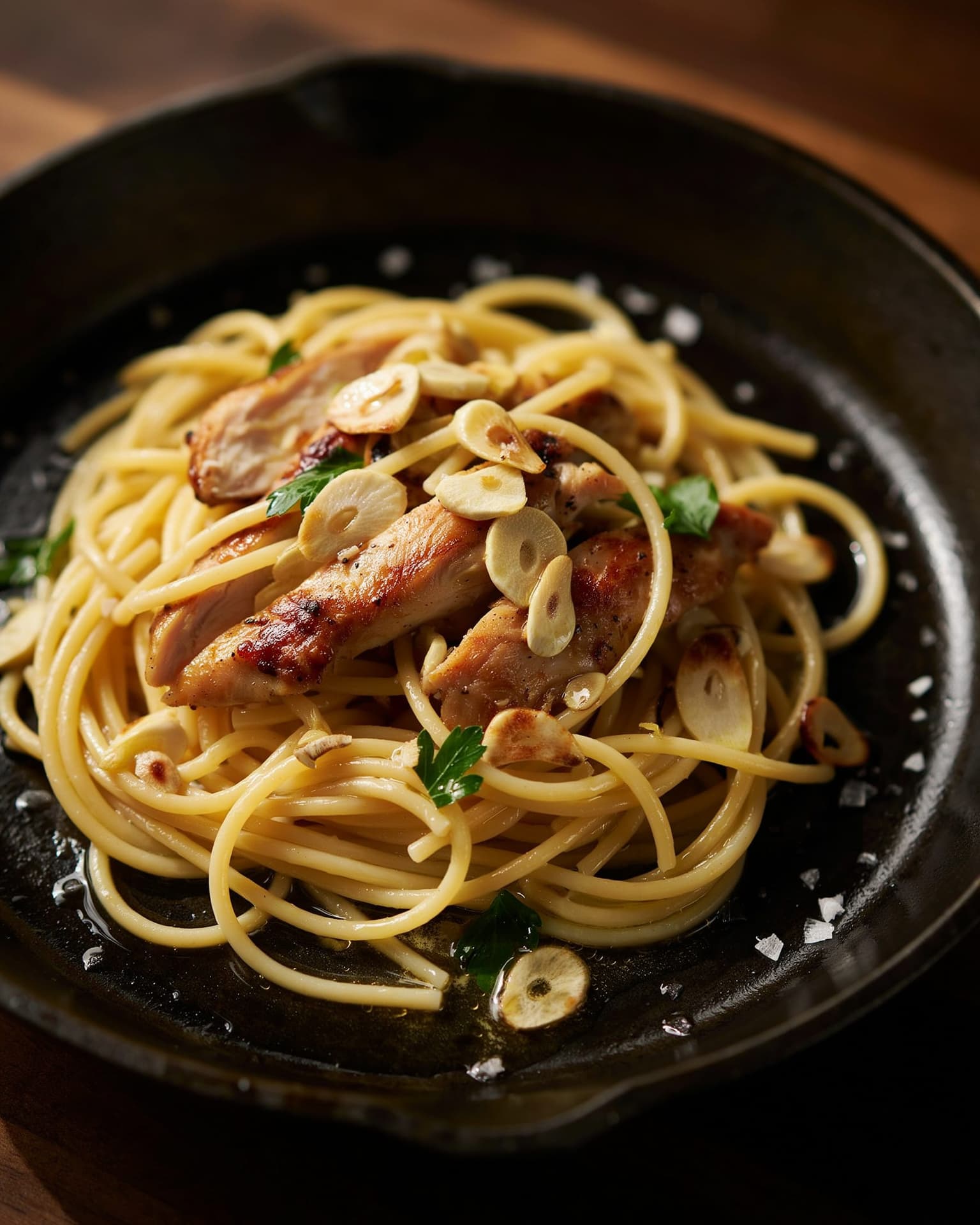
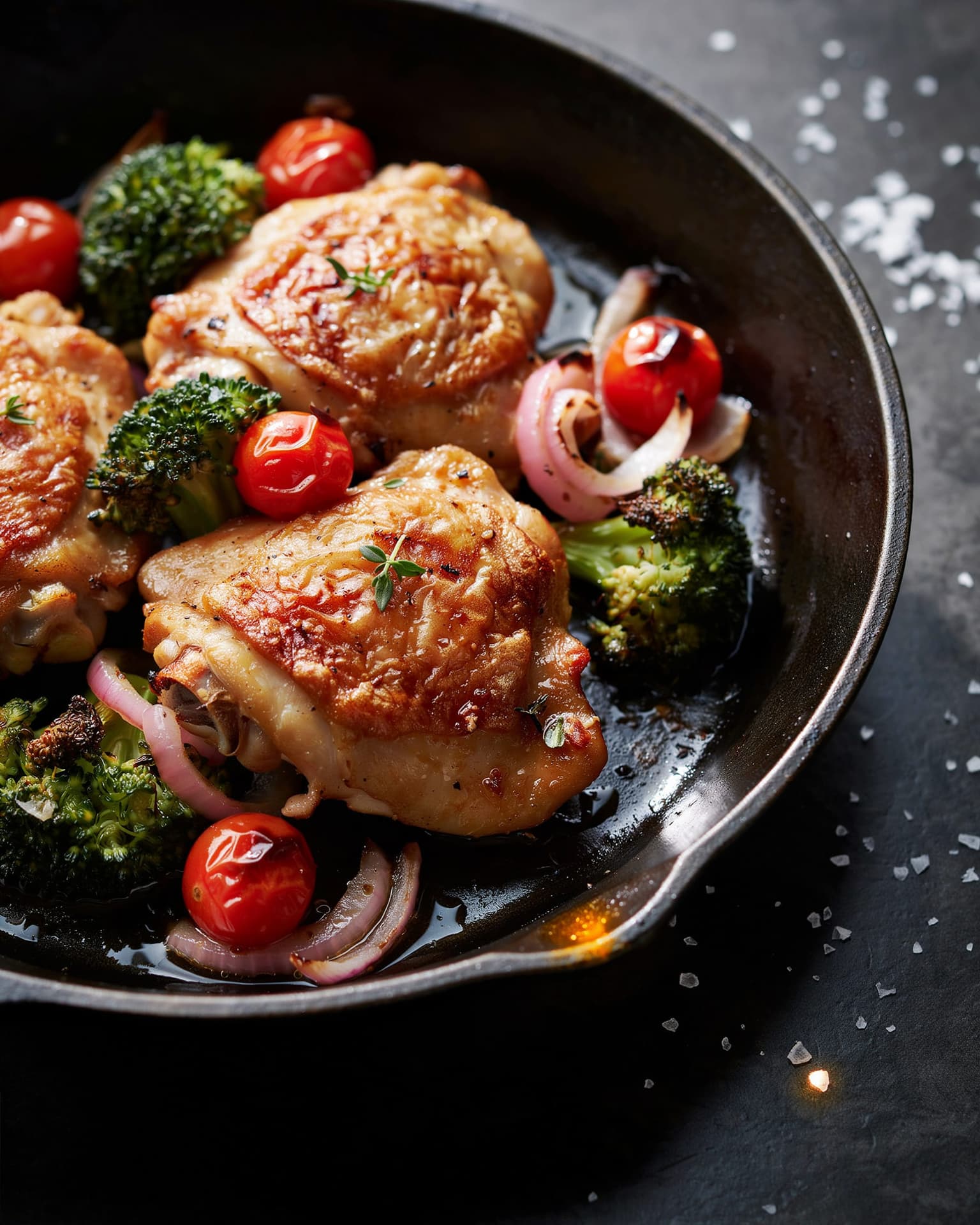
One-pan meals are your best friend when cooking for two, because they scale down cleanly and leave almost no cleanup. This chicken and rice, a quick pasta with garlic and canned tomatoes, or a sheet-pan roast of chicken and frozen vegetables all serve two comfortably. The key is choosing recipes built around a single protein and a starch that cooks in the same vessel. I aim for dishes under 40 minutes with fewer than 10 ingredients.
What's the easiest 30 minute dinner?
A one-pan protein-and-grain dish like this one is the reliable 30-to-35-minute answer. Searing the chicken takes about 8 minutes, and the rice simmers for 16-18 while you do nothing but leave the lid alone. If you want it faster, swap the rice for pasta stirred into the tomato liquid, which cuts about 5 minutes. Ground beef instead of chicken breast also shaves time since it cooks in roughly 6 minutes to 160°F / 71°C.
Can I use ground beef instead of chicken breast?
Absolutely, and it's faster. Skip the searing-and-removing step — instead, brown 1/2 pound (225g) of ground beef in the pan until it reaches 160°F / 71°C, about 6 minutes, then drain excess fat and continue with the onion and garlic. The beef stays in the pan the whole time. You'll lose the elegant cutlet presentation but gain a heartier, weeknight-friendly bowl. It will still be delicious — arguably cozier.
Why is my rice mushy or crunchy?
Mushy rice means too much liquid or too much stirring, which knocks starch loose. Crunchy rice means you lifted the lid and lost steam, or the heat was too low. Use a 1-to-1.75 ratio of rice to liquid for long-grain white rice, keep the lid on, and maintain a bare simmer. If the center is crunchy at the end, add 2 tablespoons hot water, cover, and rest 5 minutes off heat.
Can I make this ahead or double it?
Yes. It reheats well for 3 days in the fridge — add a splash of water before microwaving to loosen the rice. To double it for four, use a larger 12-inch skillet or a Dutch oven so the rice cooks in an even layer; a crowded pan steams unevenly. Keep the liquid ratio identical when you scale. I don't recommend freezing, as the rice texture softens noticeably after thawing.
The pan is empty, two forks are crossed on the edge of it, and the only thing left to wash is sitting in the sink cooling — which is exactly how a Tuesday should end.