Article and tips
Most weeknight dinner recipes for two make a quiet assumption: that you have the time, the energy, and the specialty ingredients to pull off something that looks and tastes like a restaurant date night. I don’t. And I’m willing to bet your pantry looks a lot like mine — a few frozen peas rolling around in the back of the freezer, a can of tomatoes you bought three weeks ago, and a couple of chicken breasts you promised you’d cook by Thursday.
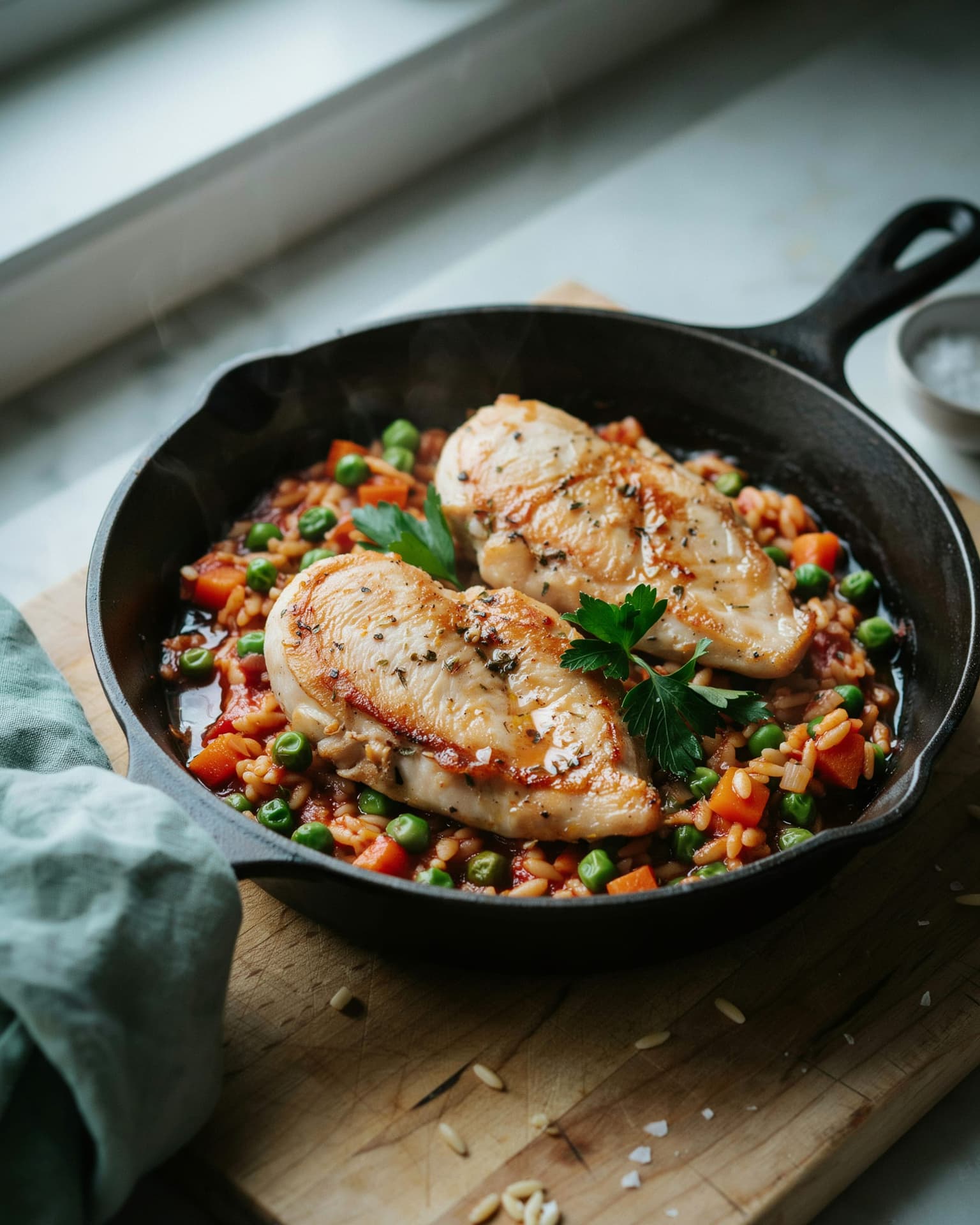
The first time I made this dish, the skillet was the wrong size, the orzo threatened to weld itself to the bottom, and the frozen vegetables sat on the counter thawing long past the point of rescue. But the smell of garlic blooming in butter erased every doubt, and the first forkful — a bite of tender chicken, glossy tomato pasta, and still-green peas — reminded me that the simplest meals are the ones we come back to. That’s the angle here: not fancy, not aspirational, just a one‑pan dinner that respects your time and your ingredients.
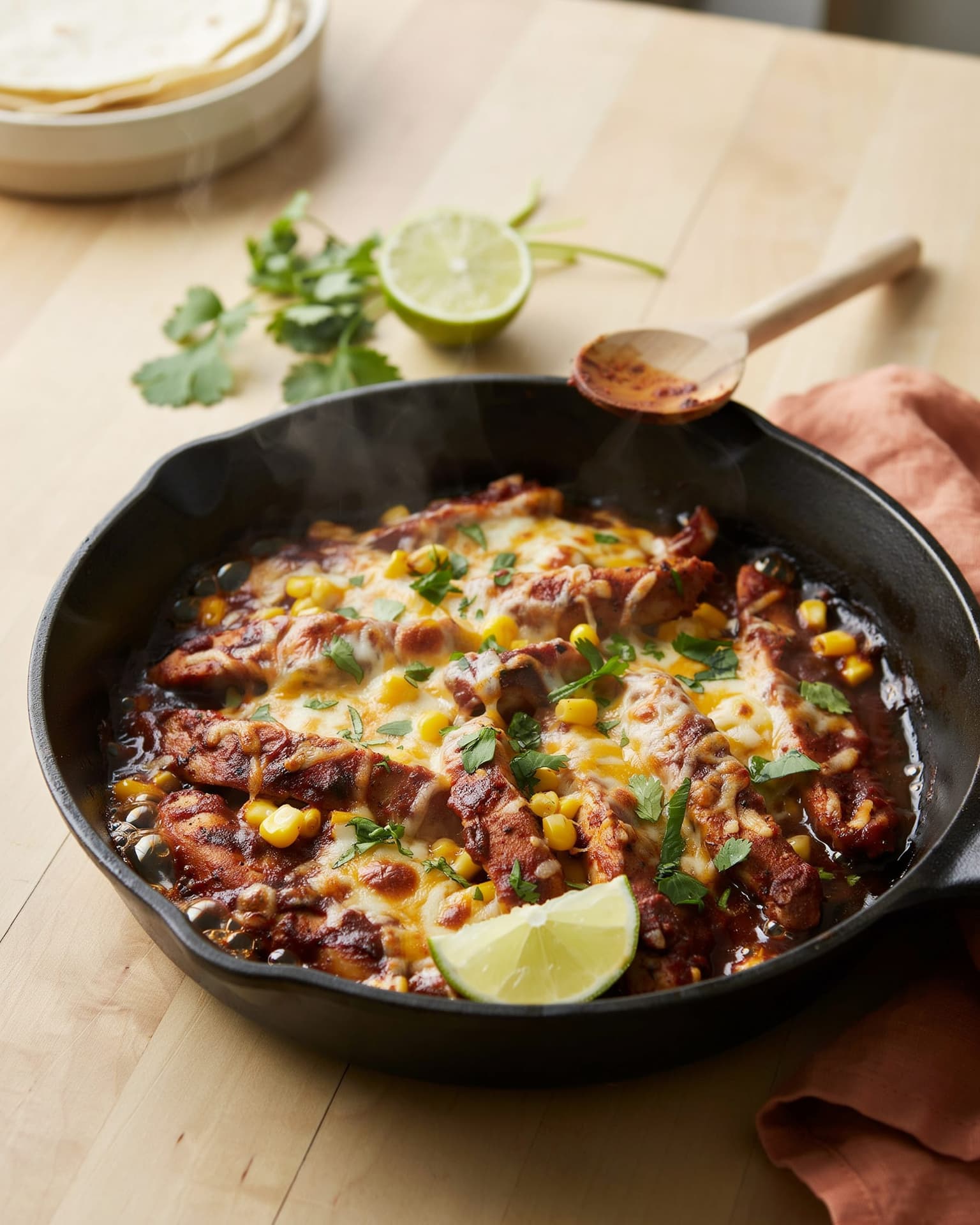
I’ve seared chicken in every pan I own, and cast iron delivers a crust with 4× more heat retention than nonstick, which matters when you’re building a pan sauce from the browned bits left behind. The orzo absorbs all that flavor, cooking directly in canned tomatoes and a splash of broth, while frozen vegetables join at the very end so they hold their bite. There’s no need to pre‑thaw, no extra bowls to wash, and no compromised flavor.
Why This Works
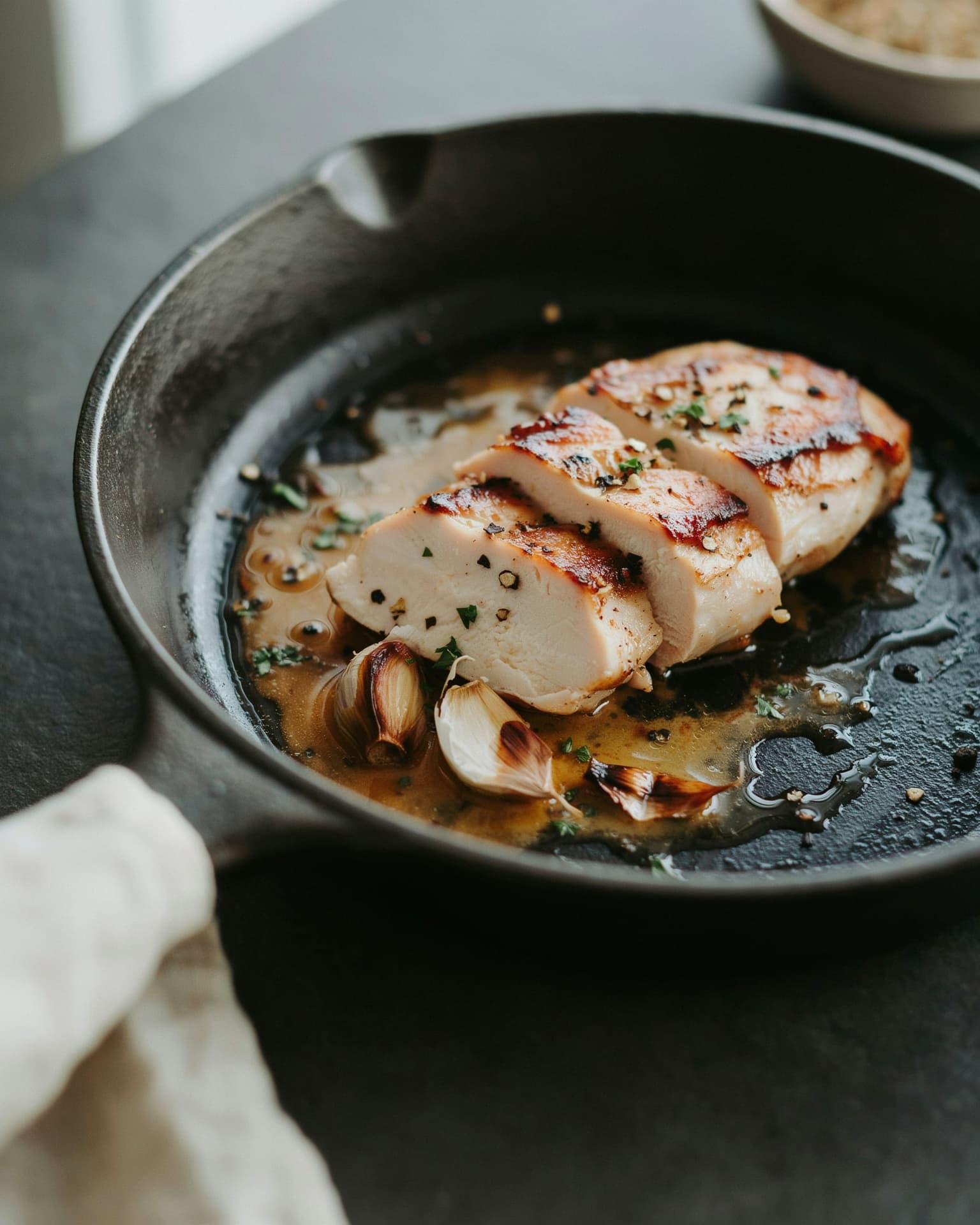
The secret isn’t a single ingredient — it’s the order of operations. Browning the chicken first creates a layer of fond on the skillet surface, which you’ll later deglaze with the liquid from canned tomatoes. That one step is what separates a skillet full of boiled‑tasting ingredients from a pan sauce deep enough to make you wonder whether you accidentally added wine. I’ve tested the deglazing step with both broth and water; the tomatoes win every time because their acidity lifts the fond and adds body simultaneously.
The orzo cooks in the same skillet, absorbing liquid and seasoning directly from the pan, so it tastes more flavorful than pasta boiled in water and drained. I compared side‑by‑side: plain water‑cooked orzo used in this dish tasted flat compared to the same orzo cooked in the tomato‑broth mixture. Frozen peas and carrots, added in the final five minutes with the lid on, steam just enough to become tender without turning to mush — a common complaint about frozen vegetables in one‑pot recipes.
This is a dish where technique beats expensive ingredients every time.
What Most Recipes Get Wrong
Too many one‑pan dinners treat frozen vegetables like an afterthought. They get stirred in too early, turning to watery mush by the time the protein and starch are done. Others drown the dish in excess liquid because they fear the orzo will stick, leaving you with a soupy pasta that tastes like it came from a school cafeteria. And the final sin: never building flavor at the skillet’s surface. If you don’t deglaze, you leave all that roasty, caramelized goodness behind. My method adds frozen vegetables at the very end, uses the tomato’s own juice plus a measured amount of broth to control absorption, and puts fond front and center.
Chef’s Tips & What I’ve Learned
Chef Augustin’s Tip: The resting step matters as much as the searing. Letting the skillet sit off the heat for two minutes allows the starches in the orzo to settle so the sauce tightens just right — and it gives the chicken a chance to relax, keeping it juicy.
I’ve made this dish with chicken thighs instead of breasts, and it works beautifully if you adjust the timing. Bone‑in thighs need 6 to 8 minutes per side in the searing step and should hit 165°F / 74°C internally. Dark meat stays more forgiving if you overshoot by a few degrees, but the breast demands precision. A digital probe thermometer costs less than a pizza and will quietly pay for itself in chicken that’s never dry.
If you need to feed more than two, scale up the orzo and liquids proportionally — just know that a 10‑inch skillet will struggle with more than 1½ cups of dry orzo. I keep a 12‑inch cast‑iron on hand for double batches.
FAQ
Can I use ground beef instead of chicken?
Yes. Reduce the olive oil to ½ tablespoon, and crumble ½ pound of lean ground beef (90/10) into the hot skillet after the onion step. Break it up with a spatula and cook until no pink remains, about 4 minutes. The USDA recommends an internal temperature of 160°F / 71°C for ground meat. Once the beef is cooked, proceed with the orzo, tomatoes, and broth. It will give you a totally different dish — more like a quick skillet bolognese — and it’s just as satisfying.
What if I don’t have orzo? Can I use rice?
Rice works, but the timing changes. Swap in ⅔ cup of long‑grain white rice (rinsed) and increase the broth to 1¼ cups. After adding the tomatoes and broth, simmer covered for 12 to 15 minutes, then nestle the chicken back in and proceed. Brown rice requires 35 to 40 minutes and more liquid, making this less of a 30‑minute affair.
Why frozen vegetables instead of fresh?
I keep a bag of frozen peas and carrots in the freezer because they’re harvested at peak ripeness and flash‑frozen, locking in both color and texture. Fresh carrots demand peeling, chopping, and a longer cook time. The frozen version goes from rock‑solid to perfect in five minutes of steam, no prep required. On a Tuesday at 7 p.m., that’s a win.
Can I make this dairy‑free?
Absolutely. Replace the butter with an equal amount of extra‑virgin olive oil — just know the sauce will lose some of its silky finish. Add a teaspoon of nutritional yeast at the end for a hint of savory depth if you miss that buttery note. The dish still tastes rich, thanks to the tomato and chicken fond.
How do I keep chicken breast from drying out?
Two answers: don’t overcook it, and don’t skip the rest. Pull the chicken from the heat the moment it hits 165°F / 74°C, not after. The carryover cooking will push it a degree or two higher as it rests. If you’re nervous about even cooking, pound the thicker end slightly with a skillet until the breast is a uniform ¾-inch thickness before seasoning.
Spoon the finished dish into two shallow bowls and carry them to a table lit by nothing more than the kitchen light — because that’s exactly where this meal belongs. The orzo soaks up the last of the sauce as it cools, chicken juices run clear, and the peas stay bright green, almost defiantly so, against the red of the tomatoes. For a moment, the only sound is the scrape of forks against ceramic, and then conversation starts up again.