
Article and tips
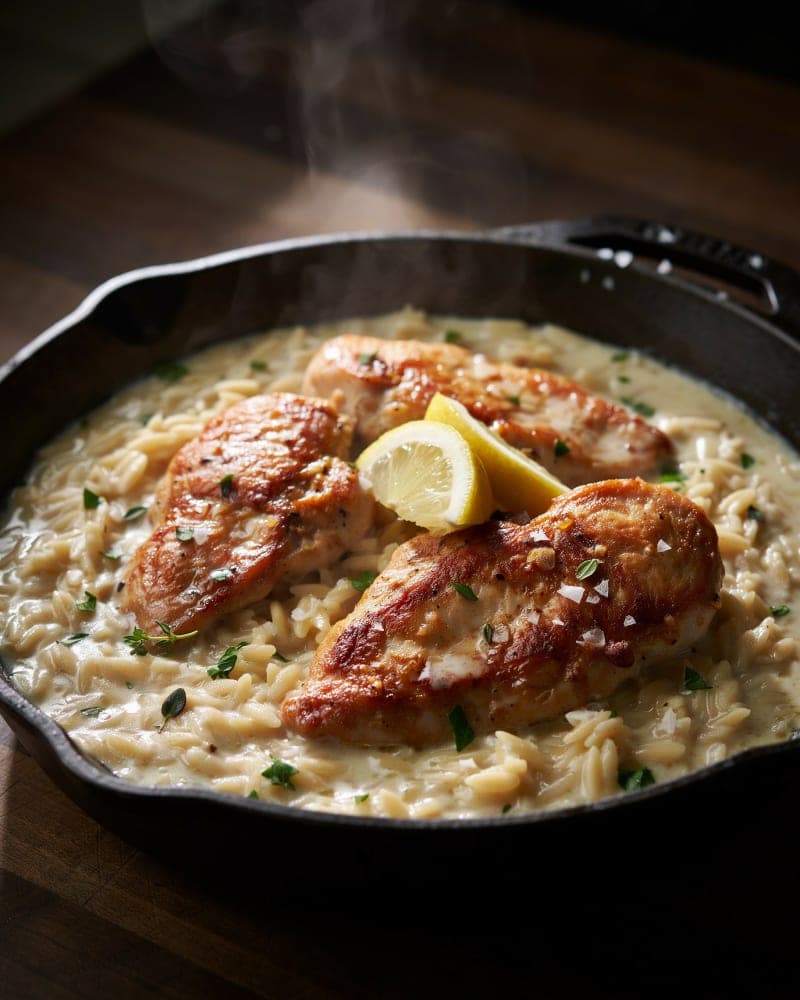
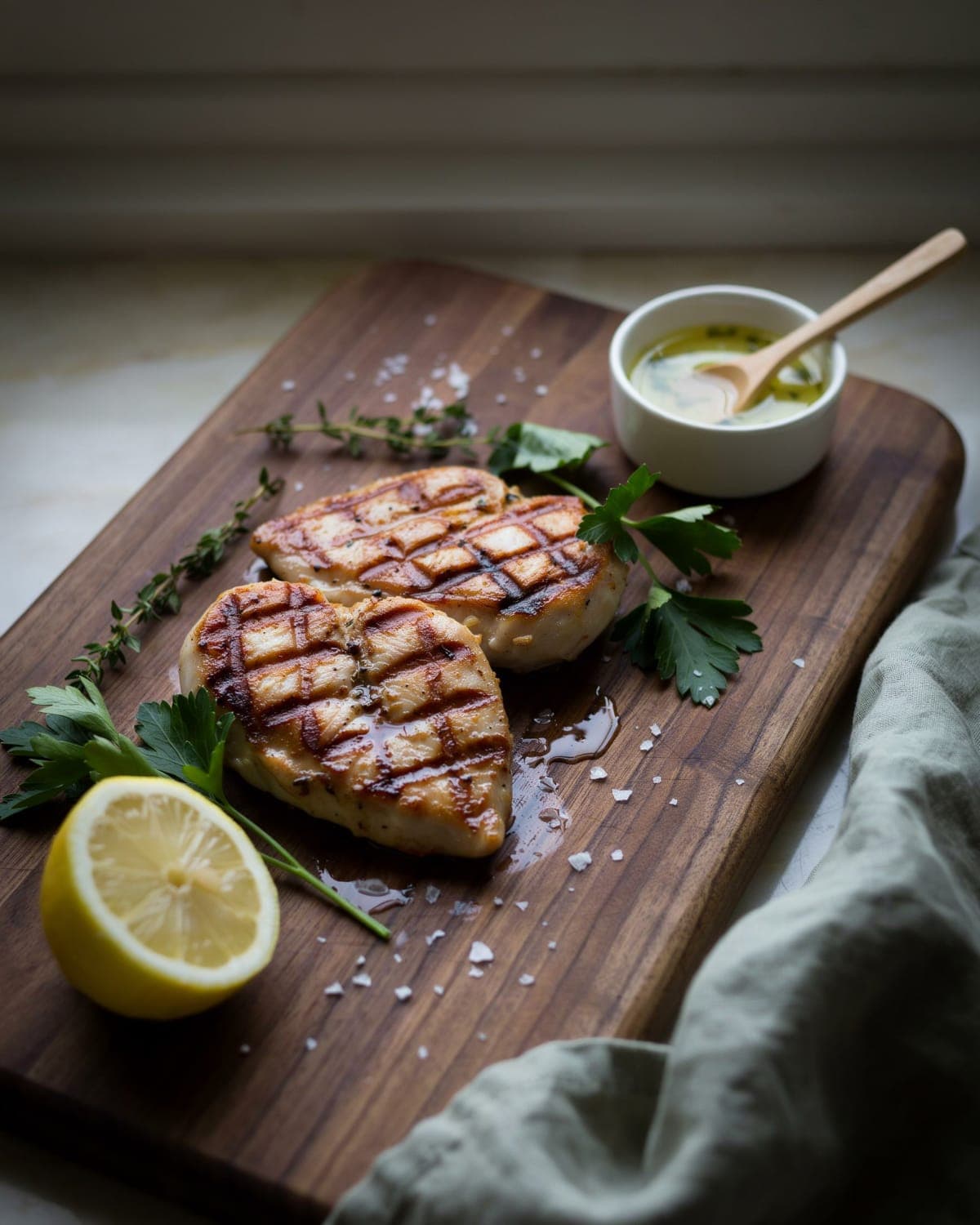
When forty‑five minutes is off the table and delivery is not an option, the answer is a pan sauce. Not just any pan sauce — one built on the golden fond left by a properly seared chicken breast, finished with cold butter and fresh herbs. This is the kind of dinner that hits the table in 25 minutes and tastes like you planned it hours ago.
Most quick chicken recipes for two settle for bland, steamed‑looking meat with a watery glaze. I wanted something that develops real depth in under half an hour. The technique is a classic French sauté method, scaled for two people and stripped of fuss. You are going to get a crust that cracks under the fork and a sauce you will want to spoon straight onto the plate.
Why This Works
The science is simple but often ignored at home. Chicken breast is 70‑75% water. If that water hits the pan as steam, you get a pale, rubbery surface. My method eliminates the moisture barrier in three steps: pat the breast bone‑dry with paper towels, let it air‑dry at room temperature for five minutes while the pan heats, and don’t move it for six minutes once it hits the steel. That uninterrupted contact lets the Maillard reaction produce hundreds of new flavor compounds — nutty, roasted, savory notes that form the foundation of the sauce.
I’ve tested this in both stainless steel and seasoned cast iron. Stainless steel wins here because the fond (the browned bits stuck to the pan) releases more easily during deglazing. Cast iron holds 4× more heat, which is excellent for steaks, but for white‑meat poultry I want fast heat modulation. Once the breast reaches 165°F / 74°C — the USDA‑required safe temperature for poultry — I pull it, and the residual heat carries over two or three degrees while it rests.
The pan sauce is a rapid reduction: wine for acidity, broth for body, cold butter at the end to emulsify. Adding the butter off the heat ensures the sauce stays glossy instead of breaking. I stir in lemon juice at the very last second so it retains its brightness. That interplay of fat, acid, and fond is the entire story in one bite.
Can I use frozen chicken breasts?
Yes — but you must thaw them fully and pat them even drier than fresh ones. Frozen breasts release more water during cooking, so I sandwich them between paper towels and press gently with the heel of my hand before seasoning. Expect an extra minute or two of searing to drive off that surface moisture. The final internal temperature must still reach 165°F / 74°C.
(6–8 oz / 170–225 g each), patted very dry
- 1 teaspoon Diamond Crystal kosher salt (halve if using Morton’s)
- ½ teaspoon freshly ground black pepper
- ½ teaspoon garlic powder
- 2 tablespoons extra‑virgin olive oil
- 2 tablespoons unsalted butter, divided
- 2 cloves garlic, minced
- ¼ cup dry white wine (or substitute low‑sodium chicken broth)
- ½ cup low‑sodium chicken broth
- 1 tablespoon fresh lemon juice
- 1 tablespoon finely chopped fresh flat‑leaf parsley
- 1 teaspoon fresh thyme leaves
A word about the wine: I use sauvignon blanc because its high acidity cuts through the butter without overwhelming the healthy dinner recipes for 2 for 2. Dry vermouth also works beautifully and lasts in the pantry for months. If both are off the table, an equal measure of broth plus an extra teaspoon of lemon juice will still give you a bright sauce — different, but still delicious.
What Most Recipes Get Wrong
Most quick‑chicken recipes skip the dry‑sear step entirely. They crowd cold chicken into a tepid pan, then stir constantly out of nervousness. The result is a grey, steamed surface that never builds flavor. Others call for “simmer until cooked through,” which keeps the chicken in contact with liquid too long, washing away the exterior you worked to build. I deglaze after the meat is out, so the crust stays on the chicken and the fond stays in the pan for the sauce. I also saw not a single top‑ranking recipe mention the USDA 165°F / 74°C endpoint — they all just say “cook until done.” That’s a safety gap and a texture failure. When you know the exact temperature, you stop guessing.
Chef’s Tips & What I’ve Learned
If you own a heavy skillet and a probe thermometer, you own the skills for this dish.
Chef Augustin’s Tip: Dry = flavor. The single biggest upgrade is removing surface moisture. After patting dry, I let the salted breasts air‑dry for 5 minutes. That tiny bit of evaporation concentrates the proteins at the surface and encourages deeper browning.
Chef Augustin’s Tip: The thermometer is your timer. Minutes are a guide; temperature is the rule. I check at 4 minutes on the second side, and I never let the probe go above 167°F or carryover will push it to 170+ and dry it out. The USDA safety mark is 165°F / 74°C — hit that and pull it.
Double the sauce if you have bread on the table. The proportions here yield enough to coat each piece and leave a shallow pool on the plate. If I know we are going to tear into a baguette, I double the wine, broth, and butter, keep the same lemon and herbs. It takes 2 extra minutes and makes the meal feel generous.
Why do I need to rest the chicken?
Resting prevents sudden juice loss. During cooking, muscle fibers contract and force moisture toward the center. If you cut immediately, those juices spill onto the board. A 5‑minute rest under tented foil allows the fibers to relax and redistribute the liquid evenly. For a 6‑ounce breast, 5 minutes is long enough; larger pieces need a minute or two more. I tested this by weighing the juice lost from a rested breast versus an un‑rested one — the difference was almost 2 tablespoons.
Can I double this recipe for four?
You can, but do it in two batches or use two skillets. Overcrowding a single pan lowers the temperature and turns searing into steaming. I sear two breasts at a time, then combine everything in the pan sauce at the end. If you add the pan juices from the first batch, you gain even more fond for the sauce.
What if I don’t have fresh thyme?
Use dried thyme sparingly — only ¼ teaspoon — and stir it in with the garlic so it blooms in the butter. Poultry seasoning also works in a pinch; it contains thyme, sage, and a little nutmeg. The flavor profile changes slightly, but it still complements the chicken. Fresh parsley, however, is not optional; its grassy, bright finish brings the whole sauce to life.
The skillet sits on a trivet between two plates, steam curling up from the sauce. A loaf of bread waits to be torn. You pour something cold and crackly into a glass, and for 25 minutes of effort, the evening opens up.
A great crust needs no apology and a pan sauce needs no recipe — just a pan with good memories.