
Article and tips
The mistake I keep seeing when scaling down meals for exactly two people is ignoring pan geometry and moisture release. Staring at a massive 12-inch skillet containing just enough food for a single couple is a guaranteed ticket to rubbery seafood and watery vegetables. I learned this during my early days of cooking small batches at home. A pan that is too large allows the zucchini to spread out and steam rather than sear. When you scale down a large meal, the pan geometry must shrink accordingly to maintain the proper heat concentration.
In my kitchen, I have observed that switching to a 10-inch skillet completely changes the outcome. The zucchini caramelizes beautifully, and the shrimp remain incredibly tender. It is a simple adjustment, but it transforms the entire process. You can hear the difference the moment the seafood hits the pan; the sizzle is sharp and aggressive. A meal scaled down is not simply divided by two; it is an entirely new geometry of heat.
We are working with a very specific volume of food, and the environment must reflect that volume. If you take a standard four-person dish and halve the ingredients without changing the vessel, the sauce will break, and the vegetables will turn to mush. I have spent years analyzing why this happens, and it all comes back to the relationship between surface area and evaporation.
Why This Works
The foundation of this dish relies on controlling moisture loss and layering savory elements in a confined space. When you cook for exactly two people, every single drop of liquid matters. The zucchini needs intense, direct contact with the hot metal to sear, dropping its raw edge and building a deep, savory foundation. This is why we cook the vegetables first and remove them. It is not just about heating them up; it is about fundamentally changing their cellular structure through direct heat.
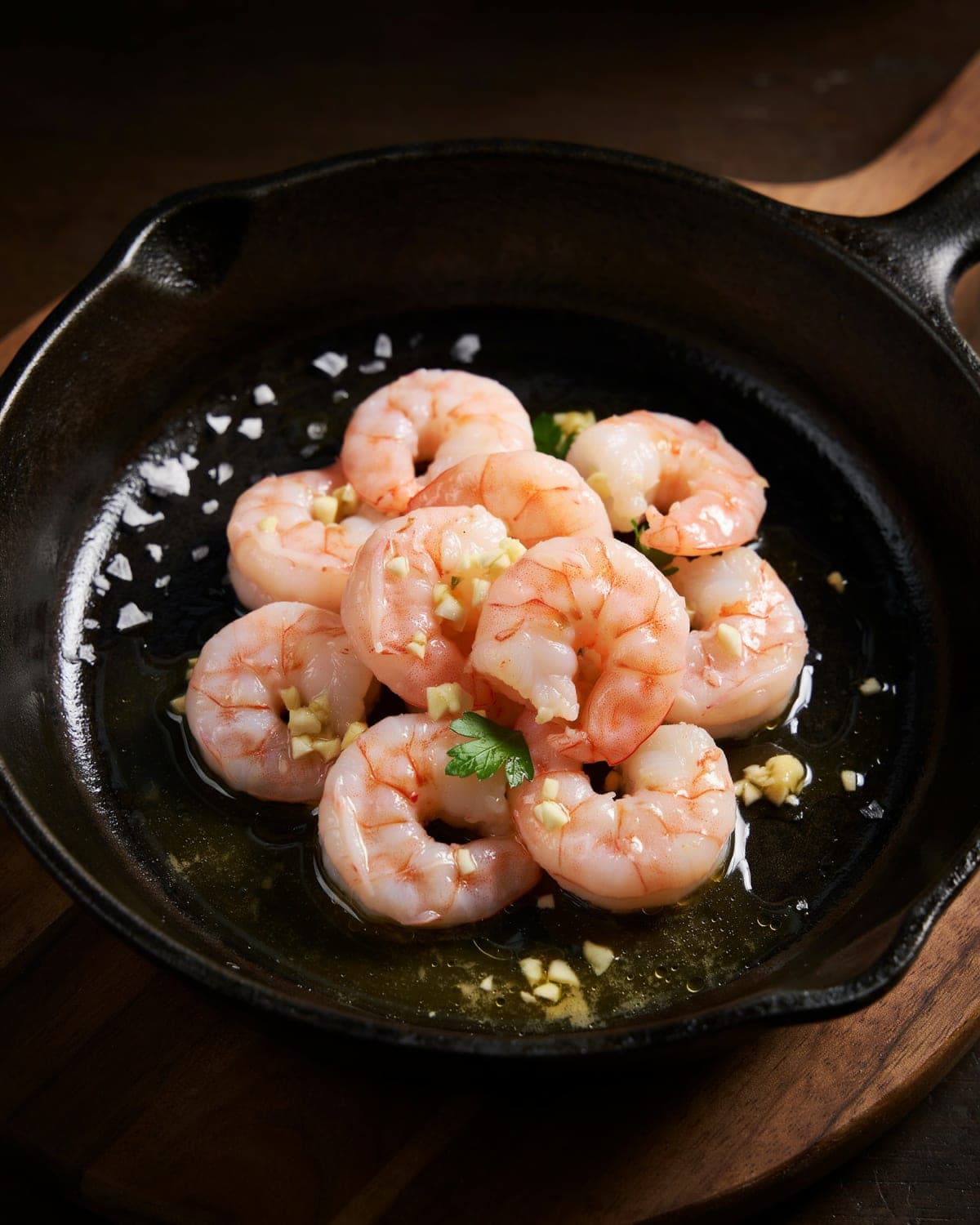
I have tested this recipe using both a 10-inch enameled cast iron skillet and a standard aluminum pan. The cast iron consistently yields shrimp that develop a beautiful crust due to its superior heat retention. This sustained heat creates a violent sear that perfectly cooks the seafood without turning it rubbery. The confined surface area of the smaller pan ensures the garlic butter sauce emulsifies visually and completely.
If you attempt this in a larger pan, the butter spreads too thin and burns before it can coat the shrimp. The garlic remains raw on the edges while scorching in the center. By matching the pan size to the portion size, we guarantee that the liquids emulsify evenly, creating a naturally creamy pan sauce. It is an exercise in culinary geometry that yields flawless results every single time. The right pan size is an ingredient in itself.
What Most Recipes Get Wrong
The most glaring error in small-batch cooking is failing to manage moisture. Many recipes simply tell you to dump the shrimp and zucchini into the pan at the same time. But cooking high-moisture vegetables alongside delicate seafood in a single batch means the liquid turns to steam. You end up boiling your dinner rather than searing it. Cooking them sequentially is non-negotiable.
Another common mistake is tossing the garlic in too early. Garlic burns rapidly, and burnt garlic turns incredibly bitter. If you add it at the beginning of the cooking process, it will scorch by the time the shrimp are cooked through. It must be introduced at the very end, over low heat. The residual warmth carries the flavor perfectly without ruining the delicate oils.
Another critical misstep is the timing and method of seasoning. Many home cooks wait until the very end to add salt, which means the sodium never penetrates the cellular structure of the vegetables or the seafood. By seasoning the shrimp vigorously before they hit the pan, we layer the flavor. If you only salt at the table, your food will taste salty on the surface but incredibly bland in the center.
Finally, many people pull their seafood off the heat too late because they rely on visual cues rather than a thermometer. You must use a digital thermometer to verify the core temperature. Resting the vegetables while the shrimp cook ensures that everything retains its proper texture. A small batch requires a watchful eye, as the margin for error shrinks alongside the portion size.
Chef's Tips & What I've Learned
Chef Augustin's Tip: Always pat your shrimp dry with a paper towel before seasoning them. Excess surface moisture prevents the oil from making direct contact, leading to a steaming effect. By ensuring the exterior is completely dry, you guarantee a violent, immediate sear that locks in a beautiful texture visually and physically.
Chef Augustin's Tip: Let the zucchini rest on a plate rather than in a bowl while you cook the seafood. If you pile hot vegetables into a deep bowl, the trapped heat creates steam that turns them mushy. Spreading them out on a flat plate allows the excess heat to escape quickly, preserving the slight crunch you worked so hard to achieve in the pan.
Chef Augustin's Tip: If you notice your garlic browning too rapidly in the butter, do not panic. Simply add the lemon juice immediately and pull the pan completely off the burner. The sudden influx of cool liquid and the removal of the heat source will halt the cooking process instantly, saving your sauce from turning bitter and ensuring it remains glossy and sweet.
A perfectly timed pan sauce demands total presence; the moment you look away is exactly when the butter breaks.
Frequently Asked Questions
What size pan is best for cooking dinner for exactly two people?
A 10-inch skillet is the optimal vessel for scaling down meals designed for two. A standard 12-inch pan creates too much surface area, causing the butter and lemon juice to evaporate rapidly, leaving the dish dry. The 10-inch geometry perfectly balances depth and evaporation, ensuring the sauce pools correctly around the ingredients.
How do I prevent shrimp from turning rubbery in a small batch?
The key is aggressive searing followed by strict temperature control. Cook the 10 oz of seafood quickly over medium-high heat, verify the core reaches the safe zone of 145°F / 63°C, and lower the heat immediately. Lowering the temperature before building the butter sauce ensures the proteins do not contract and squeeze out their moisture.
Can I use frozen shrimp instead of fresh for this recipe?
Yes, you can absolutely substitute frozen shrimp, but they must be completely thawed and dried. I recommend thawing them overnight in the refrigerator. If you are in a rush, run them under cold water for 15 minutes. Ensure you dry them thoroughly with paper towels; any residual moisture will completely ruin the sear in the pan.
What is a good lazy dinner to make tonight with minimal cleanup?
This exact skillet meal was designed for those nights. By using one pan for searing the vegetables and cooking the seafood, you eliminate the need for extra pots. If you are exploring other single-vessel options, you might enjoy my salmon orzo for two for a different flavor profile with zero extra dishes to scrub.
How do I keep leftover fresh parsley fresh for the next meal?
Never store opened bunches of soft herbs loose in the crisper drawer, as they wilt rapidly. Trim the stems, place them in a small glass with an inch of water, and cover the leaves loosely with a plastic bag. Stored like a bouquet in the refrigerator, parsley will remain vibrant and crisp for up to two weeks.
At what temperature are shrimp considered fully cooked?
According to safety guidelines, all seafood must be cooked thoroughly to destroy harmful bacteria. USDA recommends 145°F / 63°C for safety. You must insert your probe thermometer into the thickest part of the largest piece to verify this exact metric. The flesh should turn opaque and pearly pink when it hits this target.
Can I prepare the ingredients in advance for this dinner?
Absolutely. You can peel and devein the 10 oz of seafood, slice the zucchini into uniform half-moons, and mince the garlic up to 24 hours beforehand. Store them in separate airtight containers in the refrigerator. Having your mise en place ready transforms this 30-minute recipe into a completely stress-free assembly process when you walk through the door.
What kind of digital thermometer is best for small cuts of seafood?
An instant-read thermocouple thermometer with a narrow tip is essential for small-batch cooking. Standard dial thermometers take too long to register and require a deep insertion. With a thin probe, you can accurately temp a single piece of shrimp to ensure it hits the required 145°F / 63°C without splitting the piece entirely in half.
Two forks clink gently against the ceramic plates on the small wooden table, steam rising lazily from the vibrant green zucchini and golden shrimp. The rich aroma of toasted garlic and bright lemon fills the room, accompanied by a chilled glass of white wine opened right between them.