
Article and tips
The one thing restaurants do with salmon orzo that most home cooks miss is the simplest: crisp skin. Not soggy, rubbery, peel-it-off-and-push-it-aside skin, but a shattering, glassy crust you want to eat on its own. And if you cook the orzo in the same pan after searing the fish, that skin-rendered fat and those browned bits on the bottom of the pan get swept into the pasta, where they form the backbone of a sauce so silky you won't believe there's no cream in it.
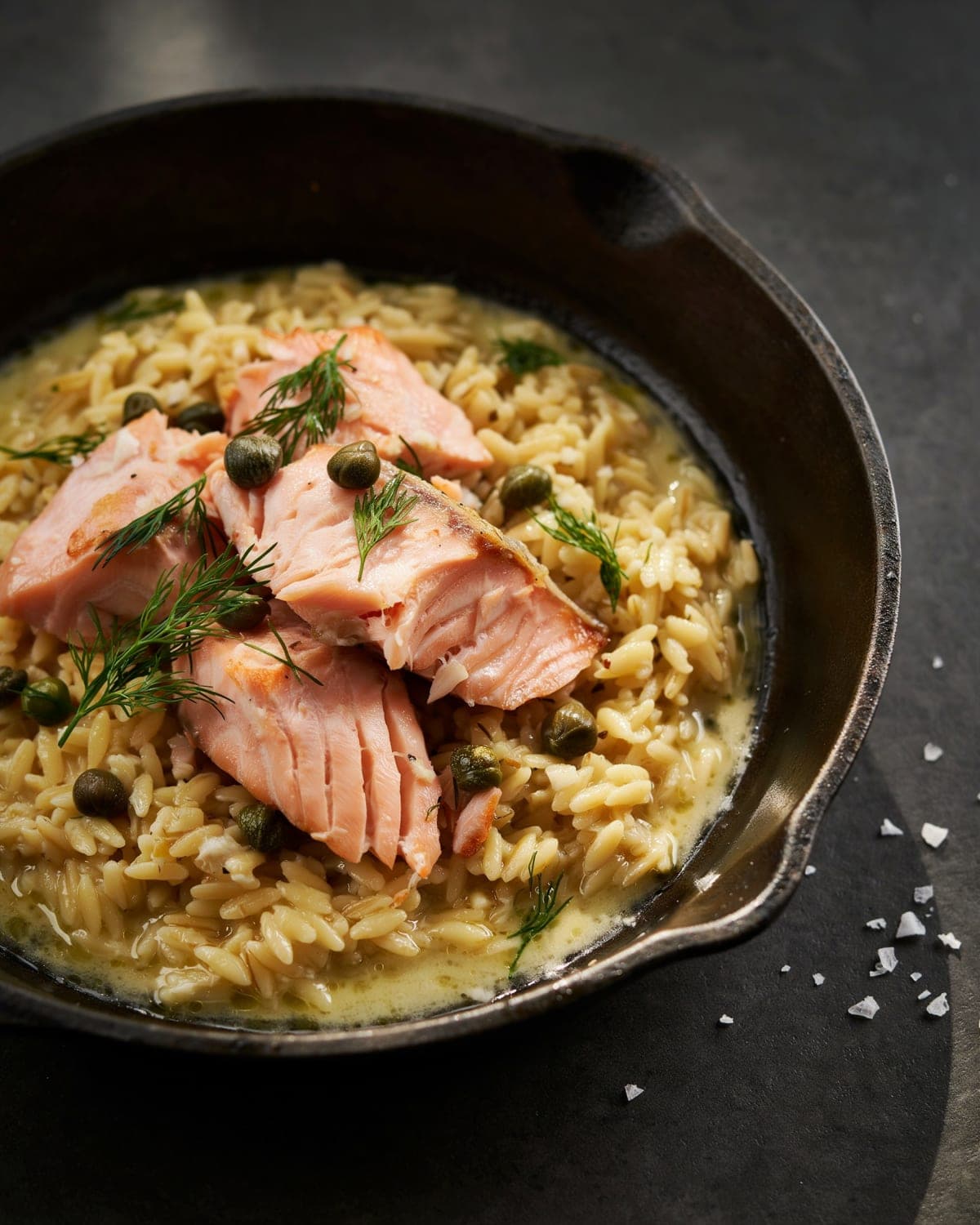
That's the dish. Two pan-seared salmon fillets with crackling skin, served over a lemony, dill-flecked orzo studded with briny capers and sweet pops of frozen peas. One pan, 30 minutes, thanksgiving dinner for two for two that feels like a restaurant entree but costs a fraction of the price.
Why This Works: The Skin, The Starch, The Pan
I've made this recipe in every pan in my kitchen, and the method stands up because of three deliberate moves borrowed from professional kitchens.
The skin. A properly dried fillet, placed in a screaming-hot pan, makes contact and immediately begins to render. The layer of fat under the skin turns into a kind of self-basting fry oil, and the proteins contract, pushing the flesh up and away from the heat. If you don't touch it for 4-5 minutes, the Maillard reaction does exactly what you want: golden, crackling, shatterable skin. Flip it for just long enough to bring the internal temperature to 145°F (the USDA minimum for fish), and you get perfectly cooked, still-moist flesh.
The starch. Orzo is a pasta, and pasta releases starch as it cooks. When you cook orzo directly in broth in the same pan where you seared the salmon, it absorbs all the fatty, browned goodness stuck to the bottom while the released starch thickens the liquid into a creamy, no-cream-needed sauce. Harold McGee explains in On Food and Cooking that pasta starch is an excellent thickening agent — more stable in heat than flour-based roux — and that's exactly what gives this dish its lush texture.
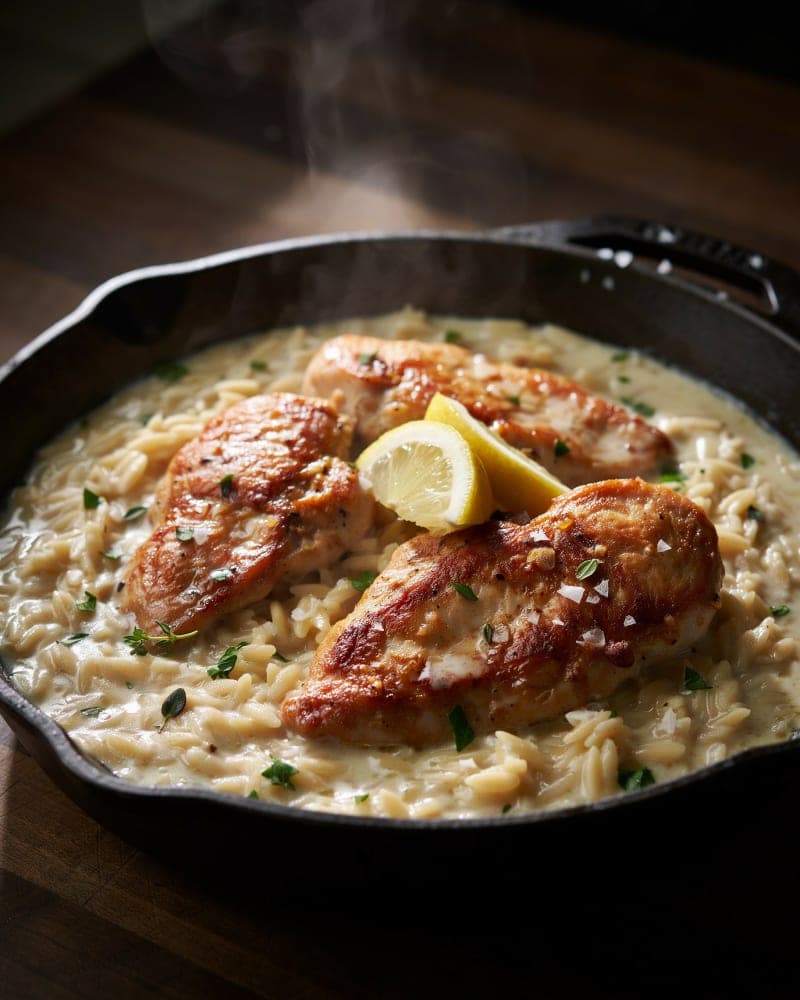
The one-pan build. The sequence matters: sear the salmon, build the orzo in the same pan, finish with cold butter and fresh aromatics. Every trace of flavor stays in the meal, and you wash white wine lemon chicken orzo for two for two. (I've tested this in both stainless steel and carbon steel; carbon steel gives a slightly deeper sear because it holds more heat, but a well-preheated heavy-bottomed stainless pan does just fine.)
The backbone of a good pan sauce is what the French call the sucs — the caramelized bits left behind after searing protein. Treat them as free flavor.
zo.** A ½ cup of dry orzo (about 3.5 ounces) is just enough for two generous portions without producing leftovers that turn gummy the next day. Scale up or down by the ¼ cup if you must.
- Capers and dill. This is the pairing that makes the dish. The capers bring a sharp, salty brine that cuts through the richness of the salmon, while fresh dill adds that faint anise sweetness without being aggressive. If you can't find fresh dill, ½ teaspoon of dried dill works in a pinch — but stir it in with the broth so it can bloom.
- Frozen peas. I keep a bag in the freezer for exactly this kind of dinner. They add sweetness, texture, and a pop of green without any prep. No need to thaw them; frozen peas cook in the time it takes to finish the orzo.
- Lemon. Both zest and juice. The zest's oils are where the real lemon punch lives, and the juice brightens the whole dish. If you only use juice, you're leaving half the flavor on the cutting board.
- Butter. Two tablespoons, cold and divided. One goes into the pan early to build flavor in the base; the other goes in off the heat at the end to create a glossy, emulsified finish. Cold butter, stirred in rapidly, doesn't just melt — it thickens the sauce into a proper mantecatura.
- Pantry staples. Shallot, garlic, olive oil, white wine (or broth), and good salt.
What Most Recipes Get Wrong
The top recipe I pulled up skips a critical step: they add the orzo without toasting it first. That's a missed opportunity. Toasting pasta in fat before adding liquid deepens its nuttiness and helps the grains maintain a pleasant chew even after absorbing all that broth. Another popular version drowns the orzo in heavy cream. I love cream, but here it masks the clean, briny notes of caper and dill and makes the dish heavy when it should be bright. By relying on the pasta's own starch and a little butter, you get a sauce that's rich without being cloying. Finally, many recipes cook the salmon entirely through in the pan and then let it sit while the orzo finishes, leaving you with a cold fillet. The fix: rest it on a plate, tented, and give the orzo your full attention. The salmon stays perfect and the whole dish lands at the table hot.
If you rinse capers before using them, you'll wash away the brine that seasons the whole pan. I just drain them and give them a quick pat — that salty pop is an ingredient, not a flaw.
Chef's Tips & What I've Learned
Chef Augustin's Tip for Crisp Skin: The 10-second press at the start is non-negotiable. I learned this from a line cook during a stage in a tiny Paris bistro where every fillet left the pan with skin like glass. It forces out the air pockets that would otherwise steam the skin from underneath.
Chef Augustin's Tip for Perfect Orzo Texture: Think risotto, not rice pilaf. You're going for a loose, flowing texture that settles into a creamy puddle on the plate. If the orzo sits too long and tightens, a splash of warm water and a quick stir bring it back.
Chef Augustin's Tip for Leftovers: This dish is best fresh — the skin loses its crunch in the fridge. But if you have leftovers, flake the salmon off the skin, toss everything together, and eat it cold as a pasta salad the next day. A squeeze of lemon revives it.
Cooking for two isn't about halving recipes designed for four. It's about recalibrating time, heat, and the size of your pan so the technique still works.
Frequently Asked Questions
How long does salmon orzo with dill and capers last in the fridge?
Stored in an airtight container, this dish will keep for up to 2 days. The orzo will absorb more liquid overnight, so it will be thicker when you reheat it. Warm it gently in a skillet over low heat, adding a tablespoon of water at a time until it loosens up. I do not recommend microwaving; it overcooks the salmon and turns the orzo gummy. The crisp skin won't survive storage, so plan for tender flakes instead.
Can you freeze salmon orzo with dill and capers?
Freezing isn't ideal. Orzo tends to turn mushy upon thawing, and salmon can develop a fishy off-taste. If you must freeze, pack into a freezer-safe container and use within 1 month. Thaw overnight in the refrigerator and reheat on the stovetop with a splash of water. The texture won't be the same — expect a creamy porridge rather than distinct grains — but the lemon-dill-caper flavor will still be there.
What do you serve with salmon orzo with dill and capers?
Because the orzo already bundles starch, vegetable, and sauce into one pan, I keep the side minimal. A simple arugula salad dressed with olive oil and lemon juice balances the richness beautifully. If you want something warm, quick-sautéed asparagus or green beans with a little garlic would echo the flavors without adding work. A chilled glass of unoaked Chardonnay or a dry rosé is my standard pour.
Can I make this recipe without wine or alcohol?
Absolutely. Replace the wine with an equal amount of low-sodium chicken or vegetable broth. Since you won't be burning off alcohol, the deglazing step still does its job of lifting the fond from the pan. Some cooks add a tiny splash of white wine vinegar (maybe ½ teaspoon) to mimic the acidity wine brings, but honestly, the lemon juice at the end covers that ground. The dish will be slightly less complex but still delicious.
How can I tell when the salmon is done without a thermometer?
Press the thickest part of the fillet gently with your finger. If it feels firm and starts to flake along the natural lines of the muscle, it's at or near 145°F. The flesh should be opaque and you'll see a bit of white albumin between the flakes. But an instant-read thermometer is the most reliable tool. I keep one clipped to my apron — it's a $12 guarantee against overcooked fish.
What are common mistakes when making this for two?
Overcrowding the pan is the biggest one. A 10-inch skillet fits two salmon fillets comfortably, but if you shove them in without enough space, the temperature drops and the skin steams instead of sears. The second most frequent mistake is adding the orzo to cold broth and expecting a creamy sauce — you must bring the liquid to a simmer before the starch starts to release. Finally, forgetting to tent the salmon while the orzo cooks means the fillet cools too quickly; a loose foil cover traps just enough heat without softening the skin.
Can I use frozen salmon fillets?
You can, but thaw them fully first and press out any excess moisture with paper towels before seasoning. The skin won't crisp as beautifully as fresh, and the flesh tends to release more water during cooking, so give the pan an extra 30 seconds of heating to drive off surface moisture before adding the fish. USDA guidelines still apply: cook to 145°F.
I set two plates on the counter, the slate still warm from the oven. Steam curls off the orzo, carrying the sharp scent of lemon and the mellow perfume of dill. The salmon skin gleams under the kitchen light, an amber-brown crust that gives a quiet crack when I press a fork to it. Outside, the evening has turned cool, and we open a bottle of something chilled. It's a Tuesday, and I'm not expected anywhere else.