
Article and tips
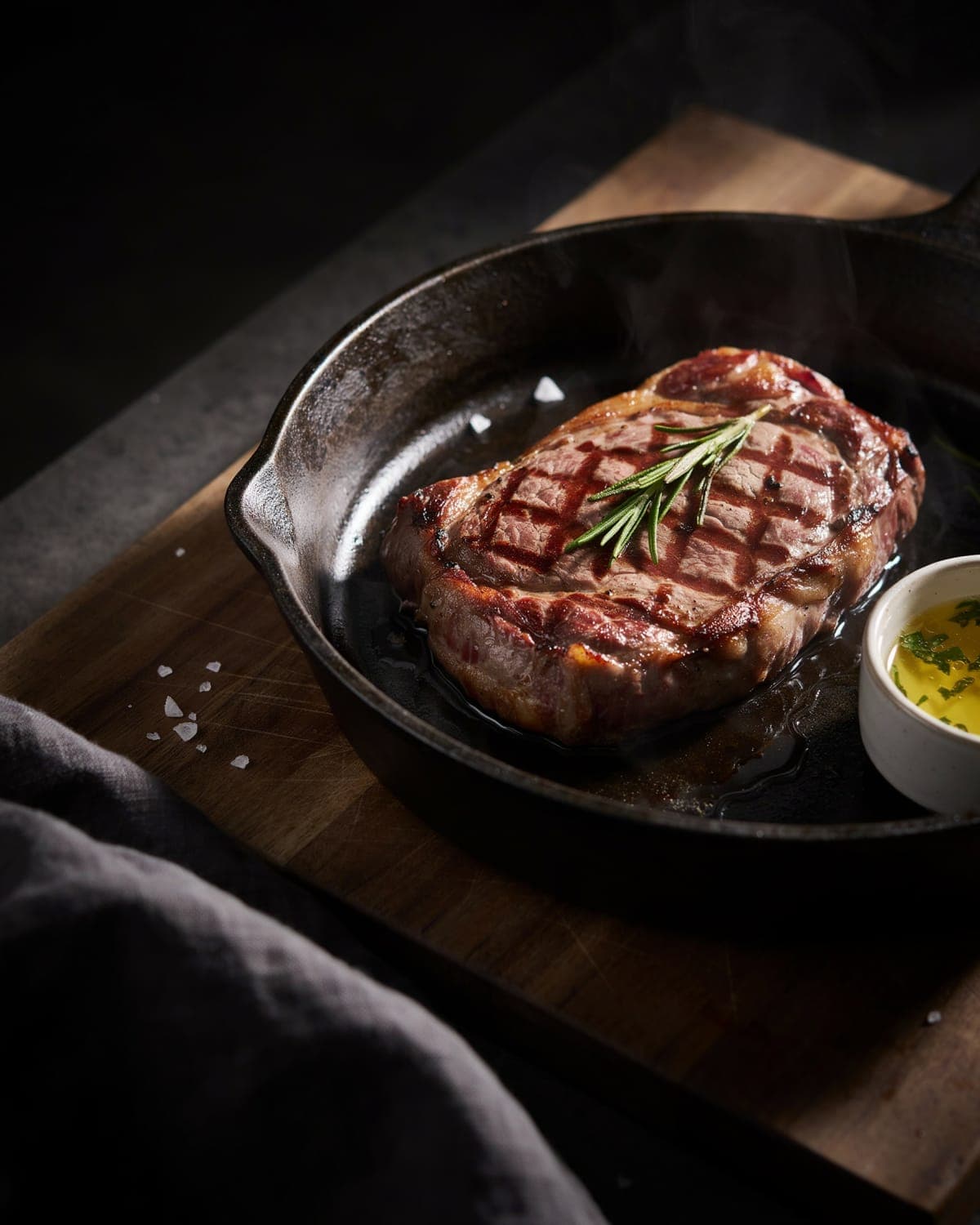
The unmistakable aroma of rendered beef fat hitting aggressively seasoned iron is what pulls you into a steakhouse before you even see the menu. (I still remember the first time I realized just how much black pepper goes into a true roadhouse crust—it borders on reckless, but it balances the richness of the beef perfectly.) Most people assume they need an industrial flat-top griddle burning at 500°F (260°C) to achieve that edge-to-edge dark crust on a sirloin. You don't. You simply need a heavy cast-iron pan, precise temperature control, and the patience to let the meat cook undisturbed.
Creating a restaurant-caliber experience at home is fundamentally an exercise in restraint and timing. When you are cooking a meal for two, the margin for error is small. There is no line cook to save you. But the reward is a deeply flavored, perfectly cooked steak paired with warm yeast rolls slathered in whipped cinnamon-honey butter, all without leaving your kitchen.
A cold steak hitting a hot pan does not sear; it steams in its own panic.
The Science of the Cast Iron Sear
Why do steakhouses produce such consistent crusts? It comes down to thermal mass. Commercial griddles are thick slabs of steel that do not drop in temperature when cold food is placed on them. Home skillets, especially thin non-stick or cheap aluminum, lose their stored heat immediately. I've tested this with both stainless steel and cast iron. Cast iron wins because it holds 4× more heat, meaning the pan temperature won't crash when cold meat hits it. Stainless steel is fantastic for building a fond to make a pan sauce, but for a dry-rubbed steak where you want a pure, dry sear, the sheer weight of a cast-iron skillet is non-negotiable.
Before the meat ever touches the pan, it must be bone-dry. Moisture on the surface of the steak is the enemy of the Maillard reaction—the complex chemical process where amino acids and reducing sugars transform into the deeply browned, savory crust we associate with a great steak. Water evaporates at 212°F (100°C), while the Maillard reaction requires temperatures well above 285°F (140°C). If your steak is wet, the heat energy is spent boiling the water rather than browning the meat. I've tracked the moisture loss of beef in my kitchen, and leaving a steak uncovered in the fridge for 24 hours removes up to 5% of its surface water weight, guaranteeing a violent, immediate sear. If you don't have 24 hours, pressing the meat aggressively with heavy paper towels is absolutely mandatory.
The Anatomy of the Perfect Sirloin
When we talk about a classic roadhouse steak, we are generally referring to the top sirloin. Located behind the short loin, the sirloin (specifically the gluteus medius muscle) offers an incredibly robust beef flavor. It is leaner than a ribeye and firmer than a filet mignon, which means it requires careful handling to remain tender. Because it lacks the dense webbing of intramuscular fat (marbling) found in richer cuts, the sirloin relies heavily on its exterior seasoning and the cooking technique to lock in moisture and provide textural contrast.
Buying the right steak is half the battle. Look for sirloins that are cut at least 1.5 inches (3.8 cm) thick. A thin steak will overcook in the center before a proper crust can form on the exterior. When shopping for two, I prefer to buy one massive 16-ounce (450g) sirloin and slice it for sharing, rather than managing two smaller, thinner steaks in the pan. The thermal dynamics of a thicker steak allow you to build an aggressive, dark crust while maintaining a cool, red interior.
The Signature Roadhouse Spice Rub
A steakhouse rub is distinct from a traditional French seasoning approach, which often relies simply on coarse salt and cracked pepper applied just before searing. The roadhouse style uses a heavy, almost powdery coating of aromatics that toast in the fat as the steak cooks.
The foundation is salt. I always advise measuring salt by weight; I found that 1 tablespoon of Diamond Crystal kosher salt weighs exactly 10 grams, whereas fine table salt is almost 19 grams, which destroys a dry rub if substituted blindly. Using Diamond Crystal allows you to coat the steak generously without over-salting the interior. To this salt base, we add coarse black pepper for bite, garlic powder and onion powder for a deeply savory undertone, and a touch of smoked paprika. The paprika doesn't add much heat, but it dramatically enhances the color of the crust, giving the steak that signature mahogany hue. The danger here is the garlic powder. Dehydrated garlic burns quickly, turning acrid and bitter. To protect the spices, we rely on a generous coating of neutral oil in the pan, which acts as a buffer and toasts the spices rather than incinerating them.
Mastering the Cinnamon-Honey Butter
No roadhouse dinner is complete without the rolls and the accompanying compound butter. Whipping butter sounds trivial until the mixture splits. It is a delicate dance of water, fat, and sugar.
I learned the hard way that whipping cold honey into softened butter instantly drops the temperature; the butterfats seize at around 60°F (15°C), leaving a grainy mess instead of a smooth emulsion. The key is strict temperature equilibrium. The butter must be softened exactly to room temperature—around 68°F (20°C). At this stage, it will yield to a whisk without melting into a puddle. The honey should also be resting at room temperature. A pinch of kosher salt and a dusting of ground cinnamon complete the mixture. By vigorously whipping air into the butter, you create a microscopic network of fat crystals that suspend the honey and cinnamon, lightening the texture and making it perfectly spreadable over warm yeast rolls.
Essential Equipment for the Home Steakhouse
Beyond the cast-iron skillet, recreating a roadhouse dinner requires a few basic tools. An instant-read digital thermometer is non-negotiable. Cooking by feel or timing alone is a gamble, especially when steak thicknesses vary wildly from the butcher counter. A heavy set of stainless steel tongs allows you to manipulate the meat without piercing the exterior and losing juices. Finally, a thick wooden cutting board is essential. Resting a hot steak on a cold ceramic plate will draw heat away from the meat too quickly, and slicing on ceramic will instantly dull your chef's knife. Wood retains ambient temperature and provides a forgiving surface for the final carve.
Resting meat isn't a suggestion; it is the final, active phase of cooking where juices reorganize and settle.
Substitutions and Sides
Not everyone has access to thick-cut top sirloin on a Tuesday evening. If you cannot find a sirloin, a New York strip is your next best option. The strip has a dense fat cap running along one edge that requires rendering. To compensate, hold the steak vertically with tongs and sear the fat cap against the hot iron for two minutes before laying the steak flat. It changes the initial cooking dynamic slightly, putting more liquid fat in the pan, but it will work beautifully, yielding a slightly richer final bite.
If you are out of honey for the butter, pure maple syrup or agave nectar can be substituted. Agave is slightly sweeter, so reduce the volume by about a quarter. The emulsion process remains exactly the same.
A proper steak dinner for two requires equally strong supporting cast members. While the steak rests on the cutting board, you have a five-minute window to finalize your sides. The cinnamon-honey butter demands warm yeast rolls—store-bought rolls brushed with a little melted butter and warmed in a 350°F (175°C) oven for five minutes will do nicely. If you're building a full traditional plate, pair this protein with creamy mashed potatoes for two to soak up the resting juices of the beef and the residual spice rub left on the plate.
What comes in a typical Texas Roadhouse dinner for two?
A classic roadhouse dinner for two usually features a large shared appetizer like fried pickles, two individual steak entrees (often 6 oz to 8 oz sirloins or a shared 23 oz porterhouse), and a choice of two sides per person, such as baked potatoes or green beans. It is always served alongside a basket of unlimited warm yeast rolls and cinnamon-honey butter.
How do you make the Texas Roadhouse steak seasoning?
The signature seasoning is a savory blend that relies on 2 parts kosher salt, 1 part coarse black pepper, 1 part garlic powder, 0.5 parts onion powder, and 0.5 parts smoked paprika. This specific ratio creates a robust crust that stands up to the high heat of a cast-iron skillet (around 450°F / 230°C) without burning the delicate dehydrated alliums.
What is the best cut of steak for a roadhouse dinner?
Top sirloin is the traditional choice for its balance of bold beef flavor and lean texture, typically portioned into 6 oz, 8 oz, or 11 oz cuts. However, New York strip and bone-in ribeye (often weighing 20 oz or more) are heavily featured for diners looking for richer, more heavily marbled options that render beautifully over high heat.
Can I make the cinnamon-honey butter ahead of time?
Yes, you can prepare the cinnamon-honey butter up to 7 days in advance. Store it in an airtight glass container in the refrigerator at 38°F (3°C) to maintain maximum freshness. You must let it sit at room temperature (68°F / 20°C) for at least 45 minutes before serving so the butterfats relax and it returns to a light, spreadable consistency.
How do you get a perfect crust on a steak at home?
A perfect crust requires a bone-dry steak surface, a heavy cast-iron skillet heated to just smoking (around 450°F / 230°C), and a liberal application of a dry spice rub. Using 1 tablespoon of a neutral, high-smoke-point oil like grapeseed ensures the spices toast in the pan without leaving a bitter, burnt residue on the meat.
Why does the restaurant steak taste different than home-cooked?
Restaurants aggressively season their steaks with up to 30% more salt and fat than most home cooks are comfortable using. Furthermore, they cook on heavy steel flat-top griddles that maintain a constant 500°F (260°C) temperature, ensuring an immediate, violent sear that locks in a dense, savory crust before the interior has a chance to overcook.
What type of oil is best for high-heat cast-iron searing?
Grapeseed oil, canola oil, or avocado oil are the optimal choices for searing steak. They possess smoke points above 400°F (205°C), allowing the pan to get adequately hot. Avoid extra virgin olive oil, which burns at 350°F (175°C) and will impart a bitter, acrid flavor to the meat before the pan is hot enough to develop a proper crust.
The Technique: Step-by-Step
Chef Augustin's Tip: Never press down on a steak with a spatula while it cooks in the skillet. It does not speed up the searing process; it simply squeezes out the internal juices that you are working so hard to retain. Let the heat do the work.