
Article and tips
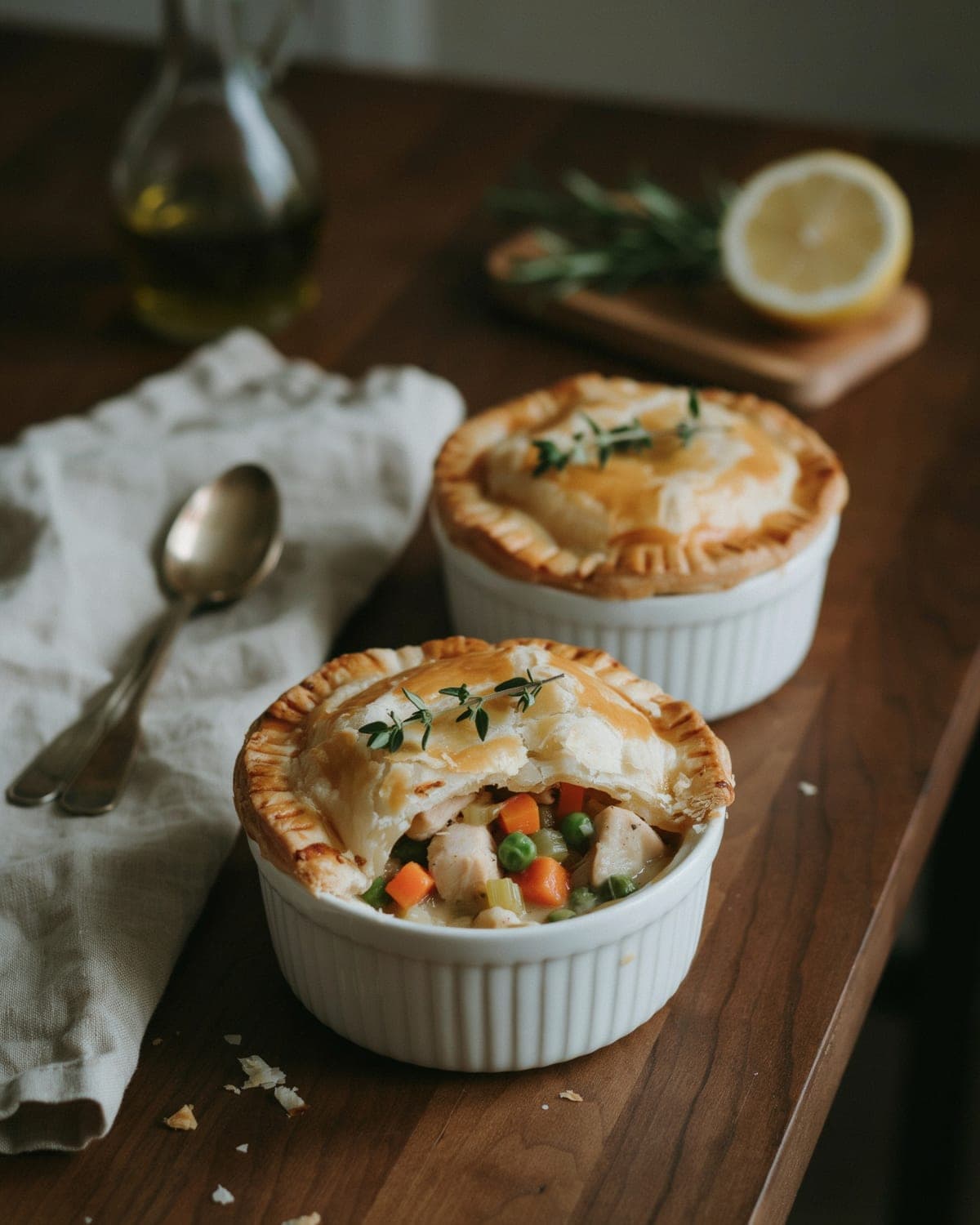
Every version I found online bakes the pastry right on top of the wet filling, which is exactly why the underside of the crust turns to gummy paste by the time the filling is hot. So here is my angle, stated plainly: I bake the puff pastry lids separately on a thanksgiving dinner for two for two while the filling simmers, then marry them at the table. You get shatter-crisp pastry on both sides and a filling that never overcooks. Two ramekins, two people, zero sad leftovers pushed to the back of the fridge.
This is a chicken pot pie scaled down with intent. I built it around a single chicken breast and a bag of frozen mixed vegetables, because that is what actually lives in most kitchens on a Tuesday. It comes together in about 45 minutes, most of which is hands-off while the pastry puffs and the sauce thickens. The result tastes like something that took far longer, and that gap between effort and reward is the whole point of cooking for two.
Why This Works
The filling is a classic velouté-style sauce built on a butter-and-flour roux. When you cook flour in fat, the starch granules coat themselves in lipid, which lets them disperse into hot liquid without clumping into lumps. As the sauce reaches a simmer, those granules swell and burst, releasing amylose that thickens everything into a glossy, spoon-coating nappe. That is why I insist you cook the raw roux for a full 90 seconds before adding liquid, and why the sauce must actually simmer, not just warm.
The separated pastry is the real engineering choice. Puff pastry rises because water trapped between hundreds of butter layers turns to steam and forces the layers apart. That lift only happens in dry, direct heat. Sit the pastry on wet filling and the bottom layers steam-poach instead of puff, leaving raw dough. Baked on a sheet pan at 400°F / 204°C, every layer inflates. I brush the tops with an egg wash for color and shine, and because a firm-cooked egg glaze is both safe and beautiful.
What Most Recipes Get Wrong
Nearly every pot pie recipe bakes the pastry directly on top of raw or barely-warm filling, then wonders why the bottom crust is pale and doughy. The physics simply do not allow it: steam from the filling condenses on the pastry underside and poaches it. My fix is to bake the lids separately on dry heat and add them at the end. It costs you nothing in time (the pastry bakes while the filling simmers) and it delivers a crust that crackles on every side. The second common miss is over-thickening the sauce until it turns to glue as it cools. Pull it at nappe consistency; it will tighten slightly in the hot ramekin.
Chef's Tips & What I've Learned
Chef Augustin's Tip: Season the sauce, taste, then season again after the vegetables go in. Frozen vegetables release water and dilute the salt, so a sauce that tasted perfect before will taste flat after. I've tested this both ways, and the two-stage seasoning wins every time.
Chef Augustin's Tip: If your ramekins are oven-safe, slide the filled-but-unlidded dishes under the broiler for 60 seconds before topping. The edges caramelize and the sauce develops a savory depth that plain reheating never gives you.
Good pot pie is a balance of temperatures: molten filling, crisp pastry, and the split second they meet on your fork.
A pinch of fresh thyme at the very end wakes up the whole dish more than a teaspoon stirred in early ever could.
How Do You Make Chicken Pot Pie for Two?
Sear one 8 oz / 227g simple dinner recipes for 2 for 2 for 2 to 165°F / 74°C, dice it, and set aside. Build a roux from 3 tablespoons butter and 3 tablespoons flour, then whisk in 1 cup milk and 3/4 cup chicken broth until the sauce coats a spoon. Fold in the 1/2 cup frozen mixed vegetables, divide between two ramekins, and top each with a puff pastry round baked separately at 400°F / 204°C. The whole process takes about 45 minutes.
Can You Freeze Chicken Pot Pie for Two?
Yes, but freeze the filling and the pastry separately for the best result. Cool the filling completely, then freeze it in the ramekins wrapped tightly for up to 3 months. Bake fresh pastry the day you serve it, since thawed baked puff pastry loses its shatter. To reheat, thaw the filling overnight in the fridge and warm it at 350°F / 177°C until it reaches 165°F / 74°C, roughly 25 minutes, then add the lid.
How Long Does Chicken Pot Pie for Two Last in the Fridge?
Stored in an airtight container, the filling keeps 3 to 4 days in the refrigerator per USDA guidance for cooked poultry. Keep the baked pastry in a separate container at room temperature for up to 2 days, or it will go soft against the moist filling. When reheating, bring the filling back to 165°F / 74°C before serving. I do not recommend freezing an already-assembled, already-baked pie; the crust never recovers.
What Should You Serve with Chicken Pot Pie for Two?
Because the pie is rich and creamy, I pair it with something sharp and green. A simple arugula salad with lemon and olive oil cuts through the sauce beautifully, and it takes 3 minutes. Roasted asparagus or a handful of quick-sautéed green beans also works if you want everything warm. Skip heavy starchy sides; the pastry and sauce already carry the meal, and a bright vegetable is all the contrast the plate needs.
What Are Common Mistakes When Making Chicken Pot Pie for Two?
The three I see most: baking pastry on wet filling (gummy bottom), under-cooking the roux (pasty flavor), and over-thickening the sauce so it sets like glue when it cools. Add a fourth: overcooking the chicken. Pull it the instant it hits 165°F / 74°C, because it keeps cooking as it rests and again when it meets the hot sauce. A dry breast is the fastest way to make a beautiful pie taste ordinary.
Set both ramekins on a wooden board between you, let the steam curl up as someone lifts the first crackling lid, and let the conversation slow down to match the meal.