
Article and tips
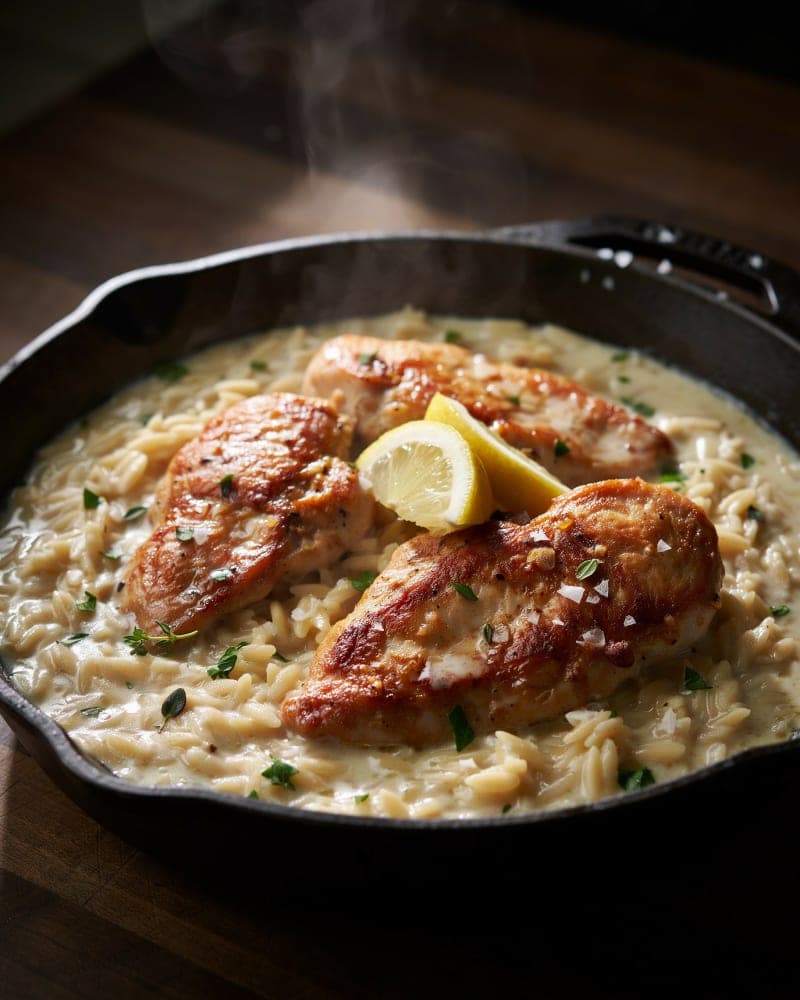
The best one-pan romantic dinner ideas for two don’t come from a list of 20—they come from understanding why those golden seared edges matter. (And why the sauce should be built in the same pan, not poured from a jar.) Most recipes rush through a thin, watery sauce and end with dry chicken that never saw a thermometer. I’ll walk you through getting a deep sear, a glossy, lemon-bright pan sauce, and fluffy pearl couscous that soaks up every drop—all in half an hour.
Why This Works
This recipe leans on three kitchen fundamentals that turn a couple of chicken breasts into a restaurant-worthy plate: the Maillard reaction, fond deglazing, and rapid hydration. When chicken hits a hot, oiled skillet, its surface amino acids and sugars react at temperatures above 300°F (150°C) to create hundreds of new flavor compounds—that’s the golden-brown crust you see. Then, as the chicken rests, the browned bits (called fond) stuck to the pan become the foundation of the sauce. Adding liquid, in this case chicken broth and fresh lemon juice, releases that fond back into solution, creating a deeply savory, complex sauce without any thickeners. Meanwhile, pearl couscous (Israeli couscous) absorbs that same liquid nearly twice as fast as rice because its pre-toasted pasta structure acts like a sponge. The result: a single pan cycles through searing, steaming, and sauce-building without ever leaving the stovetop.
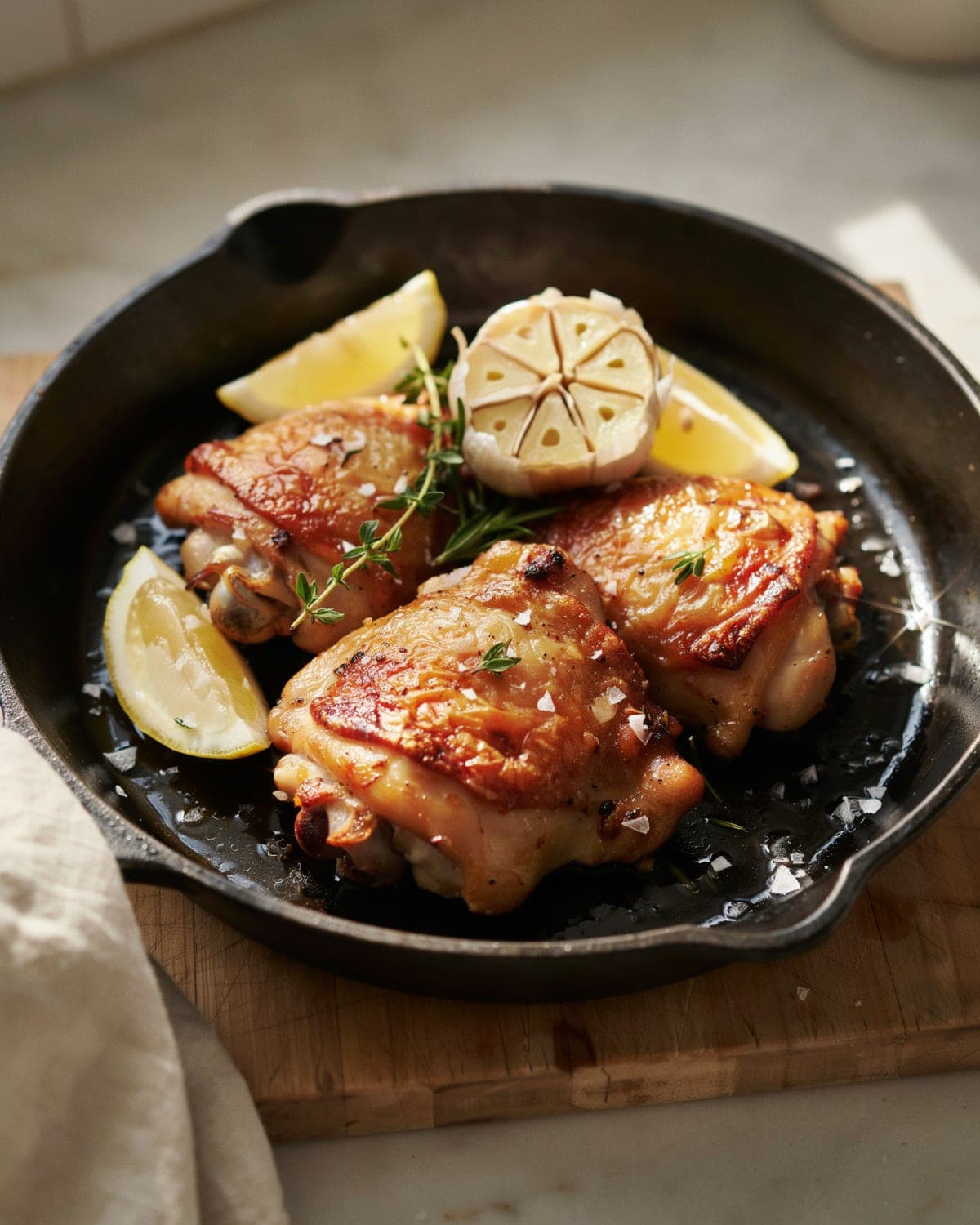
A hot pan and dry chicken are the difference between a golden crust and a pale, steamed breast.
(8 oz / 225g each)
- 1/2 tsp Diamond Crystal kosher salt, plus more for seasoning
- 1/4 tsp freshly cracked black pepper
- 1 Tbsp olive oil
- 1 Tbsp unsalted butter
- 3 cloves garlic, thinly sliced
- 1/2 small yellow onion, finely diced (about 1/3 cup / 50g)
- 1/2 cup (90g) pearl (Israeli) couscous
- 1 cup (240ml) low-sodium chicken broth
- 1/2 cup (120g) canned diced tomatoes, drained
- 1 lemon (zest of half, juice of whole)
- 1/2 cup (65g) frozen peas, thawed
- 2 Tbsp chopped fresh parsley
- 1/4 tsp red pepper flakes (optional)
Why These Ingredients Matter
Pearl couscous is the unsung hero here. Its larger, chewy pearls trap the lemon-garlic broth in their crevices, unlike fine couscous, which can turn mushy. Swapping in orzo works, but you’ll lose that pop of texture. The garlic is sliced thin, not minced, so it infuses the sauce with gentle sweetness rather than acridity when sautéed dinner dessert for two ideas for two recipes healthyly.
Butter doesn’t just add richness—it also helps carry fat-soluble aromas from the garlic and lemon zest into every bite.
What Most Recipes Get Wrong
Most “20 easy chicken dinners” roundups tell you one thing: volume over precision. Most compilations skip the why—why you dry the chicken, why the pan must be hot, why resting matters. They also tend to call for cooking chicken by time alone, resulting in dry meat. USDA guidelines specify 165°F (74°C) for poultry for a reason: that’s the temperature at which common pathogens like Salmonella are instantly killed. But hitting exactly 165°F (not 175°F or 185°F) preserves moisture. Without a thermometer, you’re guessing. Another common error is adding lemon juice too early; the acid can curdle dairy-based sauces or turn bitter if boiled. I add it at the end to keep the sauce bright and fresh-tasting.
Chef’s Tips & What I’ve Learned
Chef Augustin’s Tip: The 10-minute rest is a lie. For chicken breasts this size, 5 minutes tented is plenty. Resting redistributes juices, but if you wait too long the crust softens from trapped steam. I pull it from the pan, tent with foil for 5 minutes, then slice and serve.
Chef Augustin’s Tip: Double the batch for leftovers that reheat gracefully. The pearl couscous holds up in the fridge for 2 days. Reheat gently with a splash of broth in a covered skillet over low heat. The chicken will still taste fresh, not dry. (For meal prep, I actually undercook the peas slightly so they stay bright green when reheated.)
FAQ
Can I use chicken thighs instead of breasts?
Absolutely. Boneless, skinless thighs work beautifully and are more forgiving if you overshoot the temperature slightly. The USDA-safe internal temperature for poultry is still 165°F (74°C), whether breast or thigh. Thighs are typically smaller and thinner, so reduce the sear time to about 3–4 minutes per side. You’ll still get a lovely crust, and the darker meat adds a touch more richness to the pan sauce. Just be sure to pat them dry as thoroughly as breasts.
How do I know when the chicken is done without slicing into it?
Use an instant-read digital thermometer. Insert the probe into the thickest part of the breast, avoiding the pan or any bone. Look for 165°F (74°C). I know it’s tempting to cut a slit to check, but that releases juices you’ve worked hard to seal in. Thermometers are cheap insurance—I keep a Thermapen at the ready. If you’ve never used one, you’ll wonder why you didn’t sooner.
What if I don’t have pearl couscous?
Substitute orzo or even small pasta like ditalini. Orzo will cook in about the same amount of time and soak up the broth similarly. The texture will be softer, less chewy, so you might want to toast it an extra minute. If using rice, you’ll need to adjust the liquid ratio and cooking time—long-grain white rice takes about 15 minutes and 1.5 cups of broth. The dish will still work; you’ll just lose some of that bouncy couscous character.
Can I make this dairy-free?
Yes. Replace the butter with an additional tablespoon of olive oil. You’ll lose a bit of the creamy mouthfeel and the butter’s ability to carry garlic aromas, but the dish will still be delicious. I’ve tested this with good-quality extra-virgin olive oil, and the sauce gets a slightly more peppery, fruity note. Just be sure not to let the garlic burn in the oil-only pan—keep the heat at medium.
Why do you add the lemon juice at the end?
Lemon juice contains citric acid, which can break down and turn metallic or bitter when boiled for more than a few minutes. Adding it at the end preserves its bright, fresh zing. The zest, which holds aromatic oils, is fine to cook a bit during the simmer because the oils release gradually into the sauce. This staggered approach means you taste lemon two ways: mellow and fragrant from the zest, sharp and clean from the juice.
How do I scale this up for four people?
Double every ingredient. Use a larger 12-inch skillet—crowding the pan will steam the chicken instead of searing it. You may need to cook the chicken in two batches, then proceed with the couscous step in the same pan. The sauce will still develop those fond layers. The timing remains about the same; just add an extra 2–3 minutes for the couscous to absorb the increased liquid.
The quietest kitchen sound is the sizzle that tells you the pan was ready.
The table is small, just two plates, two forks, one skillet slowly losing its heat in the center. The chicken slice breaks under the pressure of a knife, giving way to a pink-free, perfectly white interior, glistening with that lemon-butter gloss. A few peas tumble off the couscous mound. Outside, the light is fading, but inside, the pan-smell of garlic and toasted pasta hangs warmly, promising that even a Tuesday night can feel like you poured yourself into it. It’s just chicken, you think—except tonight, it’s more.