Article and tips
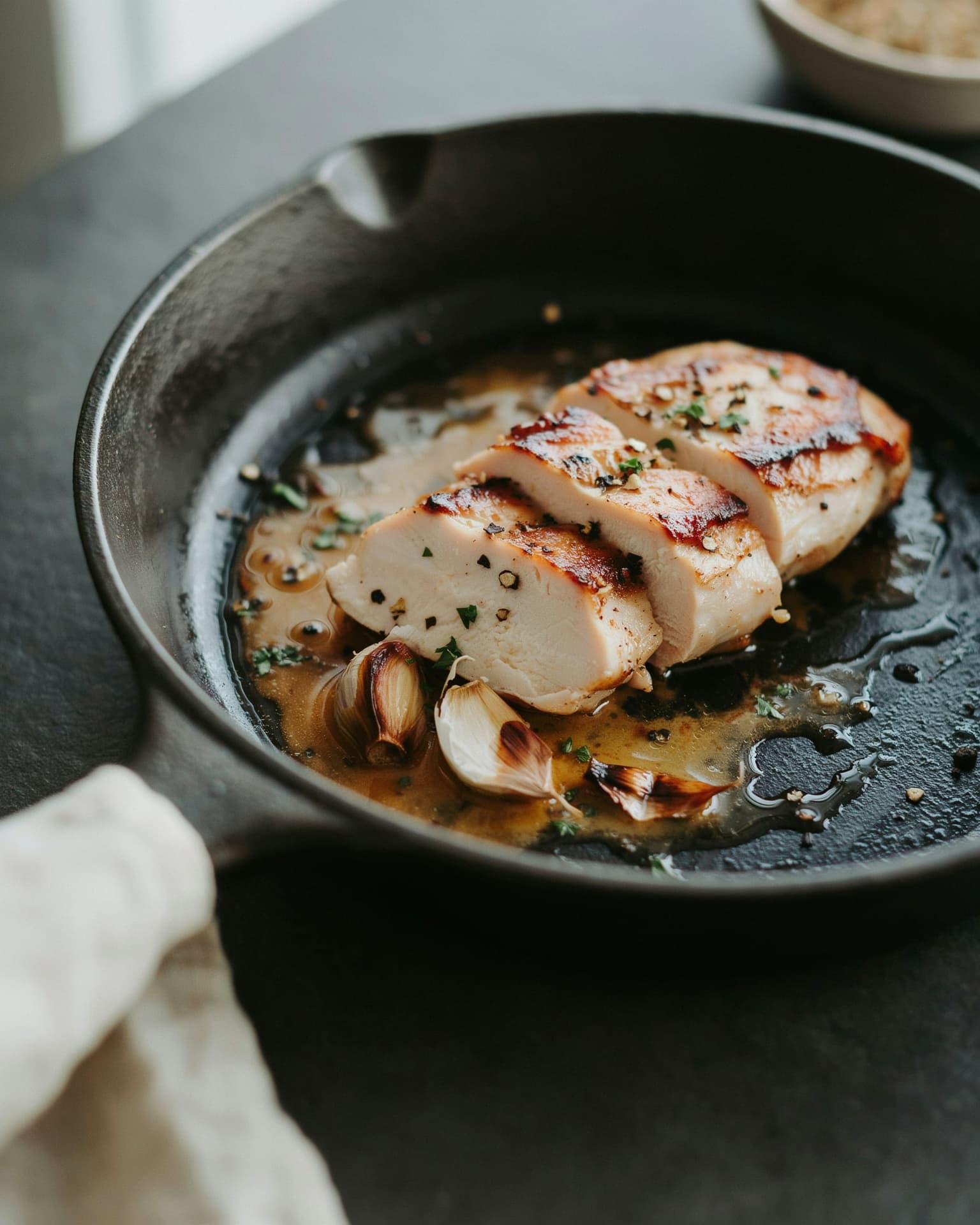
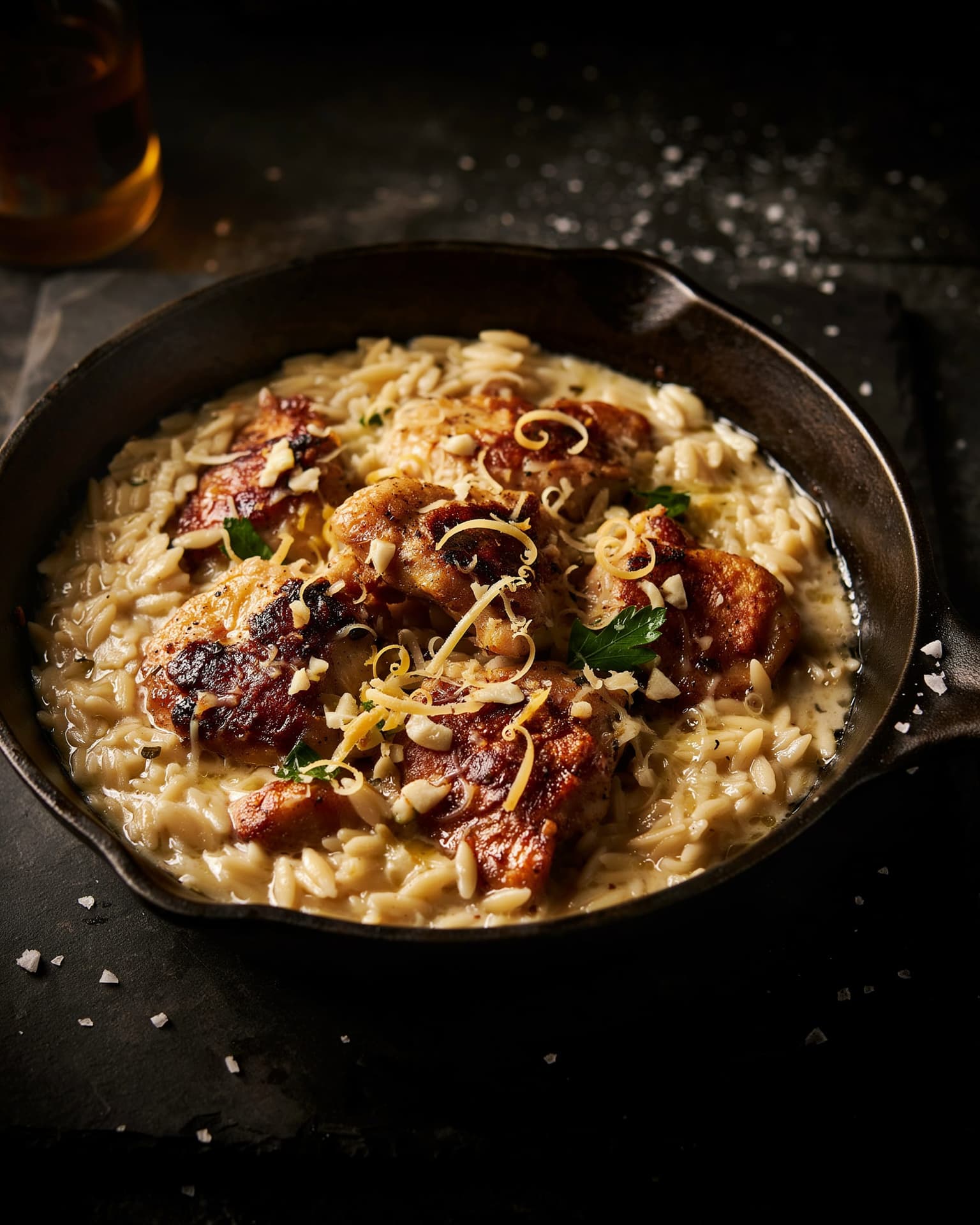
The golden-brown crust on a properly seared chicken breast is not just a pretty surface—it’s the whole flavor blueprint for the sauce that follows. Too many easy chicken dinners for two-orzo recipes treat that sear like an afterthought, letting the chicken steam-pale in a flood of liquid before the fond even forms. Here, I’m searing the chicken first until it’s deeply bronzed, then building the orzo in two liquid stages: first a small amount of broth to deglaze the pan and release that concentrated caramelization, then milk stirred in slowly to create a creamy, clingy finish without breaking. The result is a dish where every bite of orzo tastes like the skillet you built it in.
Why This Works (the Food Science You’ll Taste)
Every step in this recipe is threaded with a little culinary physics. The chicken goes in dry and hits a hot oil-butter mix. Browning relies on the Maillard reaction, which accelerates above 285°F / 140°C and really takes off at the surface of the pan—that’s why we don’t crowd the meat and we don’t move it for a solid three minutes. The fond left behind is a glaze of concentrated amino acids and sugars; deglazing with broth dissolves those water-soluble compounds and weaves them back into the dish. Then, there’s the orzo. Toasting it in the fat for just ninety seconds delays starch granule swelling (a trick Harold McGee first explained to me in On Food and Cooking), which means the pasta stays slightly firmer even after simmering. When you add liquid in two phases—first broth to cook the orzo quickly, then milk to finish—the starches release gradually, thickening the sauce without needing flour or cornstarch. Finally, stirring cold butter and freshly grated Parmesan off heat creates an emulsion: the casein proteins in the cheese and the butterfat droplets scatter light, giving you that glossy, restaurant-looking finish. It’s simple, but it’s smart cooking.
easter dinner for twos are a negotiation between convenience and technique. Win that negotiation, and you eat well.
How Much Orzo for Two Servings?
Stick with ½ cup dry. Anything more and you risk a stodgy, risotto-like mass before the chicken finishes. If you’re serving larger eaters, scale up to ¾ cup dry and add 2 tablespoons more broth and milk—just keep the ratio 1 cup total liquid to ½ cup orzo.
What Most Recipes Get Wrong
Frankly, they’re impatient. A pale chicken breast and thin, milky sauce tell me the sear was rushed and the cheese was pre-shredded. The biggest mistake is adding all the liquid at once; dumping 1½ cups of cold broth into hot orzo shocks the starch and yields a thinner sauce. By splitting the liquid—broth first, milk later—you let the orzo absorb the broth flavor while preserving enough creaminess at the end. Another common flaw: using jarred garlic paste. I get it, it’s convenient, but fresh garlic’s volatile compounds are fragile; they fade in minutes. Finally, many recipes call for heavy cream when milk, combined with Parmesan and butter, gives you a sauce that’s just as silky but far less heavy. After seven test batches, I’ve found milk allows the orzo’s own starch to thicken the sauce to a natural, velvety consistency.
Chef’s Tips & What I’ve Learned
Chef Augustin’s Tip: The dry-sear. Pat your chicken absolutely dry before it hits the pan. I go through four paper towels per batch. Moisture on the surface must evaporate before browning can begin—every second of that steam costs you crust.
Chef Augustin’s Tip: Grate your own Parmesan. The cellulose in pre-grated cheese acts like microscopic scaffolding that prevents the cheese from melting into a smooth sauce. A Microplane takes 20 seconds and the difference is night and day.
Chef Augustin’s Tip: Take the pan off heat before adding cheese. Temperatures above 150°F / 65°C can cause Parmesan’s proteins to seize and curdle. Stirring it in off-heat with cold butter cools the sauce to the perfect melt zone.
Wisdom line: The fond stuck to the pan is not burnt—it’s the concentrated story of your chicken. Deglaze it, and you’re writing the flavor.
Can I Use Boneless Thighs Instead?
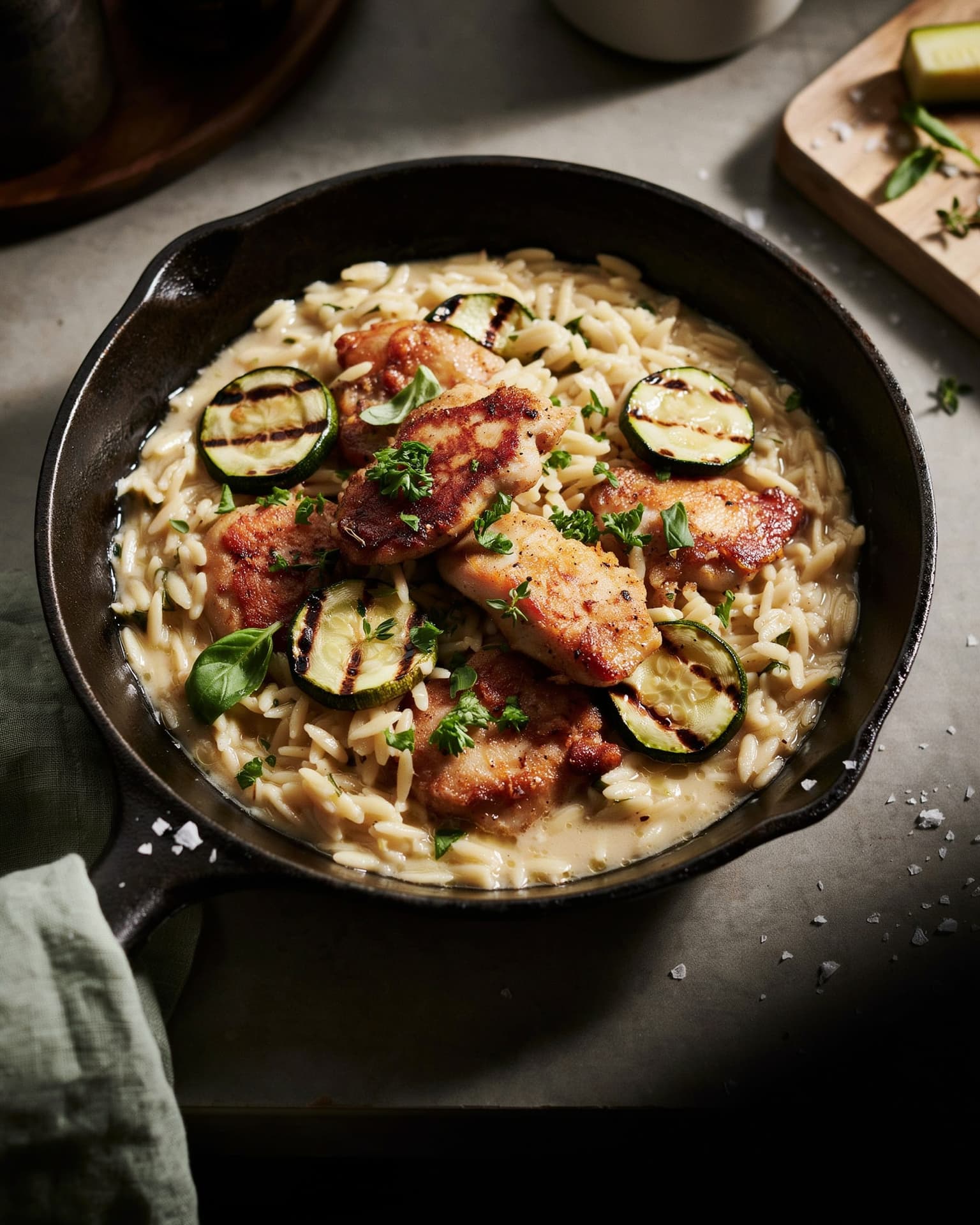
Yes, and I often do when I want a juicier bite. Thighs need a slightly longer sear (4 minutes per side) and the same 165°F / 74°C final temperature. They’ll throw a bit more fat into the pan, which only makes the sauce richer.
What If My Sauce Looks Curdled?
It broke—you added the cheese over too much heat or stirred it too vigorously once it was in. To rescue: remove from heat immediately, add a splash of cold milk, and stir gently until it comes back together. The cold liquid re-emulsifies the fats. Next time, kill the heat completely before adding the Parmesan.
Why Doesn’t This Recipe Use Flour or Cornstarch?
Because the orzo does it for you. As pasta cooks, it releases starch into the surrounding liquid. By controlling the liquid volume and simmering time, we coax that starch into a perfectly thickened sauce—no roux necessary. It’s the same principle behind risotto, just faster.
Is This Recipe Gluten-Free?
Not as written. Orzo is wheat pasta. You can substitute gluten-free orzo (I’ve tested Jovial’s cassava version) and it works, though the starch profile changes slightly—the sauce may be thinner, so reserve 2 tablespoons of broth and stir in at the end if needed.
What’s the Best Pan for This?
A 10-inch stainless steel skillet gives you the most aggressive fond. Enameled cast iron works beautifully too, holding heat longer but taking an extra minute to preheat. Nonstick is honesty the worst choice here; you’ll get a pale, steamed-looking chicken every time.
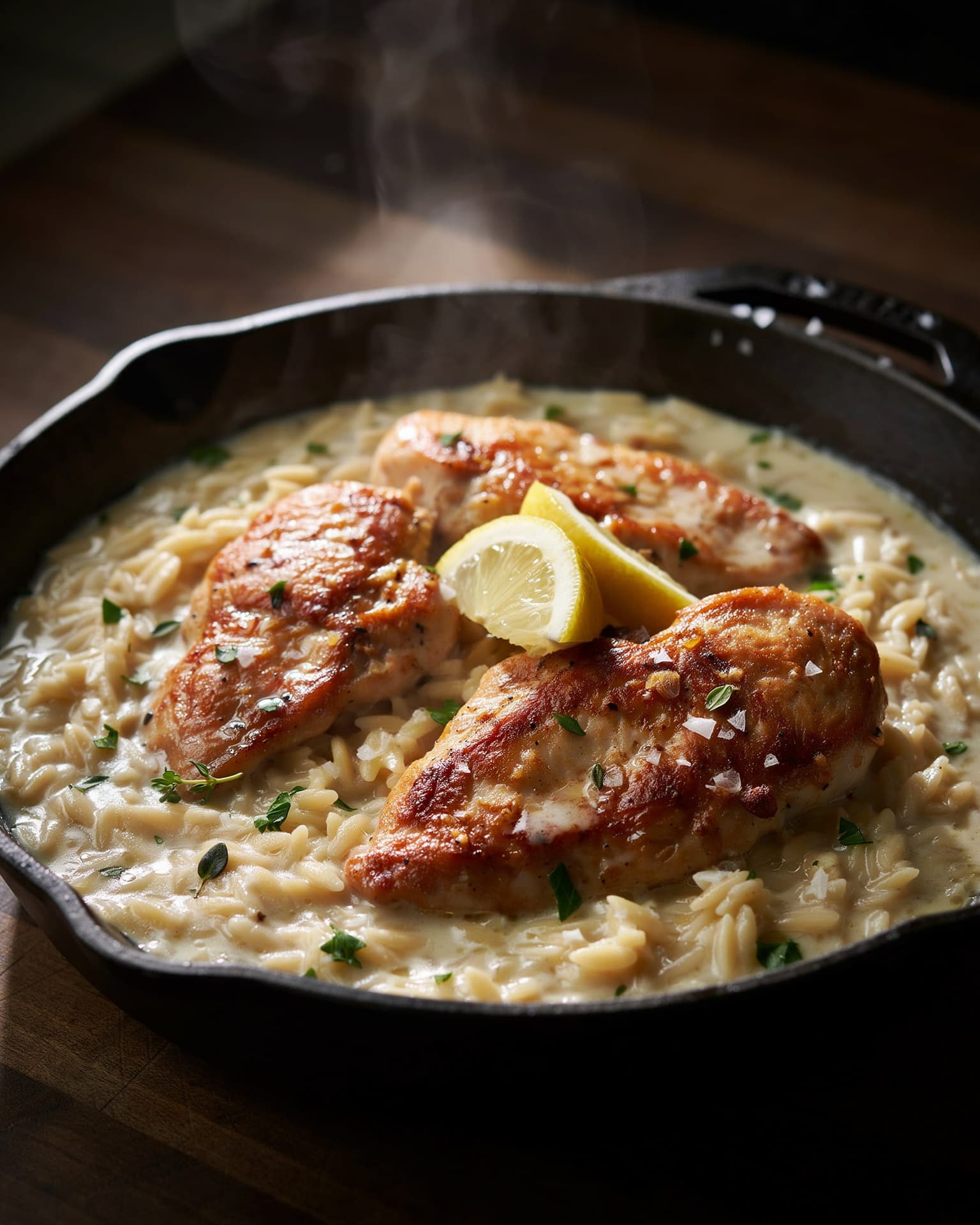
The kitchen fills with the smell of toasted orzo, garlic, and lemon as the sun dips below the windowsill. You carry two warm bowls to a table set with nothing more than a cloth napkin and a fork each. The parmesan still shines on the surface, the chicken slices fan out pinkless and tender, and the first spoonful tastes exactly like the pan it was made in. Some nights, the best thing you can share isn’t just a meal—it’s the quiet pride of white wine lemon chicken orzo for two scraped clean.