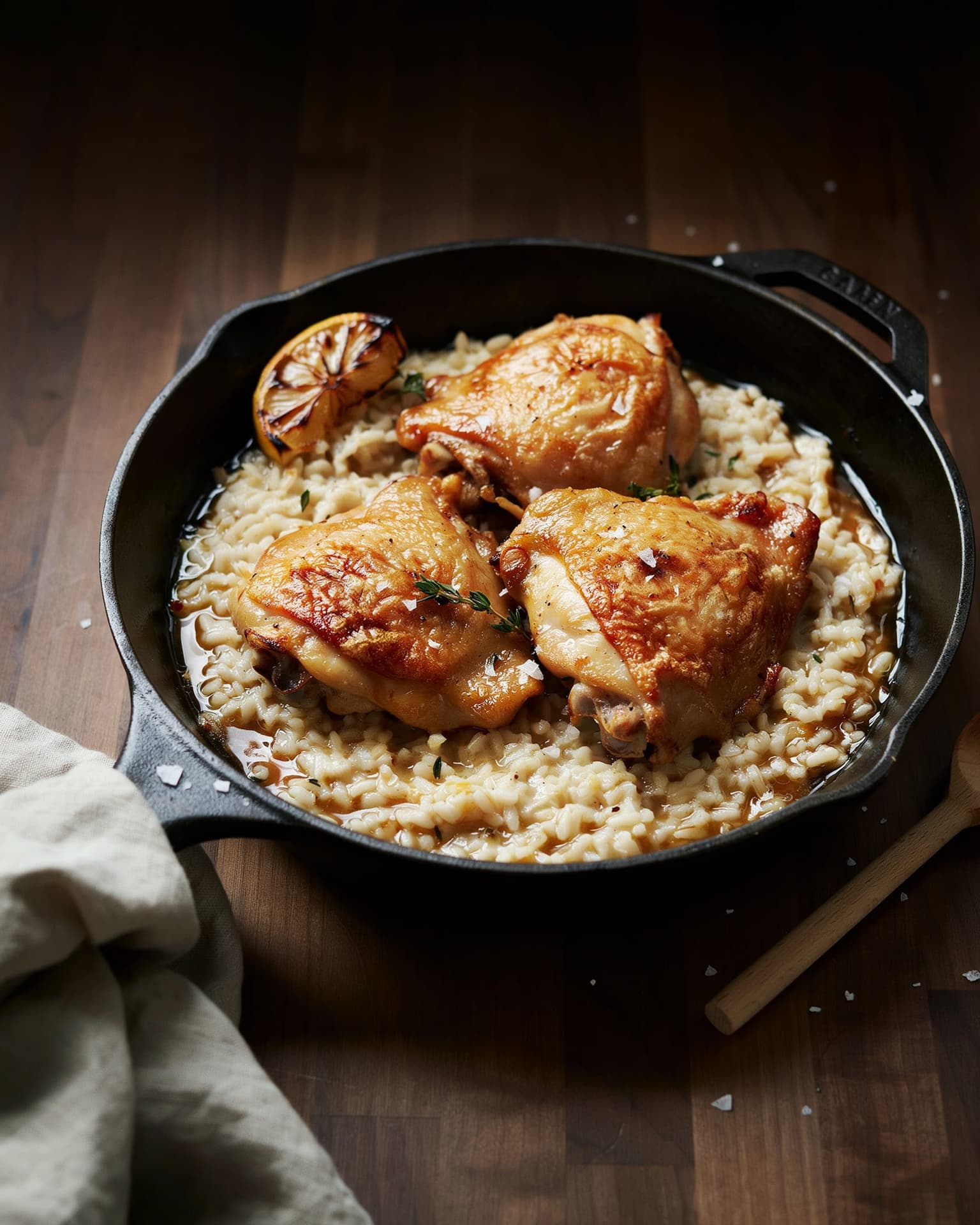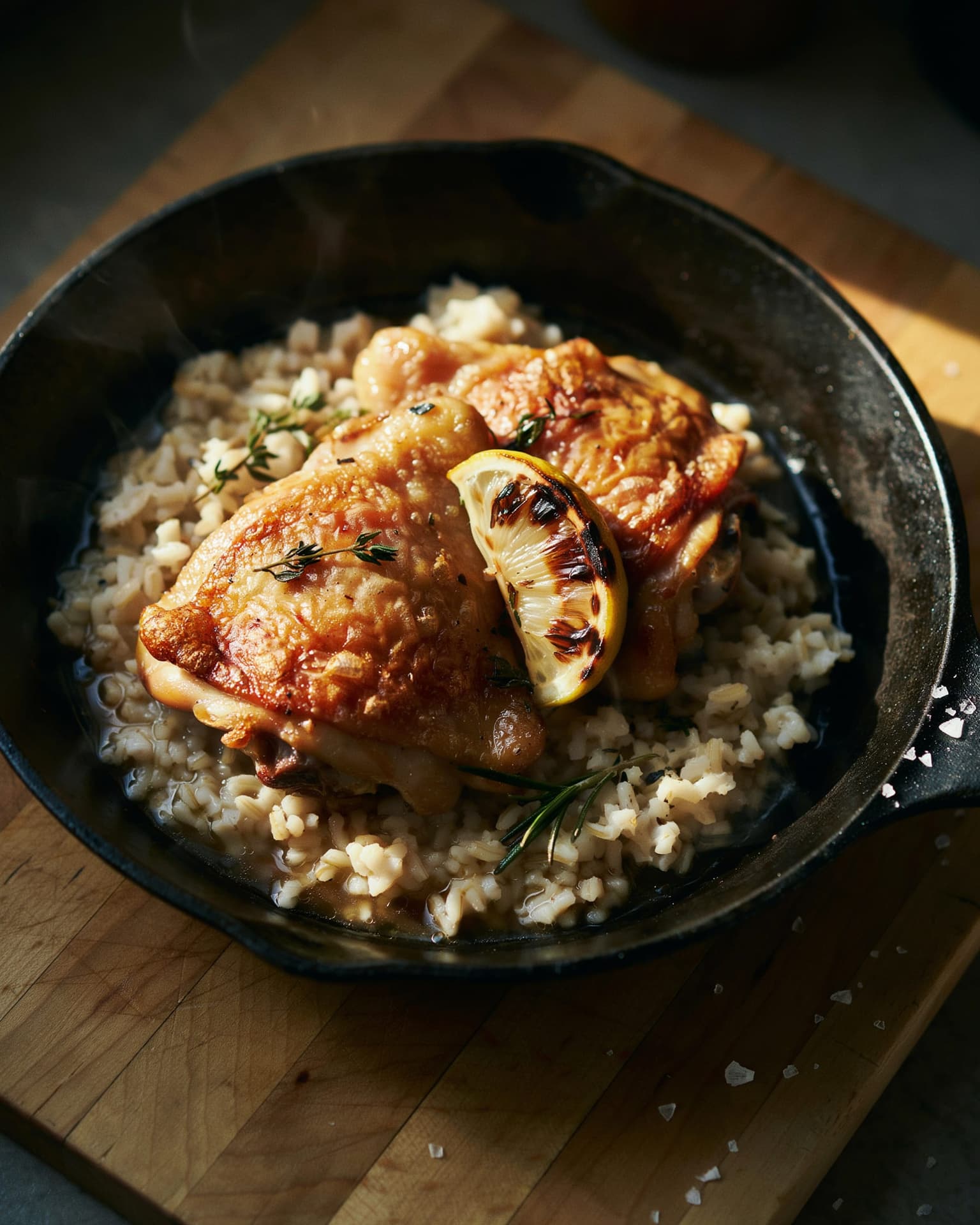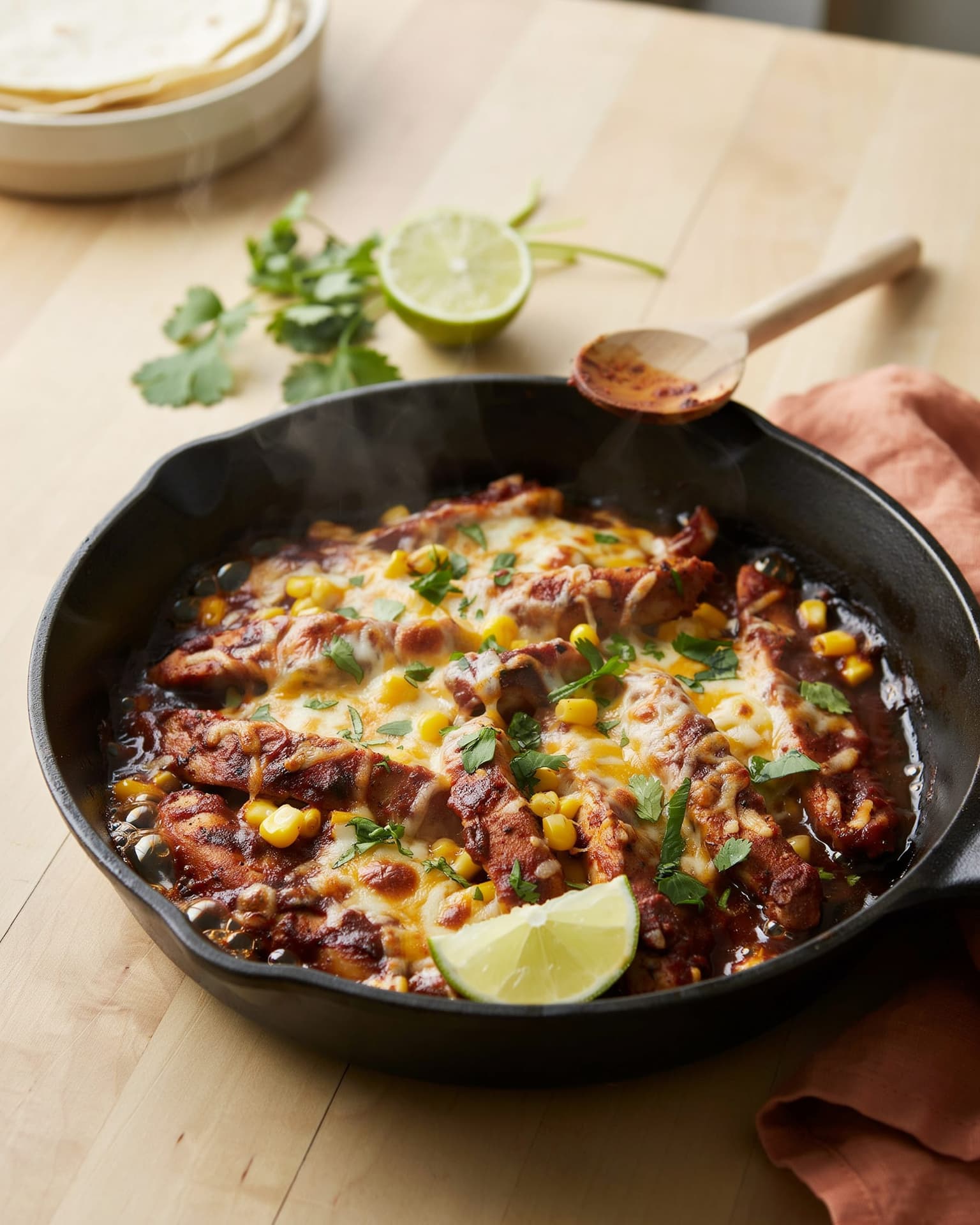
Article and tips
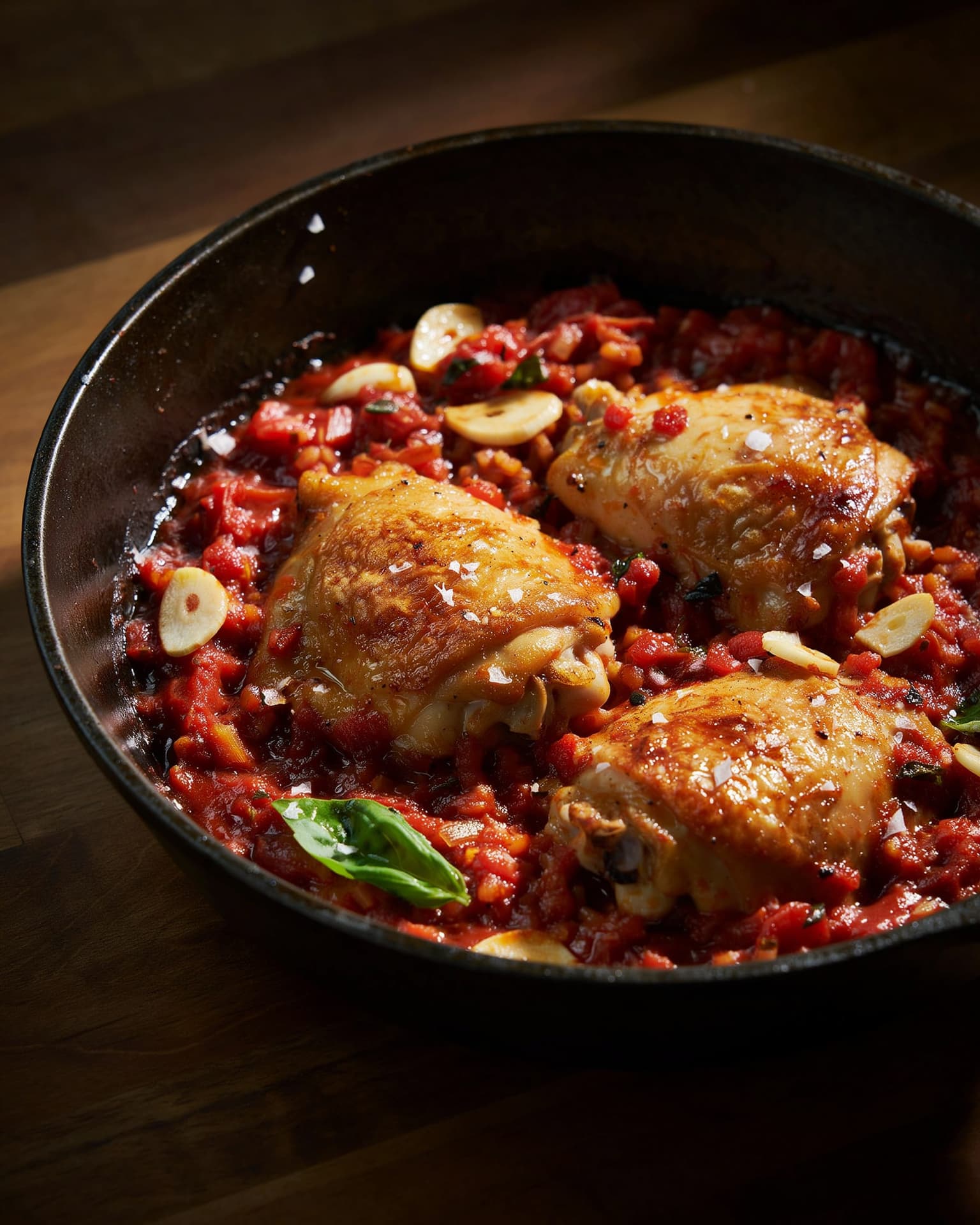
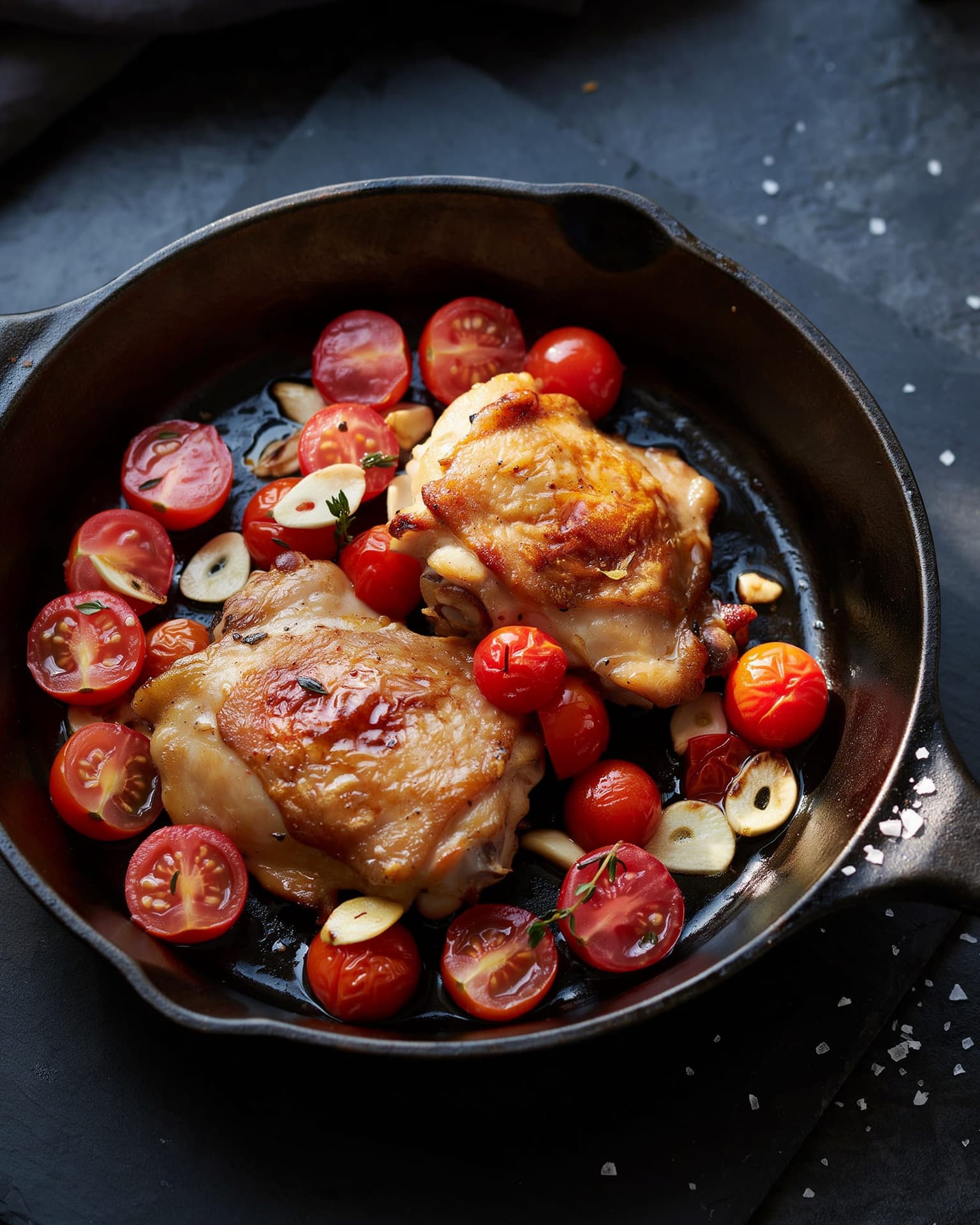
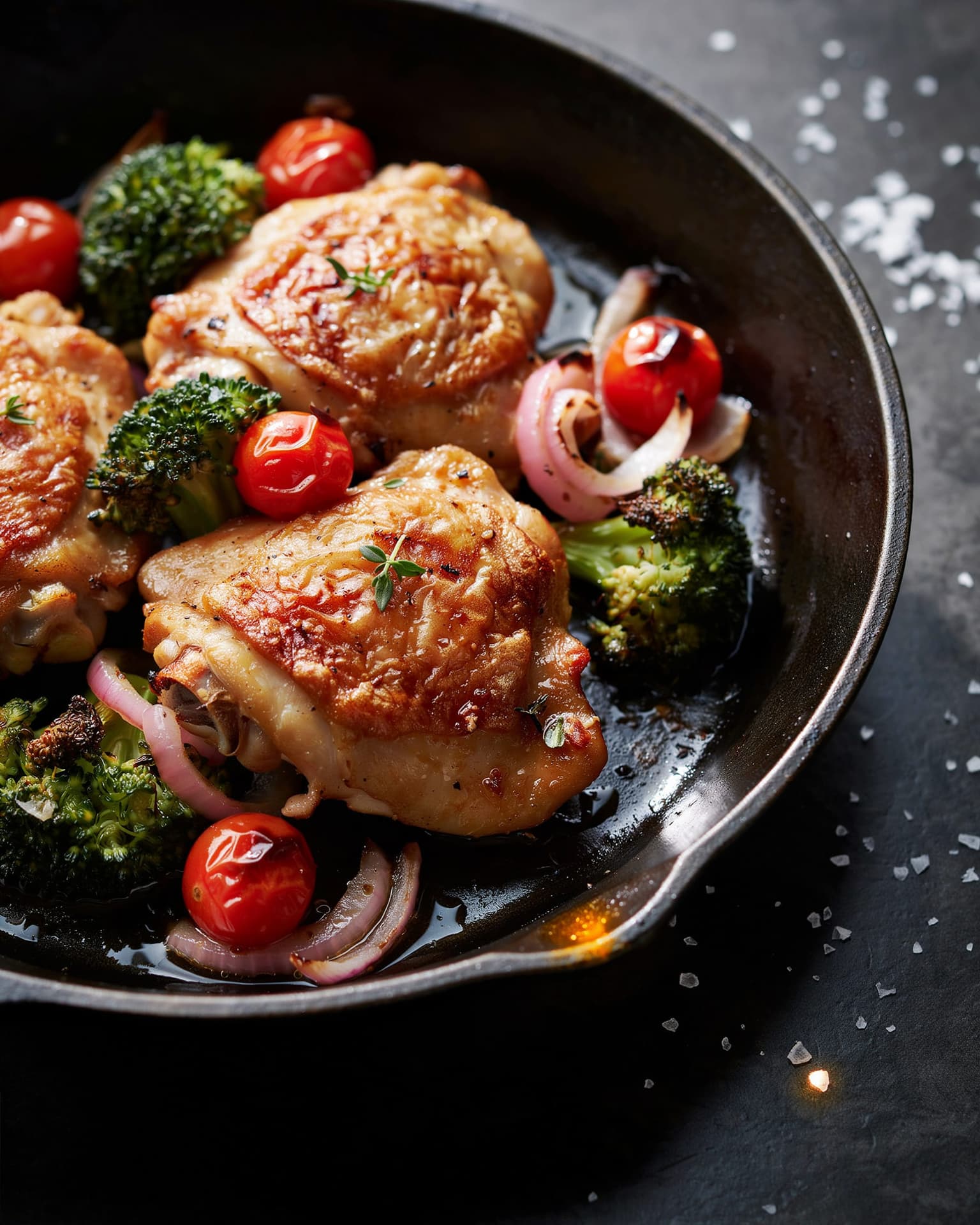
The fastest route to a real dinner for two runs through a single hot skillet, and this one gives you seared chicken, blistered vegetables, and a garlic-tomato pan sauce without a second pot to wash. Most "dinner for two" collections online hand you a full-size recipe and tell you to halve it — which is why people end up with three portions of leftovers and a fridge full of half-used cans. I built this the other way around: scaled from the start for two plates, two appetites, and one pan. That is the angle every top result misses — they list ideas but never solve the portion math.
The whole thing lives or dies on one move: getting a real sear on the chicken before anything else touches the pan. Everything after that is just building layers in the fond the chicken leaves behind.
Why This Works
Searing is not about color for its own sake — it is chemistry you can taste. When the surface of the chicken hits a screaming-hot skillet, the Maillard reaction kicks in around 300°F (149°C), converting amino acids and sugars into hundreds of new aroma compounds. That browned residue stuck to the pan (the fond) is concentrated flavor. When you deglaze with canned tomatoes and their liquid, you dissolve that fond back into the sauce, so nothing you built gets left behind.
Cooking for two also changes the physics. A smaller batch means less crowding, which means the pan recovers heat faster and you actually get a sear instead of a steam. I've tested this in both a 10-inch stainless steel skillet and a 12-inch cast iron; the cast iron holds roughly 4× more heat, so it recovers faster after the chicken goes in and gives a deeper crust. Either works — just don't overcrowd. Two breasts in a 10-inch pan is the sweet spot.
What Most Recipes Get Wrong
They tell you to halve a family recipe and walk away. But halving doesn't account for pan size, heat recovery, or the fact that a single can of tomatoes doesn't divide cleanly. The result is a crowded pan, gray meat, and half a can of tomatoes going fuzzy in your fridge by Thursday. This recipe uses one full standard can and two breasts on purpose — the ratios are locked so nothing is wasted and the pan is never crowded. That's the whole point of cooking for two: it should be easier than cooking for four, not a math problem you solve at the stove.
The second thing they get wrong is rushing the sear to "save time." Skipping the crust to shave two minutes costs you every ounce of flavor the fond would have given the sauce. Two minutes is the best trade in the kitchen.
Chef's Tips & What I've Learned
Chef Augustin's Tip: Pound the chicken to an even 3/4-inch thickness before seasoning. An even breast cooks evenly, and you'll hit 165°F / 74°C edge-to-edge instead of drying out the thin end while you wait on the fat one.
Chef Augustin's Tip: Rest the chicken while you build the sauce. Five minutes of rest lets the muscle fibers relax and reabsorb their juices, so when you slice it back into the pan you're not pouring flavor onto the cutting board.
Crush canned tomatoes with your hands, not a spoon — you control the texture and you'll feel any stray stem end you'd otherwise miss.
Good cooking for two is mostly about restraint: fewer ingredients, treated well, in a pan that isn't crowded.
Can I make this dinner for two ahead of time?
Yes, and it reheats better than most seared dishes. Cook the whole skillet, cool it, and refrigerate up to 3 days in an airtight container. The tomato sauce actually deepens overnight as the aromatics meld. Reheat gently in a covered pan over medium-low with a splash of water to loosen the sauce, and pull it the moment the chicken is warmed through — reheating to a rolling simmer will overcook the breast. I don't recommend freezing, since the frozen vegetables lose texture on a second freeze.
What can I serve with this skillet for two?
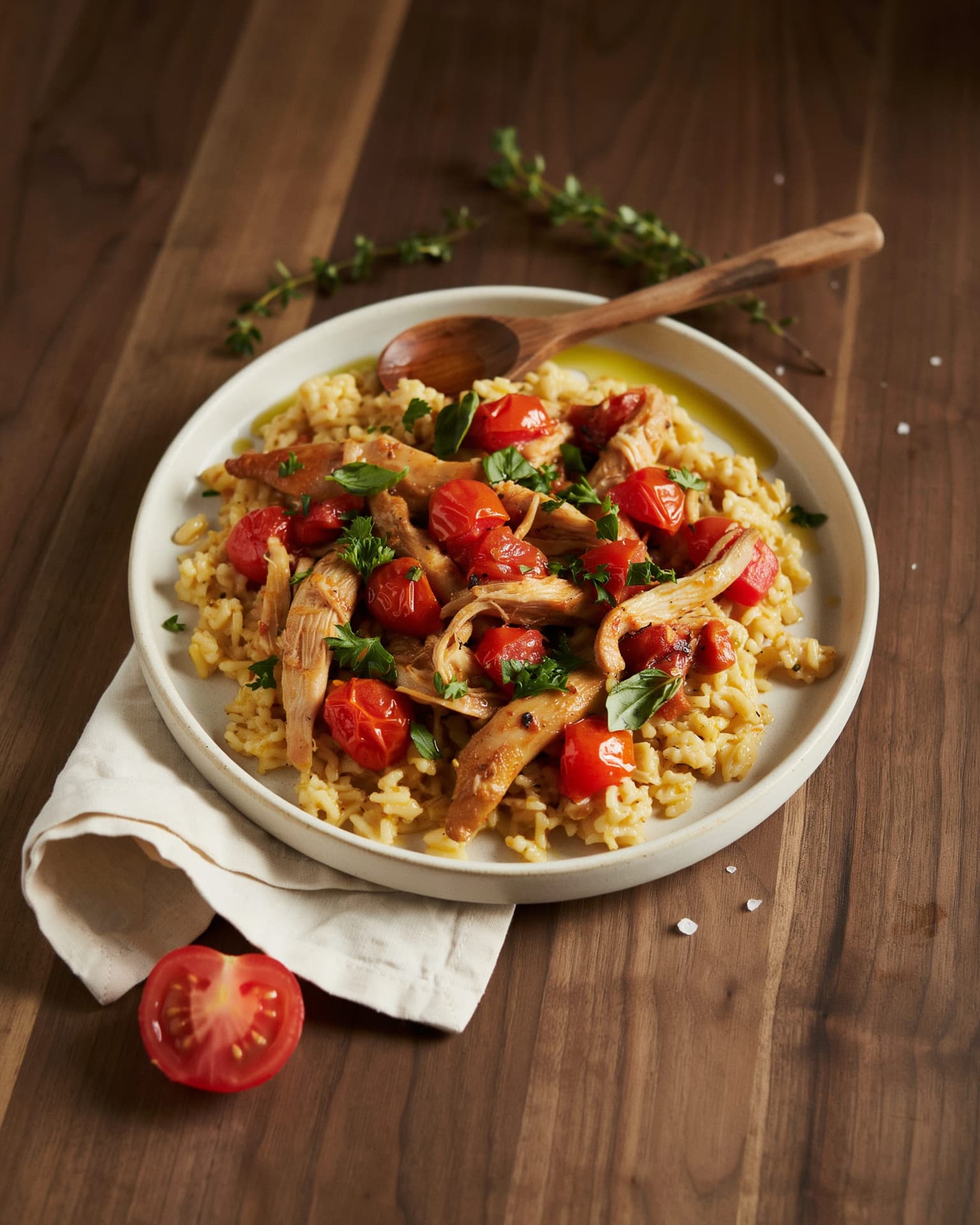
The sauce is built to carry starch, so it loves a bed underneath it. Half a cup of cooked rice or a modest 4 oz (113g) of pasta per person soaks up the tomato-butter sauce perfectly. If you want to keep the plate lighter, spoon it over a pile of wilted spinach or serve with crusty bread to swipe the pan clean. For two people, cook 1 cup of dry rice or 8 oz (227g) of pasta total — that scales cleanly with this recipe's portions.
Can I use ground beef instead of chicken breast?
Absolutely, and it's a fast swap. Brown 12 oz (340g) of ground beef in the skillet first, breaking it into crumbles, and cook it to an internal temperature of 160°F / 71°C — ground meat must hit a higher safe temperature than whole muscle because grinding distributes surface bacteria throughout. Drain excess fat, then proceed with the onion and garlic in the same pan. You'll get a heartier, ragù-style skillet that's just as fast. It'll still work beautifully.
Why are my vegetables watery?
Frozen vegetables release water as they thaw in the pan, and if your sauce is too loose to begin with, you'll end up with a thin, watery result. The fix is simple: let the tomato sauce reduce and thicken slightly before the vegetables go in, and add them straight from the freezer rather than thawing them first (thawed vegetables dump their water all at once). Keep the heat at a steady simmer, not a hard boil, so the liquid concentrates instead of the vegetables breaking down.
How do I know the chicken is fully cooked without a thermometer?
Honestly, you don't — not reliably. The USDA safe minimum for poultry is 165°F / 74°C, and an instant-read thermometer is a $12 tool that removes all guesswork. If you're truly without one, slice into the thickest part: the juices should run clear with no pink, and the meat should be opaque and firm to the touch, not translucent or springy. But a thermometer is the only method I trust, because visual cues fail exactly when the breast is thickest and hardest to judge.
The skillet lands on the table still ticking with heat, the parsley bright against the red sauce, two forks and one pan between you — which was the entire idea.