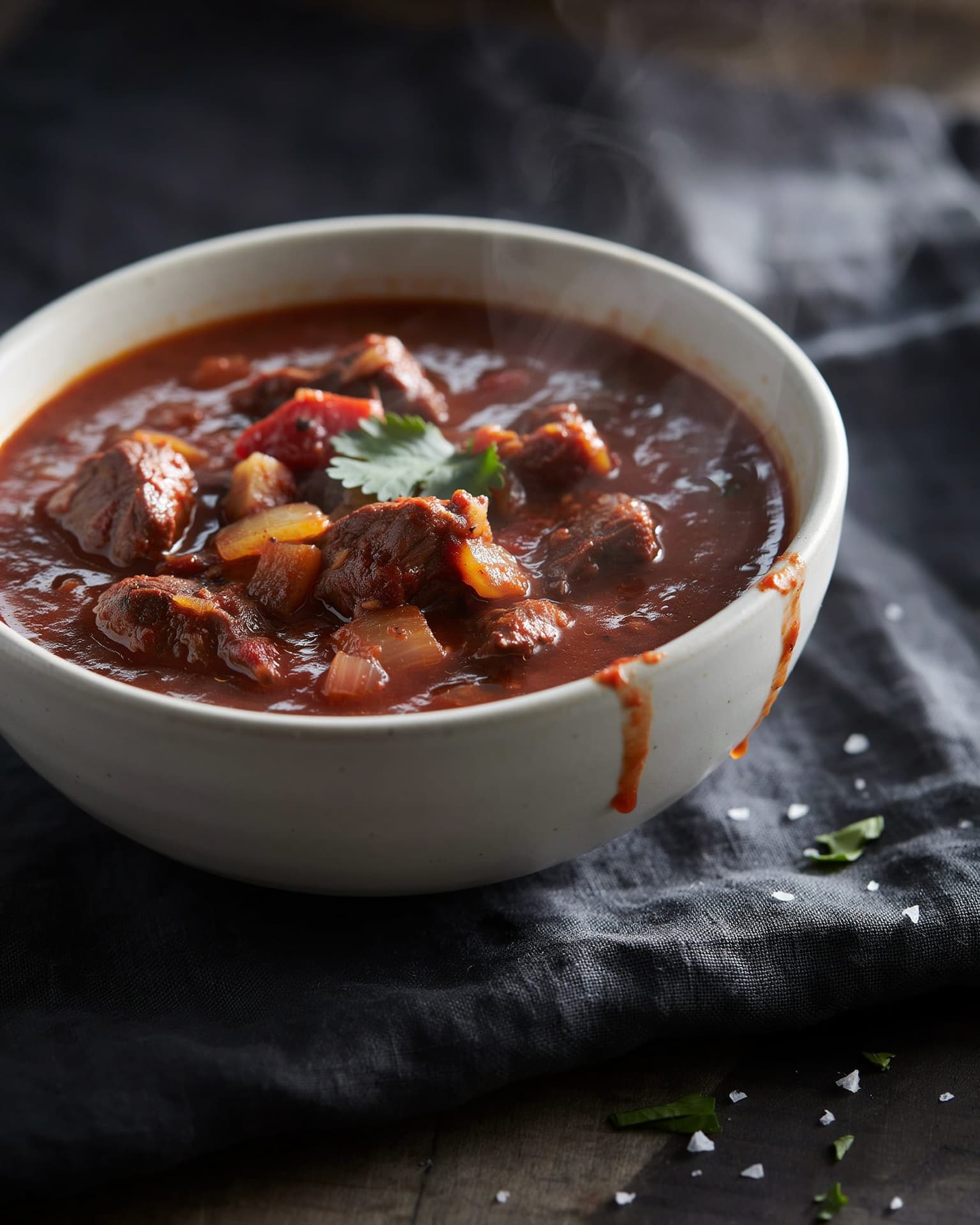
Article and tips
The secret nobody tells you about chili colorado is that the sauce takes ten minutes and the beef does the rest of the work while you set the table. Most recipes bury this dish under a four-hour slow-cooker commitment or, worse, hand you a can of enchilada sauce and call it authentic. I do neither. This version toasts dried guajillo and ancho chiles, blends them into a sauce that clings to every cube of beef, and scales the whole thing down to exactly two servings—no leftovers you'll forget in the back of the fridge.
Chili colorado (from the Spanish colorado, meaning "colored red") is a Mexican braise of beef or pork simmered in a pure dried-chile sauce. Notice what's missing: no beans, no tomato base, no chili powder blend. The color and depth come entirely from the chiles themselves. That purity is the point, and it's exactly why I toast the peppers first instead of reaching for a shortcut.
Why This Works
Dried chiles are a flavor concentrate, and heat unlocks them. When you toast a guajillo in a dry pan for thirty seconds a side, the residual oils in the skin hit their aromatic threshold—you'll smell raisin and dried cherry lift off the pan. Skip the toast and your sauce tastes flat and slightly bitter, which is the single most common complaint about homemade chili colorado.
The second lever is the sear. I brown the beef in olive oil before it ever meets the sauce, building a fond—those dark stuck bits on the pan bottom. Deglazing that fond with the chile purée pulls Maillard compounds directly into the braise. I've made this dish both ways, searing and not searing, and the seared version reduces to a glossy, clinging sauce while the unseared one stays thin and washed-out. Cast iron holds roughly 4× more heat than a thin nonstick pan, so it gives you a deeper crust in less time.
Finally, straining. Guajillo skins never fully break down, even in a high-powered blender. Push the purée through a sieve and your sauce goes from grainy to velvet. It's two extra minutes that separate a good bowl from a great one.
What Most Recipes Get Wrong
Every competitor on the first page of results does one of two things: they either commit you to a four-hour slow cooker, or they hand you a can of enchilada sauce and pretend it's the same thing. It isn't. Enchilada sauce is thickened with flour and seasoned for a different job—use it and you get a gummy, one-note gravy instead of a bright, layered chile sauce.
The gap I'm filling is speed without the shortcut. By using small chuck cubes instead of a whole roast, you get genuinely tender beef in 30 minutes of braising instead of four hours. You keep the toasted-chile soul of the dish and lose the all-day wait. Nobody in the top ten offers that, and it's exactly what a weeknight dinner for two needs.
Chef's Tips & What I've Learned
Chef Augustin's Tip: Save your chile soaking liquid and use it in place of some broth—it carries flavor the plain water would otherwise steal away. If it tastes bitter, though, toss it and use broth instead; over-toasted chiles leach that bitterness into the water.
Salt the beef, not the sauce, first—meat seasoned before searing holds it better than sauce added at the end.
Chef Augustin's Tip: If your sauce breaks or looks thin after braising, uncover and simmer 5 more minutes. Reduction fixes nearly every texture problem in a braise, and it concentrates the chile flavor at the same time.
A braise is patient with you—it forgives a rushed sear far more readily than it forgives a rushed simmer.
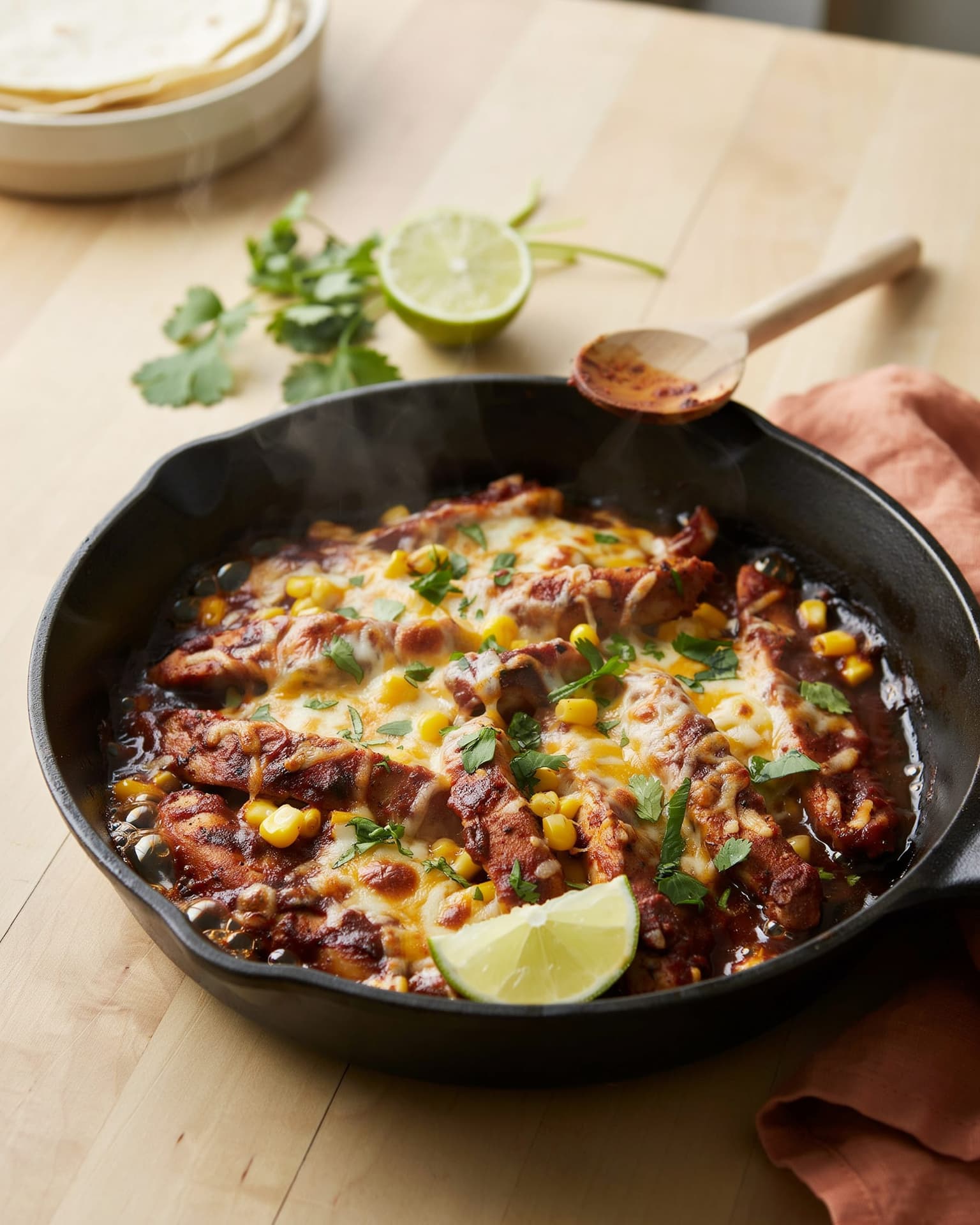
Serve it in warm shallow bowls over white rice, with a wedge of lime and a scatter of raw white onion. The steam carries the toasted-chile smell across the table before anyone picks up a fork, and that quiet moment—two bowls, one pan, the pan still ticking as it cools on the stove—is the whole reason I cook dinner for two.
What's the Secret to a Great Chili Colorado?
Toasting the dried chiles before soaking them. Thirty seconds per side in a dry pan unlocks the aromatic oils in the skins, giving you the raisin-and-cherry depth that defines the dish. Skip this step and the sauce tastes flat. The second secret is straining the blended purée through a fine sieve—guajillo skins never fully break down, and straining takes the sauce from grainy to silky in two minutes.
What Chili Do You Use for Chili Colorado?
Guajillo and ancho are the classic pairing. Guajillo (about 15g for this recipe) brings bright, tangy fruit and the signature red color, while ancho (around 20g) adds a sweet, raisin-like depth and body. Some cooks add a pasilla for smokiness. Avoid pre-ground "chili powder," which is a seasoning blend cut with cumin and salt—for pure chile flavor, use whole dried pods or single-variety ground New Mexican chile.
Can You Use Enchilada Sauce for Chili Colorado?
You can in a pinch, but you'll lose what makes the dish special. Enchilada sauce is thickened with flour and pre-seasoned for a different purpose, so it produces a gummy, one-dimensional gravy rather than a bright, layered chile sauce. If you're truly out of dried chiles, a better shortcut is two tablespoons of pure ground New Mexican red chile bloomed in oil—it keeps the true chili colorado character in about the same time.
What's the Difference Between Chili Con Carne and Chili Colorado?
Chili con carne is typically ground beef simmered with a blend of spices, often including beans, tomatoes, and commercial chili powder. Chili colorado is a purer braise—cubed beef or pork stewed low and slow in a sauce made entirely from dried red chiles, with no beans and minimal tomato. The distinction is right in the name: colorado means "colored red," pointing to that unadulterated chile sauce as the defining element.
Can I Make This with Ground Beef Instead?
Absolutely, and it's even faster. Brown 3/4 lb (340g) of ground beef in the olive oil, breaking it into small crumbles, until it reaches an internal temperature of 160°F / 71°C. Drain excess fat, then proceed straight to the onion-and-garlic step. The braise time drops to about 15 minutes since there's no connective tissue to break down. The sauce clings beautifully to the crumbles and it's a genuinely great weeknight shortcut.