
Article and tips
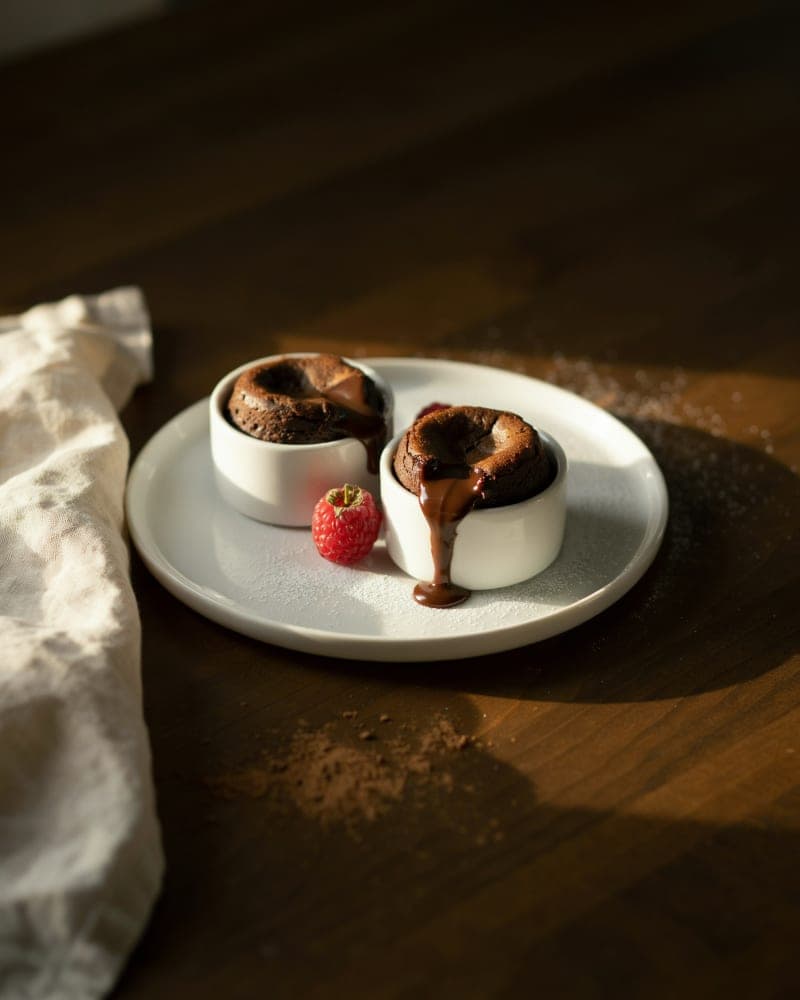
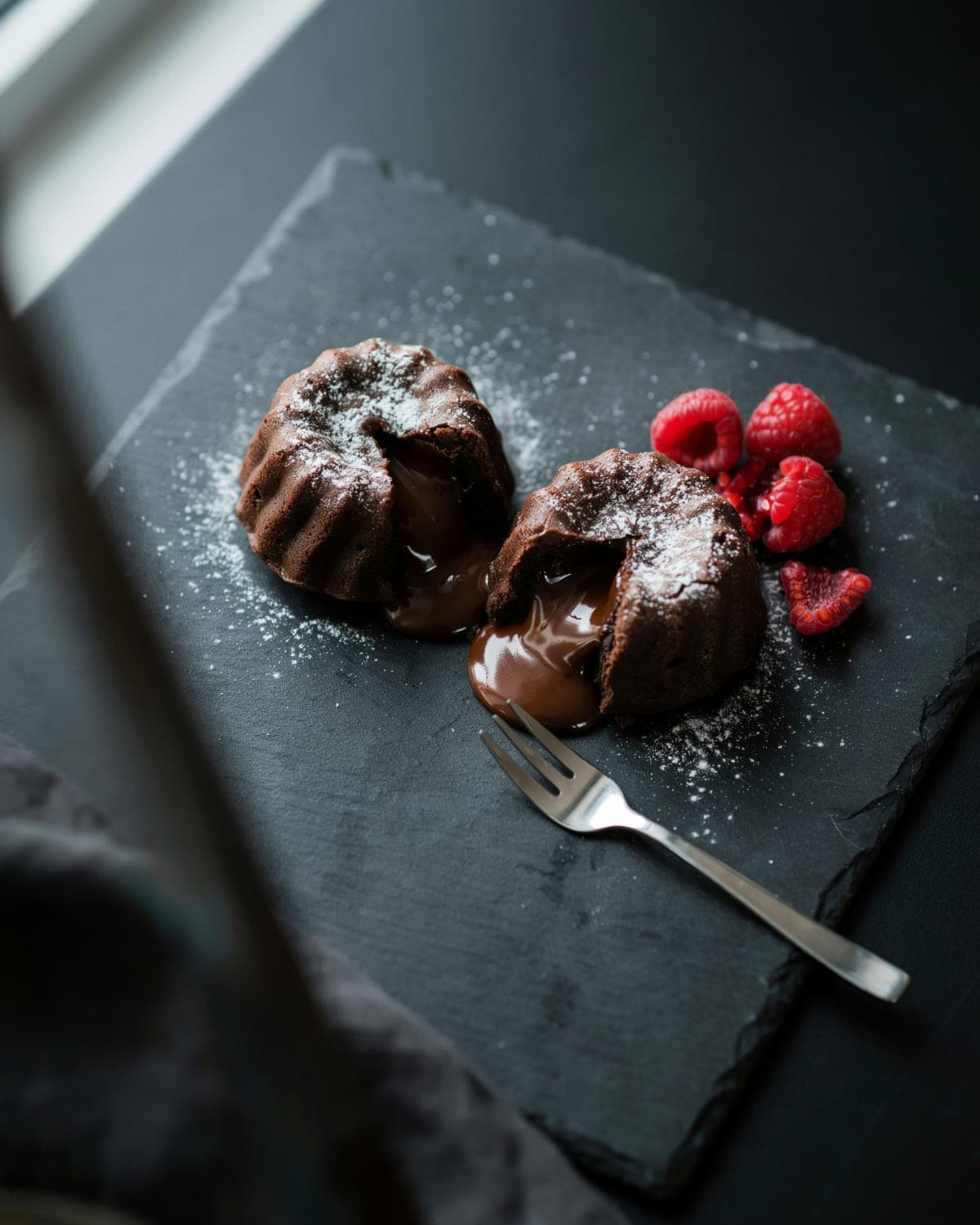
A spoon pressed into the center should release a slow, glossy river of chocolate — that's the whole point of a lava cake, and it's the one detail almost every lava cake version gets wrong. Plenty of "dessert for two" collections lean on mini cheesecakes, fruit crisps, and cookie doughs, but the lava cakes hiding among them almost always over-bake into fudgy muffins. My approach is simple: I bake these to the exact underdone minute, and I tell you precisely what the top looks like when it's time to pull them.
This recipe uses one bowl, two 6-ounce ramekins, and about 25 minutes start to finish. It scales cleanly for two people (with a whole egg and an extra yolk doing the heavy lifting), and it produces zero leftovers — which, when you're baking for two, is the entire reason you're here.
I've made these on quiet weeknights and on anniversaries, and the result never changes: two cakes with a domed, set exterior and a center that pours. You don't need a stand mixer, a scale is optional (though I'll give you weights), and the whole thing bakes while you clear the dinner plates.
Why This Works
A lava cake is really just a dessert for 2](/recipes/dessert-for-2) cake batter deliberately pulled from the oven before the middle finishes setting. The magic is timing, not technique. When you bake, heat travels from the outside in — the ramekin walls cook the batter against them into a firm shell while the core stays fluid. Pull the cakes at the right second and you trap that liquid interior inside a set wall.
The fat matters. I use a full 4 tablespoons (56g) of butter for two cakes because butter carries chocolate flavor and keeps the crumb tender. The eggs do structural work: a whole egg plus one extra yolk gives you enough protein to build a wall without so much that the whole thing turns cakey. That extra yolk is the small-batch secret — it's what makes the center pool instead of crumble.
Good chocolate is non-negotiable. I use 4 ounces (113g) of 60–70% bittersweet chocolate. Cheap chips contain stabilizers that resist melting into the silky pool you want. I've tested this side by side with chocolate chips and chopped bar chocolate — the bar wins every time because it melts into a glossier, looser center.
zed eggs so the barely-set middle is safe to eat. If you can't find pasteurized shell eggs, bake an extra 90 seconds so the center is warm-set rather than fully liquid.
What Most Recipes Get Wrong
The biggest failure in nearly every dessert-for-two lava cake is baking by the clock alone without telling you what "done" looks like. Ovens run 25°F hot or cold, ramekin thickness varies, and "bake 14 minutes" from someone else's kitchen can mean a solid cake in yours. The reliable cue is the top surface: it should look domed and set with a matte finish, but the very center should still jiggle like a loose custard when you tap the ramekin. If the whole top is firm, you've gone too far.
The second mistake is skipping the extra yolk. A single whole egg makes a cakey, crumbly middle. That lone extra yolk is the difference between a pour and a crumble.
Underbaked by 30 seconds beats overbaked by 30 seconds — you can always bake a pulled cake another minute, but you can't un-set a solid center.
Chef's Tips & What I've Learned
Chef Augustin's Tip: Prep the batter and fill the ramekins before dinner, then refrigerate. Bake straight from cold, adding 90 seconds. This works because the chilled batter resists over-baking at the edges, giving you a wider window between set-wall and molten-center. It's the closest thing to a foolproof lava cake I know.
Chef Augustin's Tip: Weigh your chocolate if you can. "4 ounces" chopped by eye can swing 20% either way, and chocolate is the one ingredient that changes the whole texture. A cheap kitchen scale pays for itself the first time your center pours perfectly.
The minute of rest before inverting isn't optional — it lets the outer wall firm just enough to hold its shape during the flip.
Serve immediately. A lava cake waits for no one; the center thickens as it cools.
Can I make dessert for two without a scale?
Yes, though chocolate is the one place weight helps most. For two lava cakes, 4 ounces of chocolate equals roughly a heaping ⅔ cup of chopped bar chocolate. Butter is easy — 4 tablespoons is half a standard stick. Sugar and flour scale fine by volume. If you bake often, a $12 scale removes the guesswork, but you can absolutely make this tonight with measuring cups and get an excellent result.
What dessert can I make in 10 minutes?
A true 10-minute dessert for two means no baking: think chocolate mug cake (90 seconds in the microwave), whipped mascarpone with berries, or a chocolate ganache poured over ice cream. These lava cakes need about 25 minutes total, but only 10 of that is hands-on — the oven does the rest while you clear the table. For genuinely instant, a warm ganache spooned over vanilla ice cream is my go-to.
Why did my lava cake not have a molten center?
Almost always over-baking. Even 60 extra seconds at 425°F / 218°C can set the middle. Pull the cakes when the edges are domed and firm but the center still jiggles when tapped. The other culprit is skipping the extra egg yolk, which keeps the interior loose. Oven temperature drift matters too — an oven thermometer is worth the $8 if your cakes keep coming out solid or, at the other extreme, raw at the walls.
Can I use pasteurized eggs and are they safe for the soft center?
Yes, and I recommend them here. Because the center of a lava cake stays soft, the eggs never reach a fully cooked temperature, so pasteurized shell eggs (heat-treated to kill pathogens) are the safe choice per FDA guidance. If you can only find regular eggs, bake an extra 90 seconds so the center is warm-set rather than fully liquid, which reduces risk. The flavor and texture stay excellent either way.
Can I make these ahead for a dinner party?
Absolutely — this is the make-ahead trick that makes lava cakes dinner-party friendly. Mix the batter, fill the buttered-and-cocoa-dusted ramekins, cover, and refrigerate up to 24 hours. Bake straight from cold at 425°F / 218°C, adding about 90 seconds to the bake time. The chilled batter actually widens your timing window, so the cakes are more forgiving from the fridge than at room temperature.
Two warm cakes on their plates, a dusting of powdered sugar catching the light, and the first spoon breaking the dome to let the center spill slow across the plate — that's how the night should end, with both of you reaching for the same corner.