Article and tips
The Lunch I Actually Make on a Weekday
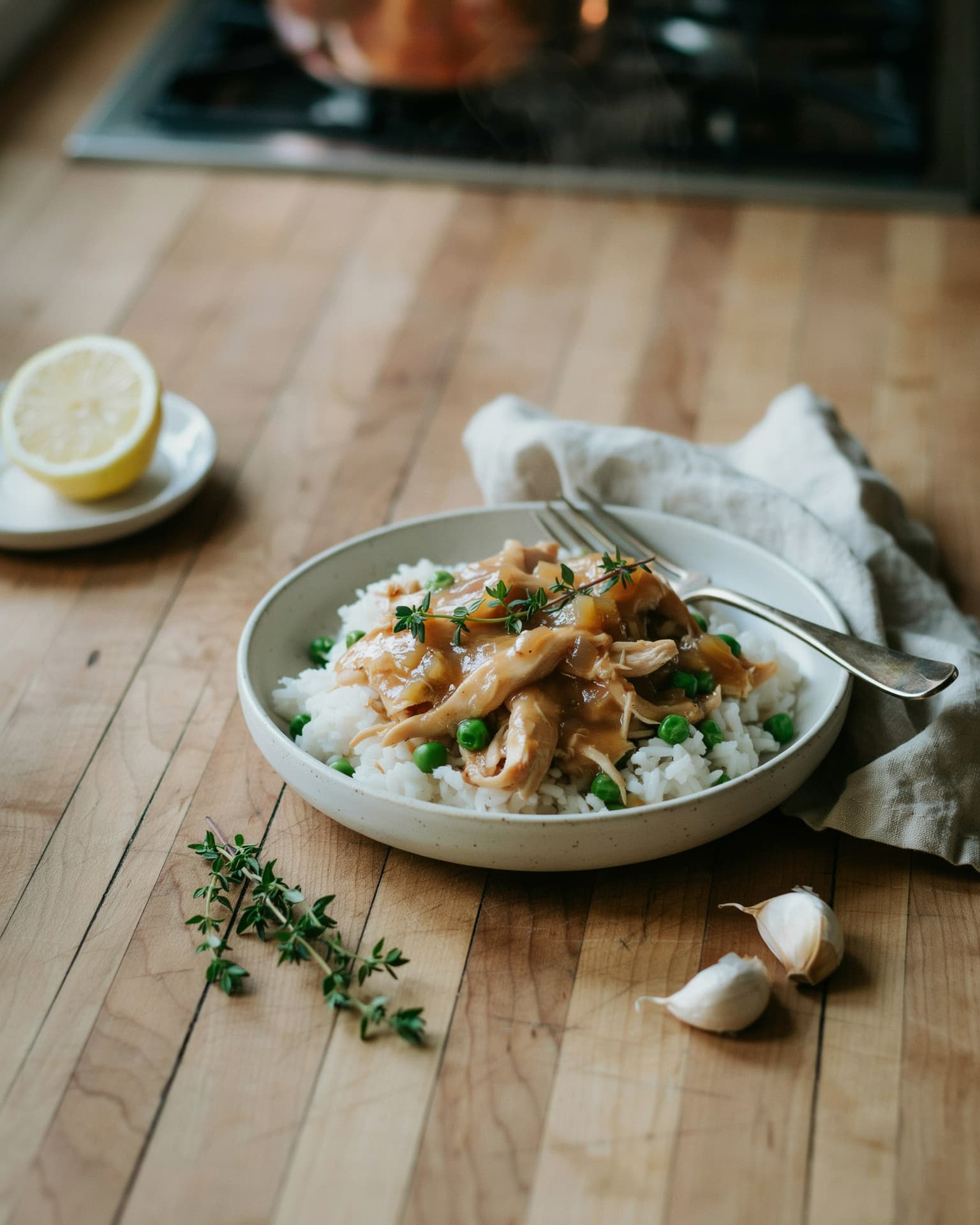
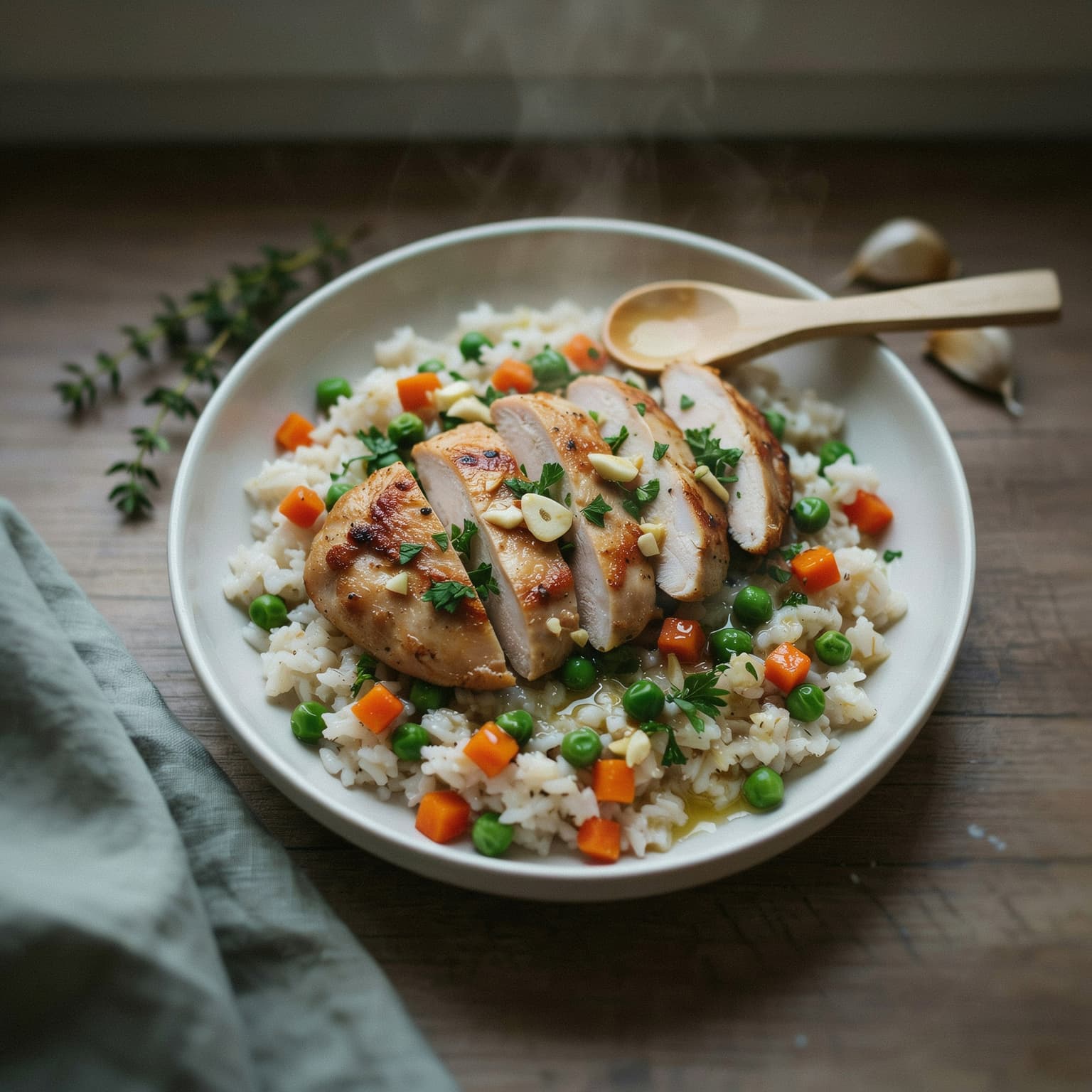
Most lunch roundups hand you a sandwich or a sad salad and call it a day. I wanted the opposite: something warm, savory, and finished in the time it takes for a work call to run long. This garlic butter chicken rice bowl is that answer — seared chicken breast, a fast pan sauce built on melted butter and garlic, spooned over rice with a handful of frozen vegetables that cook right in the pan. (My angle here, after scrolling the top results: everyone offers cold make-ahead lunches, but nobody gives you one genuinely hot bowl you can cook fresh in one skillet in twenty minutes.)
It scales cleanly for two, it reheats beautifully, and it uses ingredients you almost certainly already own. If you can dice an onion and read a thermometer, you can make this. I lean on the same one-pan logic I use in my weeknight chicken skillet, just dialed down to a lunch portion.
Good lunch is not about ambition. It's about heat, salt, and fat arriving on time.
Why This Works
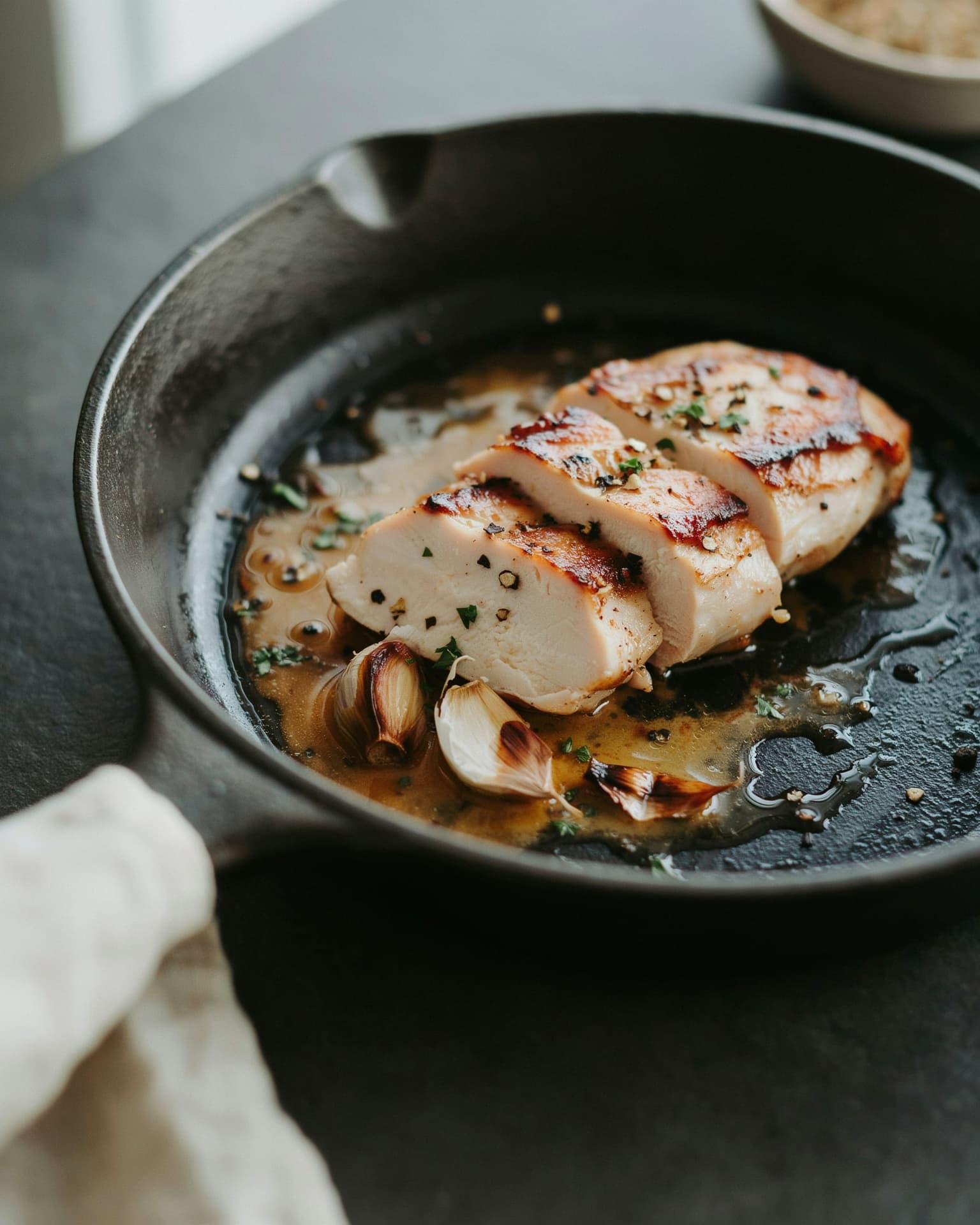
The magic is the sequence, not the ingredient list. When you sear chicken in a hot pan, the surface proteins undergo the Maillard reaction — the browning that builds deep, savory flavor around 300°F / 150°C. That browning leaves fond, the caramelized bits stuck to the pan. Most people scrub that away. I deglaze it into a sauce instead.
Butter is the second lever. Because butter is roughly 80% fat and 16% water, adding it off the direct heat lets the water carry garlic aroma while the fat coats every grain of rice with glossy richness. I add garlic late and gently — garlic scorches and turns bitter above 350°F / 177°C in about 30 seconds, so it goes in after the heat comes down. I've made this both ways, and the late-garlic version is unmistakably rounder and sweeter.
Using pre-cooked or day-old rice matters too. Cold rice has retrograded starch that stays separate in the pan instead of turning gluey, which is exactly why fried rice restaurants insist on it.
What Most Recipes Get Wrong
Every easy-lunch list I found treats lunch as something you assemble cold and endure. The unspoken assumption is that a hot, cooked lunch is a weekend-only luxury. That's the gap. Nobody shows you that a genuinely satisfying hot bowl takes the same twenty minutes as building a wrap — you just have to run one pan efficiently.
The other common miss: adding garlic too early. I see recipe after recipe say "add onion and garlic, cook 5 minutes." Garlic burns long before onion softens, and burnt garlic turns a whole sauce acrid. Stagger them. Onion first, garlic last. It's a thirty-second decision that decides whether your lunch tastes sweet or bitter.
Chef's Tips & What I've Learned
A lunch you can cook in one pan is a lunch you'll actually cook.
Chef Augustin's Tip: Slice the chicken across the grain, not with it. Cutting perpendicular to the muscle fibers shortens them, so each bite feels tender instead of stringy — it's the single biggest difference between restaurant chicken and home chicken.
Chef Augustin's Tip: Keep a pouch of cooked rice and a bag of frozen mixed vegetables in permanent stock. With those two things plus one protein, this bowl is never more than twenty minutes away — which is the entire reason it's stayed in my rotation.
I've tested this reheating both in the microwave and in a covered skillet with a teaspoon of water. The skillet wins by a wide margin because it re-crisps the rice edges instead of steaming everything into mush. If you're meal-prepping, store the chicken and rice together but add fresh butter when you reheat.
A quiet kitchen, two warm bowls on the counter, and steam rising while you finally sit down — that's the lunch worth twenty minutes.
What's the Easiest Thing to Cook for Lunch?
A one-pan rice bowl is hard to beat. If you keep cooked rice and frozen vegetables on hand, you only need to sear one protein — chicken breast to 165°F / 74°C or ground beef to 160°F / 71°C — and build a quick garlic butter sauce in the same skillet. Start to finish it's about 20 minutes, uses a single pan, and the whole thing scales cleanly for one or two people. It's warmer and more satisfying than a sandwich for roughly the same effort.
What Are Good Quick Lunch Options for Working From Home?
The best work-from-home lunches reuse something you already cooked. This garlic butter chicken bowl leans on leftover rice, which cuts active time to about 15 minutes. Other fast options in the same spirit: a garlic butter pasta toss, a quick chicken-and-vegetable stir-fry, or eggs scrambled with the same frozen vegetables. All of them share one trait — a hot protein plus a starch plus one pan — so you're never juggling multiple burners on a busy day.
Can I Make This Lunch Ahead for the Week?
Yes, and it holds well for 3 to 4 days refrigerated. Cook the full recipe, cool it quickly, and portion the chicken and rice into airtight containers. When you reheat, use a covered skillet with a teaspoon of water over medium heat for about 4 minutes rather than the microwave — the skillet re-crisps the rice instead of steaming it soft. Add a fresh knob of butter as it warms to bring back the glossy richness that dulls in the fridge.
Can I Use Ground Beef Instead of Chicken?
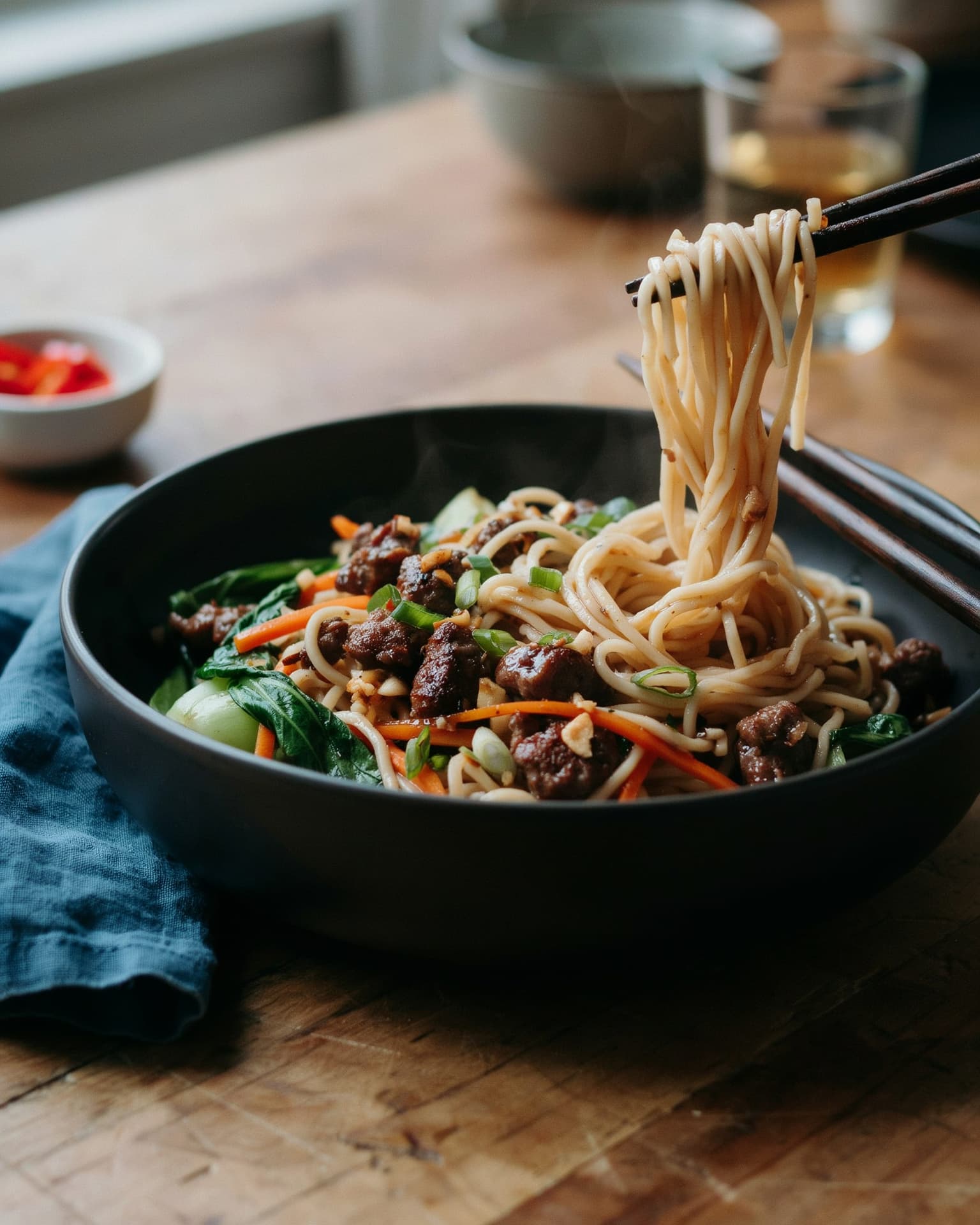
Absolutely. Brown 8 oz (225g) of ground beef in the skillet, breaking it up as it cooks, until it reaches 160°F / 71°C with no pink remaining — the USDA minimum for ground meat. Drain most of the fat, leaving about a tablespoon for flavor, then continue with the onion, garlic, and vegetables exactly as written. Ground beef actually builds fond faster than chicken, so you'll have plenty to deglaze. It's a heartier bowl but every bit as quick.
Do I Have to Use Frozen Vegetables?
Not at all — they're just the fastest option because they skip washing and chopping. Fresh vegetables work beautifully; add firmer ones like broccoli or carrots a few minutes earlier so they soften, and quick-cooking ones like spinach or peas near the end. Frozen vegetables are picked and flash-frozen at peak ripeness, so they hold up well in a hot pan. Whatever you use, aim for about 1½ cups (roughly 200g) so the bowl stays balanced between protein, starch, and vegetable.